
Irish players have been using internationally licensed casinos for years. In late 2026 the domestic picture is changing quickly: the betting side is now tightly licensed, and the casino side is still waiting for its Irish framework. This guide sets out what the different licences mean, how they compare, how to check one yourself, and what you get at an international site compared with the domestic offer.
- Regulator: Gambling Regulatory Authority of Ireland (GRAI)
- Law: Gambling Regulation Act 2024 (Act No. 35 of 2024)
- Legal age: 18+
- Tax on winnings: none for the player
- Irish online casino licence: not yet available, with the GRAI opening remote gaming in 2027-2028
The short version for Irish players
The Irish market has two different situations side by side. Betting and casino follow separate timetables under the 2024 Act. That gap explains why most casino play by Irish residents runs through European and other international licences.
| Question | Answer in November 2026 |
|---|---|
| Who regulates gambling in Ireland? | The GRAI, under the Gambling Regulation Act 2024 |
| Can an operator offer remote betting without a GRAI licence? | No. It has been a criminal offence since 1 July 2026 (s.67(1)) |
| Is there an Irish online casino licence? | Not yet. Remote gaming opens in 2027-2028 |
| Which licences do casinos serving Ireland hold? | European licences such as MGA, Gibraltar and others, plus international ones such as Curaçao |
| Does the player pay tax on winnings? | No. Betting and lottery winnings are exempt from CGT |
| Is there a national self-exclusion register? | It is in the Act (ss.44-49) but has not been commenced |
Ireland’s legal framework in November 2026
The Gambling Regulation Act 2024 replaced a patchwork of laws dating back decades. It set up the GRAI as a single regulator for betting, gaming and lotteries. The Act is being commenced in stages, so some sections already apply and others exist only on paper. For an Irish player, what matters is which parts are live today.
Betting: licensed operators only
Remote betting licences issued by the Revenue Commissioners ended on 30 June 2026. From 1 July 2026, offering remote betting to people in Ireland without a GRAI licence is a criminal offence under s.67(1). Under s.75, the High Court can order websites to be blocked and payments to be cut off for anyone offering or advertising unlicensed betting.
- Remote betting licences on the GRAI register on 5 November 2026: 37
- Remote betting intermediary licences: 4
- The offence applies to the operator, not to the player
This guide is about casino licences. For sports betting from Ireland, the GRAI register is the reference, and this page does not point you towards unlicensed sportsbooks.
Online casino: no Irish licence yet
Casino games are a different story. The GRAI only opens remote gaming licensing in 2027-2028. Until then, there is no Irish online casino licence that any operator could hold. Every online casino serving Irish players today, without exception, does so under a licence issued elsewhere.
- s.67(2), which would make offering unlicensed remote gaming an offence, has not been commenced
- The Gaming and Lotteries Act 1956 remains in force
- Irish law in this area regulates the operator; it does not create an offence for someone playing casino games
In practice, this means international licences are the market for online casino in Ireland right now. They are not a fallback, because there is no domestic alternative. The relevant question is which licence, and what it requires of the operator.
Tax: your winnings stay yours
Irish residents pay no tax on gambling winnings. Revenue treats winnings from betting and lotteries as exempt from Capital Gains Tax. The tax burden sits with the operator: 2% Remote Betting Duty on stakes placed by people in Ireland, and 25% on the commission earned by betting intermediaries.
| Who | What they pay |
|---|---|
| Player | Nothing on winnings (CGT-exempt) |
| Remote bookmaker | 2% of stakes from people in Ireland |
| Betting intermediary | 25% of commission |
Rules that already apply
Several consumer protections in the Act are already in force. They shape how deposits work and who can play.
- Credit card ban (s.165): gambling with a credit card is prohibited. Debit cards, PayPal, Apple Pay, Revolut, bank transfer and Paysafecard remain the standard Irish methods.
- Age limit (s.158): 18+, with no exceptions.
- Parental control links (s.174): GRAI licensees must link to parental control software from their homepage.
MGA licensed casinos: what the Malta licence involves
The Malta Gaming Authority is the most established remote gaming regulator in the EU. MGA licensed casinos run under Malta’s Gaming Act and operate inside the EU legal framework, including EU anti-money-laundering rules and data protection under GDPR. Several brands that are well known in Ireland, including LeoVegas, Mr Green, PlayOJO, Casumo and Videoslots, operate under Maltese licences.
What the MGA checks
An MGA B2C licence is not a one-off registration. The authority applies a set of ongoing obligations, and licences can be suspended or cancelled.
- Fitness and propriety: directors, shareholders and key staff are vetted
- Player funds: operators must protect customer balances and hold enough funds to cover them
- Game certification: RNGs and games are tested by approved laboratories
- Responsible gambling: deposit limits, cooling-off periods and self-exclusion must be available on the account
- AML/KYC: identity and source-of-funds checks under EU directives
- Reporting and audits: regular financial and compliance reporting to the regulator
Disputes and complaints
MGA licensees must first deal with complaints internally. If that fails, the player can go to the operator’s approved alternative dispute resolution (ADR) body, which is free for the player. The MGA also runs its own player support channel for issues involving licensees. These steps are part of the licence conditions rather than goodwill from the operator.
Pro tip: Before you deposit, open the casino’s terms and search for “dispute” or “ADR”. An MGA licensee should name its ADR provider. Having that name to hand saves time if a withdrawal is ever delayed or a bonus decision is disputed.
Curaçao, Kahnawake and other international licences
Outside the EU, Curaçao is the most common licence among international casinos, especially crypto-friendly ones. The licence has changed significantly in recent years. A Curaçao licence issued under the old system and one issued under the new framework are different things.
Curaçao: from master licences to direct licensing
For decades, Curaçao worked through a small number of master licence holders who issued sublicences to operators. Supervision was light, and complaint handling depended largely on the master licensee. The National Ordinance on Games of Chance (LOK) reformed this. Licensing moved to the Curaçao Gaming Authority, which issues licences directly to operators.
- Direct licensing: each operator applies and is assessed individually
- Substance requirements: operators must have a local presence and named key personnel
- Public register: licensees appear on the authority’s website
- Policies required: AML, responsible gambling and complaints procedures
A brand that has moved to a licence issued directly by the Curaçao Gaming Authority is working under a more formal regime than an older sublicence. That is a more useful distinction than a vague idea of Curaçao’s reputation.
Kahnawake
The Kahnawake Gaming Commission operates from the Mohawk Territory of Kahnawake in Canada and has licensed online gambling since the late 1990s. It publishes its licensees and runs a complaints procedure. It is used less by consumer-facing casinos than MGA or Curaçao, but it has a long track record.
How the licences compare
The table compares the main licences by what they require, which is more useful than comparing them by reputation alone.
| Feature | MGA (Malta) | Curaçao (direct licence) | Kahnawake | Gibraltar |
|---|---|---|---|---|
| Jurisdiction | EU member state | Constituent country of the Kingdom of the Netherlands | Mohawk Territory, Canada | British Overseas Territory |
| Public licence register | Yes | Yes | Yes | Yes |
| Game/RNG testing | Required, approved labs | Required | Required | Required |
| Player complaints route | Internal, then approved ADR, plus MGA support | Internal, then the authority’s procedure | Commission complaints process | Internal, then regulator |
| Account-level RG tools | Mandatory | Required policies | Required | Mandatory |
| Typical brands | Large European casino groups | Crypto-friendly and multi-product brands | Smaller set of operators | Established European groups |
What changes for you at an international casino
Readers comparing international casinos with the Irish offer usually look at four things: catalogue size, promotions, limits and payments. The figures below come from the brand data on this site, without rounding up.
Catalogue size and number of studios
Catalogue size is where the difference is easiest to measure. Large international casinos aggregate content from dozens or even hundreds of studios, including smaller providers that rarely appear elsewhere.
| Brand | Catalogue (brand data) |
|---|---|
| Videoslots | Over 230 game providers |
| BitStarz | 9,000+ games, crypto-friendly |
| 22Bet | About 9,000 casino games |
| Duelbits | 4,000+ games from 60+ studios |
| ICE Casino | 3,500+ slot games |
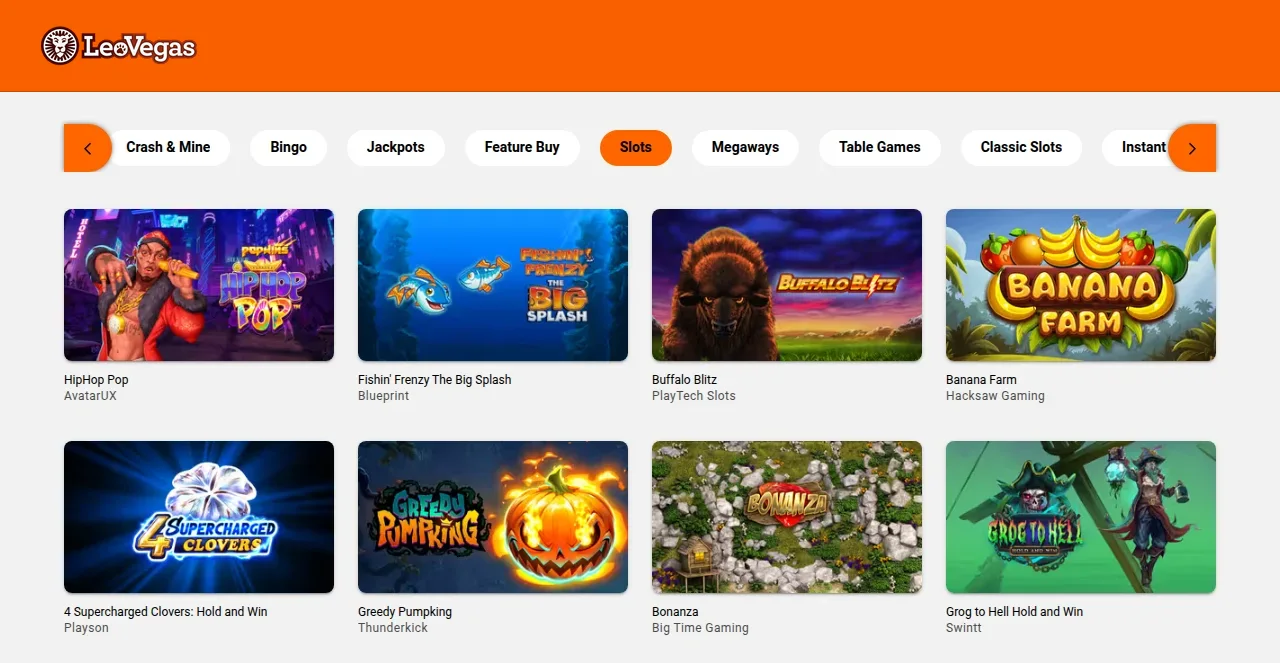
| LeoVegas | 2,000+ games from 40+ studios |
| Mr Green | 2,000+ games, 24/7 support |
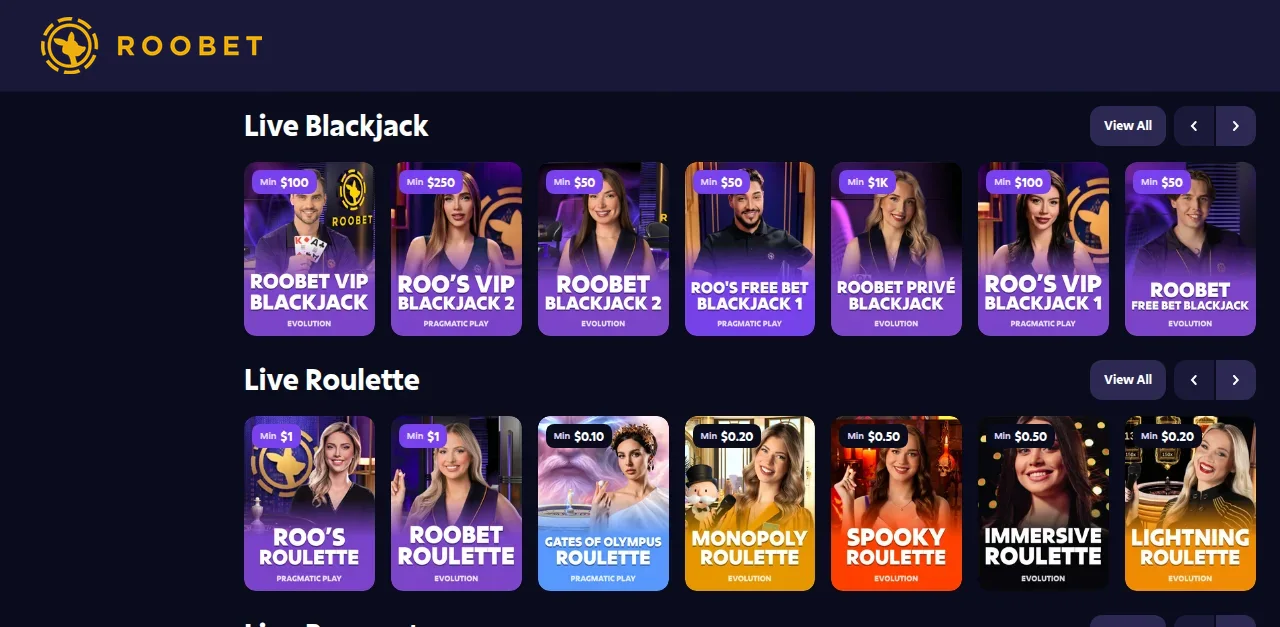
| Roobet | 15 top game studios |
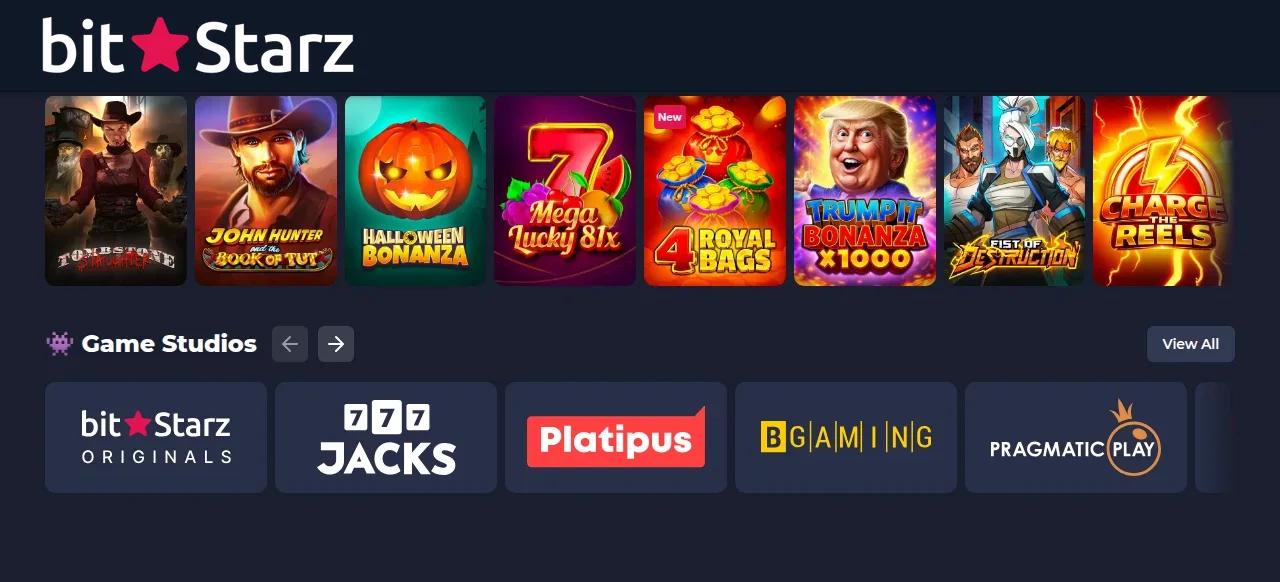
For slot players, a larger catalogue means more variety in volatility, mechanics and themes. For table players, it usually means more variants of blackjack, roulette and baccarat, each with its own rules and published RTP. Check the game’s help screen for the RTP before you play, as the same title can run at different settings on different sites.
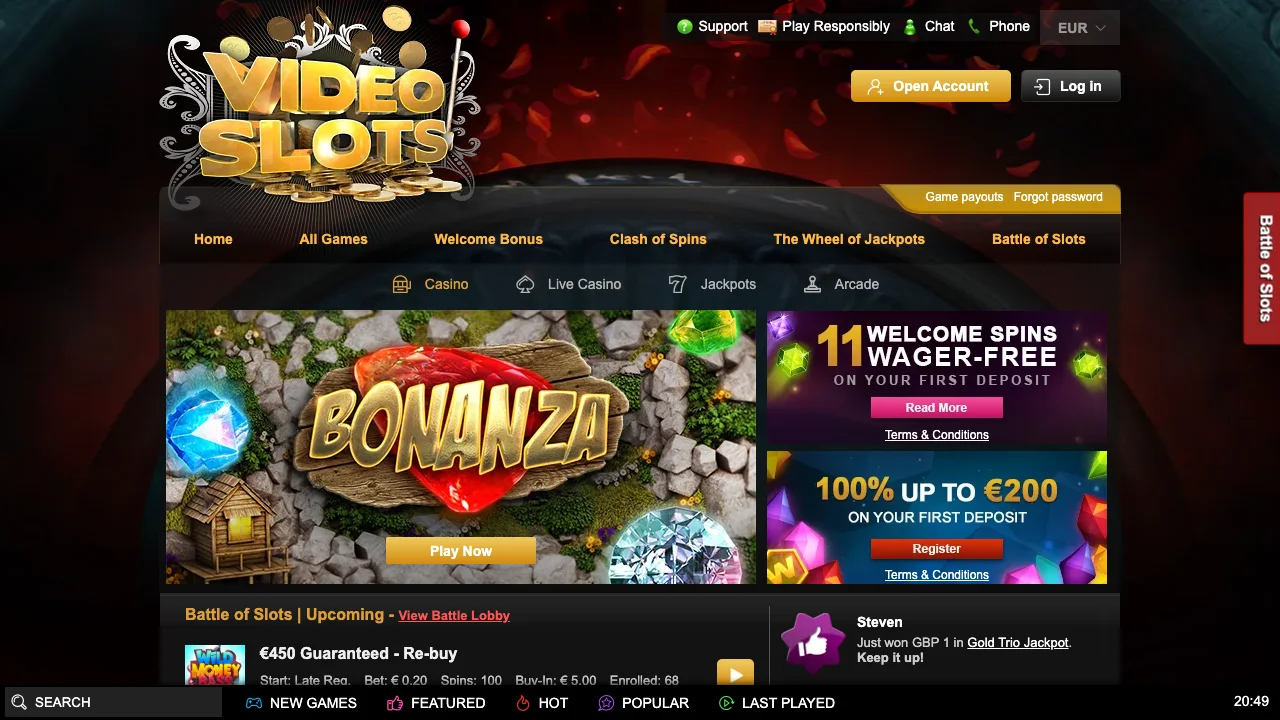
Videoslots is the clearest example of studio breadth, with over 230 providers in the brand data.

Welcome offers and promotions
Promotions are another clear difference. The 2024 Act gives the GRAI powers over inducements for its licensees, while international casinos set their own offers under their home licence. The headline offers below come from the brand data. The full terms, including wagering, apply at each site.
| Brand | Headline offer | Note |
|---|---|---|
| Lukki Casino | €4,000 + 300 free | Four-deposit welcome offer |
| ICE Casino | Up to €1,500 + 270 FS | 3,500+ slot games |
| LeoVegas | Up to €1,000 + 200 FS | 2,000+ games from 40+ studios |
| Mr Green | €500 + 200 Free Spins | 24/7 support |
| BitStarz | €500 + 180 free spins | Crypto-friendly |
| Puntit | €500 Starter Pack | Crypto & PayPal deposits |
| Casumo | 100% up to €300 | 50 spins on Wild Wild Riches |
| PlayOJO | No-wagering free spins | Winnings paid as real cash |

Large headline figures are usually spread across several deposits and come with wagering requirements. A smaller offer with lighter terms can be worth more in practice. PlayOJO takes a different approach: its free spins carry no wagering, and winnings are paid as real cash.
Pro tip: Divide the bonus amount by the wagering total to compare offers fairly. Also check the maximum bet allowed while a bonus is active and which games count towards wagering. These two terms are behind most voided bonus winnings.
Different offer structures suit different players. Mr Green is a straightforward option with 24/7 support and its €500 + 200 Free Spins offer.

- 100% match up to €500
- 200 free spins included
- PayPal, Apple Pay & Trustly
Live casino
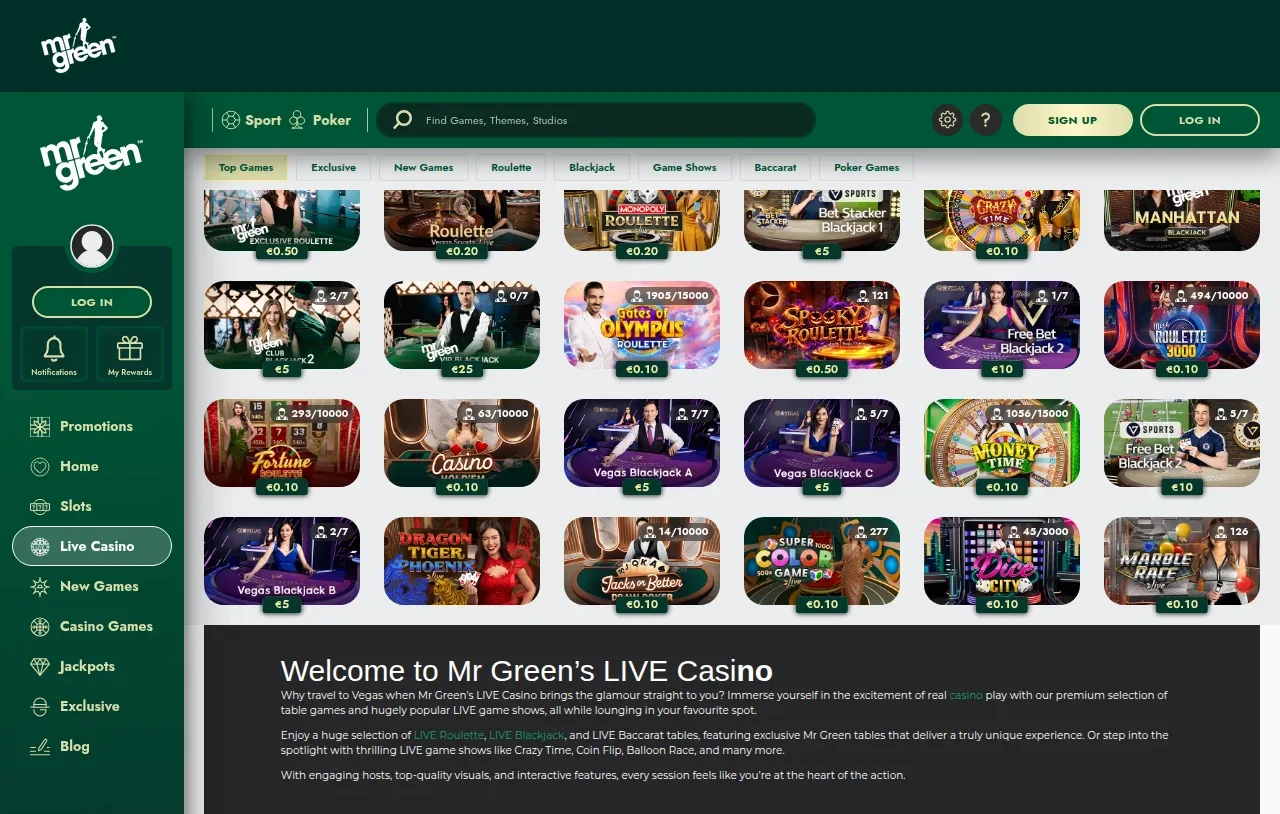
Live dealer games are where studio breadth matters most. International casinos usually run several live studios side by side. That means more roulette, blackjack and baccarat tables, game shows, and a wider range of table limits from low-stakes seats to high-limit rooms.
- Table variety: multiple versions of each classic, including speed and multi-camera formats
- Game shows: wheel and multiplier formats alongside traditional tables
- Table limits: minimum and maximum stakes shown at each table before you sit down
Deposit and stake limits
Without an Irish casino licence in force, there is no domestic monthly deposit cap or per-spin maximum stake for online casino games yet. The 2024 Act gives the GRAI powers to set such rules once remote gaming licences are issued. At international casinos, limits are set by the licence, the operator and each game: slots have their own maximum bet and live tables display their limits.
- Game limits: set per title or per table and shown in the game
- Account limits: deposit, loss, wager and session limits you set yourself in account settings
- Withdrawal limits: daily, weekly or monthly caps in the operator’s terms
Higher limits describe what a game or site allows, not a target. Personal deposit limits are available at MGA licensees by licence requirement and at most international sites. Setting one when you register takes a minute.
Payments, including crypto
International casinos serving Ireland usually support the methods Irish players already use, often alongside cryptocurrency. Because of the s.165 credit card ban, use a debit card or one of the alternatives below.
| Method | Typical use |
|---|---|
| Debit card | Deposits and, at most sites, withdrawals |
| PayPal | Fast e-wallet deposits and withdrawals where offered |
| Apple Pay | Mobile deposits |
| Revolut | Card or bank-based deposits and withdrawals |
| Bank transfer | Larger withdrawals |
| Paysafecard | Prepaid deposits |
| Crypto | Deposits and withdrawals at crypto-friendly brands |
Among the brands on this site, crypto is central at BitStarz (crypto-friendly), Duelbits (instant crypto cashier), Roobet (crypto + fiat cashier) and Puntit (crypto and PayPal deposits). 1xBet lists 11 payment options. Crypto withdrawals avoid card processing times, though blockchain network fees and confirmation times vary by coin.
BitStarz combines a 9,000+ game catalogue with a crypto-friendly cashier.

- 24/7 live chat support
- 180 free spins on deposit 1
- Cards, e-wallets and crypto
Wager-free play
Most welcome offers carry wagering requirements. PlayOJO’s model is different: its free spins have no wagering, and winnings are paid as real cash. For players who would rather not track rollover, this is a simpler arrangement.
- Min. deposit €10
- Over 80 Must Drop jackpots
- 24/7 live chat support
How to verify a casino licence, step by step
Checking a licence takes about five minutes and is worth doing before your first deposit. The process is the same for any jurisdiction. Find what the operator declares, then confirm it at the source.
- Scroll to the footer. Look for the regulator’s logo, the licensed company’s name and, where published, a licence number.
- Read the terms. The terms and conditions should name the operating company, its registered address and the licensing jurisdiction.
- Go to the regulator directly. Type the regulator’s address yourself instead of clicking the logo, since a logo link can point anywhere.
- Search the public register. Search by company name, licence number or domain.
- Match the details. The company, status (active/suspended) and listed domains should match the site you are on.
- Check the complaints route. Note the ADR body or complaints procedure named in the terms.
Fewer international operators publish their licence number in the footer these days, often only the jurisdiction and company name. When a number is published and matches the register, that is a positive sign of transparency. When only the company and jurisdiction appear, search the register by company name instead.
Checking an MGA licence
The MGA’s website has a licensee register that you can search by company or brand. Each entry shows the company, licence type, status and the domains it covers.
- Search by the company name from the casino’s terms
- Confirm the status shows as active
- Check that the casino’s domain appears in the list of authorised URLs
Checking a Curaçao licence
Under the new framework, the Curaçao Gaming Authority publishes its licensees. Many Curaçao sites display a validation seal that opens a certificate page on the regulator’s domain.
- Click the seal and confirm that the page opens on the regulator’s own domain
- Check that the company name matches the casino’s terms
- Note whether the licence was issued directly or under an older sublicence
Pro tip: Save a screenshot of the register entry and the casino’s terms on the day you register. If a dispute ever reaches an ADR body or regulator, having the licence details and terms from that date makes your case much easier to follow.
Checking a Kahnawake licence
The Kahnawake Gaming Commission lists its permit holders by category. Search for the company or brand and confirm that the entry is current. The same rule applies to all three regulators: if the details on the register and the site match, the licence claim holds up.
Free support in Ireland
Whatever licence a casino holds, independent help in Ireland is free and confidential. The national exclusion register is not yet commenced, so the operator’s own limit and self-exclusion tools, together with these services, are the main options today.
- Gambling Care (Gambling Awareness Trust): free 24-hour line 1800 936 725 · gamblingcare.ie
- Extern Problem Gambling (formerly Problem Gambling Ireland): 089 241 5401
- Gamblers Anonymous Ireland: +353 1 8721133, 10:00-22:00 every day
- HSE: public health information and services
Your rights as a player at a licensed casino
A licence is a set of obligations the operator signs up to, and each obligation is a right you can rely on. Whatever the jurisdiction, a properly licensed casino commits to a recognisable core of player protections. The detail and the enforcement differ between regulators, which is why the comparison earlier in this guide matters, but the baseline below is common ground.
- Clear terms before you play: bonus rules, withdrawal conditions and account closure terms published and accessible from every page.
- Certified games: random number generators and return-to-player figures tested by an accredited laboratory.
- Segregated or protected funds: rules on how player balances are held, strictest under the MGA.
- Responsible gambling tools: deposit limits, time-outs and self-exclusion available inside the account.
- A complaints route: first to the operator, then to an independent body or the regulator itself.
- Data protection: for EU-licensed operators, GDPR applies in full, including your right to access and delete data.
Fair games and published RTP
Every slot and table game from a recognised studio ships with a theoretical return-to-player figure, usually somewhere in the mid-90s per cent for slots. Licensed casinos must run the certified version of the game, and many show the RTP in the game’s information panel. If a game lists more than one RTP setting, the casino’s chosen setting is the one that counts.
Pro tip: open the “i” or paytable menu inside a slot before your first spin. The RTP shown there is the version the casino actually runs. Two casinos can host the same title at different settings, so checking the figure takes ten seconds and tells you more than any review headline.
Your balance, your withdrawal
Withdrawal rules are where licence terms bite hardest. A licensed operator must process cash-outs according to its published terms, apply identity checks consistently, and explain any refusal. Know-your-customer (KYC) checks are normal under every serious licence and are the usual reason for a first withdrawal taking longer than later ones.
| What you can expect | Why it happens | What helps |
|---|---|---|
| ID and address check on first withdrawal | Anti-money-laundering rules under every licence | Upload documents right after registering |
| Withdrawal to the same method you deposited with | Closed-loop payment rules | Deposit with the method you want to be paid on |
| Pending period before processing | Internal review, set out in the terms | Check the stated pending time before depositing |
| Source-of-funds questions on large sums | Regulatory thresholds | Keep bank statements to hand |
Genuinely unlicensed sites: the real risks
There is an important distinction between a casino licensed abroad and a site with no licence at all. International brands holding MGA, Curaçao or Kahnawake licences answer to a regulator, run certified games and publish terms they can be held to. A site with no licence answers to nobody. That second category is the one worth steering clear of, and it is usually easy to spot.
What a missing licence actually means
- No independent game testing: nothing confirms the games are the genuine certified versions.
- No complaints body: if a withdrawal stalls, there is no regulator or mediator to escalate to.
- No rules on player funds: balances can disappear if the site closes.
- Terms that change overnight: bonus and withdrawal conditions rewritten after you deposit.
- Weak data security: no obligation to protect identity documents you upload.
Warning signs worth checking
Most problem sites give themselves away within a minute of browsing. The pattern is consistent across markets, and none of these signs relate to where a casino is licensed — they are about whether it can be held to anything at all.
- A footer with no regulator named, or a seal that does not click through to a registry page.
- Games from studios you have never heard of, with no RTP information anywhere.
- Bonus terms missing, or a “maximum withdrawal” clause buried deep and set absurdly low.
- No company name, address or support contact beyond a web form.
- Pressure tactics: countdown timers on deposits, or support pushing you to deposit before answering a question.
Licensed international casino vs no licence
| Feature | MGA-licensed | Curaçao / Kahnawake-licensed | No licence |
|---|---|---|---|
| Regulator you can contact | Yes, with formal complaints process | Yes, via the licensing authority | No |
| Certified RNG and RTP | Required | Required | No obligation |
| Rules on player funds | Strict, audited | Present, lighter | None |
| Responsible gambling tools | Mandatory | Required under current rules | Optional at best |
| Published terms you can rely on | Yes | Yes | Rarely |
Self-exclusion and responsible gambling tools
Responsible gambling tools are not an extra; they are part of what makes a casino worth using. They let you set the shape of your play in advance, on a calm day, so decisions in the moment are already made. Ireland’s own framework is still being built, so for now the strongest tools sit inside your casino account and with your bank.
Where Ireland’s national register stands in November 2026
The Gambling Regulation Act 2024 provides for a National Gambling Exclusion Register in sections 44 to 49. As of November 2026 those sections have not been commenced, so there is no national self-exclusion scheme yet. Other protections in the Act are already live.
- Credit card ban (s.165): gambling with a credit card is prohibited; debit cards, PayPal, Apple Pay, Revolut, bank transfer and Paysafecard remain the standard options.
- Age 18+ (s.158): applies across all gambling.
- Parental control links (s.174): licensed operators must link to parental control software from their home page.
Tools inside your casino account
Every licensed casino on our list offers account-level controls. Names vary slightly, but the set is broadly the same.
| Tool | What it does | Typical options |
|---|---|---|
| Deposit limit | Caps how much you can add per day, week or month | Lowering applies at once; raising usually has a cooling-off delay |
| Loss or wager limit | Caps net losses or total stakes over a period | Daily, weekly, monthly |
| Session reminder | Pop-up showing time played and net result | Every 15, 30 or 60 minutes |
| Time-out | Locks the account for a short break | 24 hours to several weeks |
| Self-exclusion | Closes the account for a long fixed period | Six months or more; cannot be reversed early |
Pro tip: set your deposit limit on the day you register, before claiming any welcome offer. Higher deposit ceilings at international casinos are a feature, but the ceiling that matters is the one you choose. Lowering a limit takes effect straight away; raising one normally triggers a waiting period, which works in your favour.
Blocking software and bank controls
If you want a barrier that covers every site at once, use tools outside the casino. These work regardless of where an operator is licensed.
- Bank gambling blocks: most Irish banks and Revolut let you block gambling transactions from the app.
- Device-level blockers: paid apps block gambling sites across phone, tablet and laptop.
- Talking to someone: the free support lines listed above are open to anyone, whether or not you think there is a problem.
MGA licensed casinos and international brands on our list
Irish players comparing international brands are usually weighing catalogue size, bonus value, live casino depth and payment choice. Here is how the casinos we cover line up on those points, using the figures from our own review files. Each casino’s licence details sit in its individual review, stated once with the jurisdiction.
Big catalogues and studio depth
Catalogue size is where international casinos pull clearly ahead of anything a single-country market tends to produce. Several brands list thousands of games from dozens of studios, which means more slot mechanics, more RTP choice and more live tables at once.
- BitStarz: 9,000+ games, crypto-friendly.
- 22Bet: about 9,000 casino games.
- Duelbits: 4,000+ games from 60+ studios.
- ICE Casino: 3,500+ slot games.
- Videoslots: over 230 game providers.
- LeoVegas: 2,000+ games from 40+ studios.
BitStarz is the largest catalogue in this group and suits players who like to switch between studios and game types.
- 24/7 live chat support
- 180 free spins on deposit 1
- Cards, e-wallets and crypto
22Bet matches that scale on the casino side with about 9,000 games, and pairs it with a welcome offer of up to €1,500 + 150 FS.

- 35x wagering requirements
- Minimum deposit €10
- 24/7 live chat and email
Videoslots takes a different angle: rather than a headline bonus, it focuses on slot tournaments across a library drawn from over 230 game providers.
LeoVegas combines 2,000+ games from 40+ studios with a welcome package of up to €1,000 + 200 FS.

- Wager-free Book of Dead spins
- 24/7 live chat in English
- PayPal, Trustly & Apple Pay
Live casino
Live dealer play is one of the clearest gains at international casinos: more tables, more game-show formats, and a wider spread of stake levels from low-limit tables to high-limit rooms. What to look for is the number of live studios integrated, availability of tables at Irish evening hours, and whether live play counts towards bonus wagering.
Mr Green pairs 2,000+ games with 24/7 support, and its welcome offer is €500 + 200 Free Spins.
- 100% match up to €500
- 200 free spins included
- PayPal, Apple Pay & Trustly
Roobet runs a crypto + fiat cashier and draws its lobby from 15 top game studios, with a strong live section among them.

- 24/7 live chat support
- Evolution live casino
- Browser play, iOS & Android
Welcome offers compared
International casinos can structure welcome offers across several deposits and add free spins on top. Always read the wagering requirement and maximum bet rule alongside the headline figure; the table shows the headline only.
| Casino | Headline offer | Notable feature | Our rating |
|---|---|---|---|
| Lukki Casino | €4,000 + 300 free | Four-deposit welcome offer | 84 |
| ICE Casino | Up to €1,500 + 270 FS | 3,500+ slot games | 87 |
| 22Bet | Up to €1,500 + 150 FS | About 9,000 casino games | 85 |
| 1xBet | Up to €1,500 + 150 FS | 11 payment options listed | 84 |
| LeoVegas | Up to €1,000 + 200 FS | 2,000+ games from 40+ studios | 87 |
| Mr Green | €500 + 200 Free Spins | 2,000+ games, 24/7 support | 86 |
| BitStarz | €500 + 180 free spins | 9,000+ games, crypto-friendly | 86 |
| Puntit | €500 Starter Pack | Crypto & PayPal deposits | 81 |
| Casumo | 100% up to €300 | 50 spins on Wild Wild Riches | 81 |
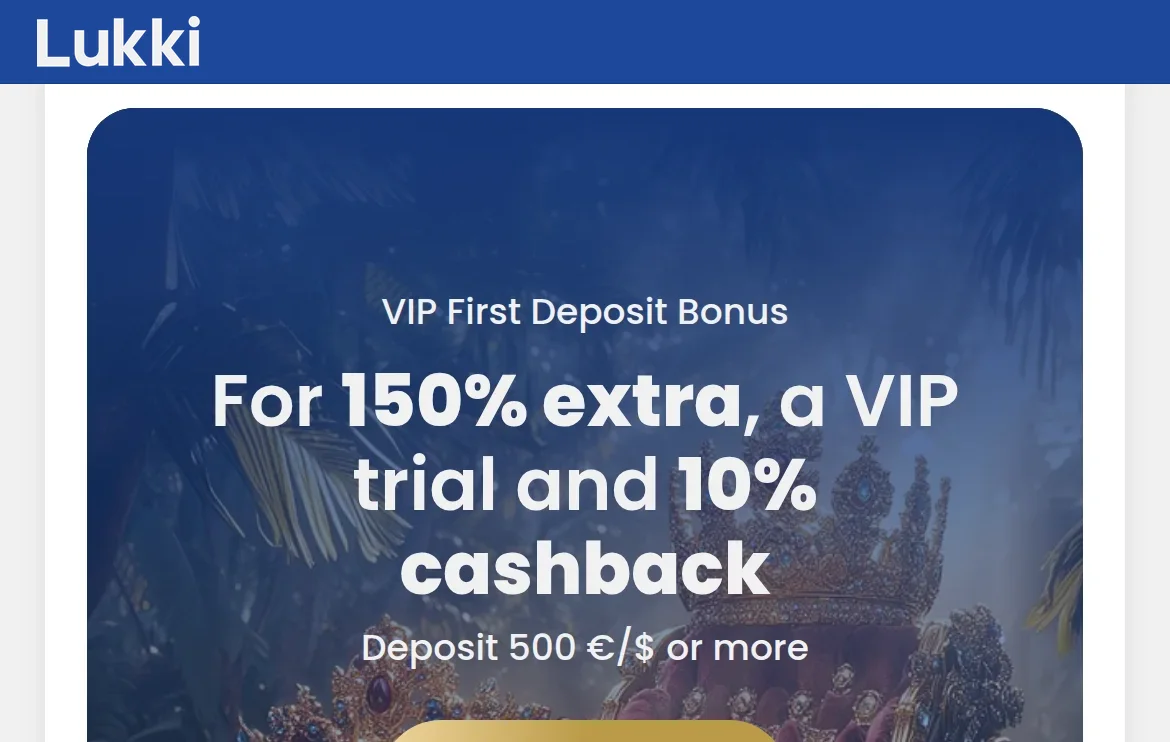
Lukki Casino has the largest headline package here, spread across four deposits.

- 14,000+ casino games
- 24/7 live chat support
- Crypto deposits accepted
ICE Casino offers up to €1,500 + 270 FS alongside its 3,500+ slot games.
- Welcome pack over 4 deposits
- 24/7 live chat and phone
- Crypto, Skrill and Neteller
Casumo keeps things simpler with 100% up to €300 and 50 spins on Wild Wild Riches.

- 53 game studios listed
- PayPal, Skrill & Neteller
- €10 debit card deposit
Pro tip: a multi-deposit package is only worth its full headline if you would make every qualifying deposit anyway. Compare offers on the first-deposit portion and the wagering multiple, not the total. A smaller offer with lighter wagering often delivers more usable value.
Wager-free play
Wager-free offers remove the rollover entirely: what you win from the free spins is yours to withdraw. They are smaller on paper but simpler, and they suit players who prefer to know exactly where they stand.
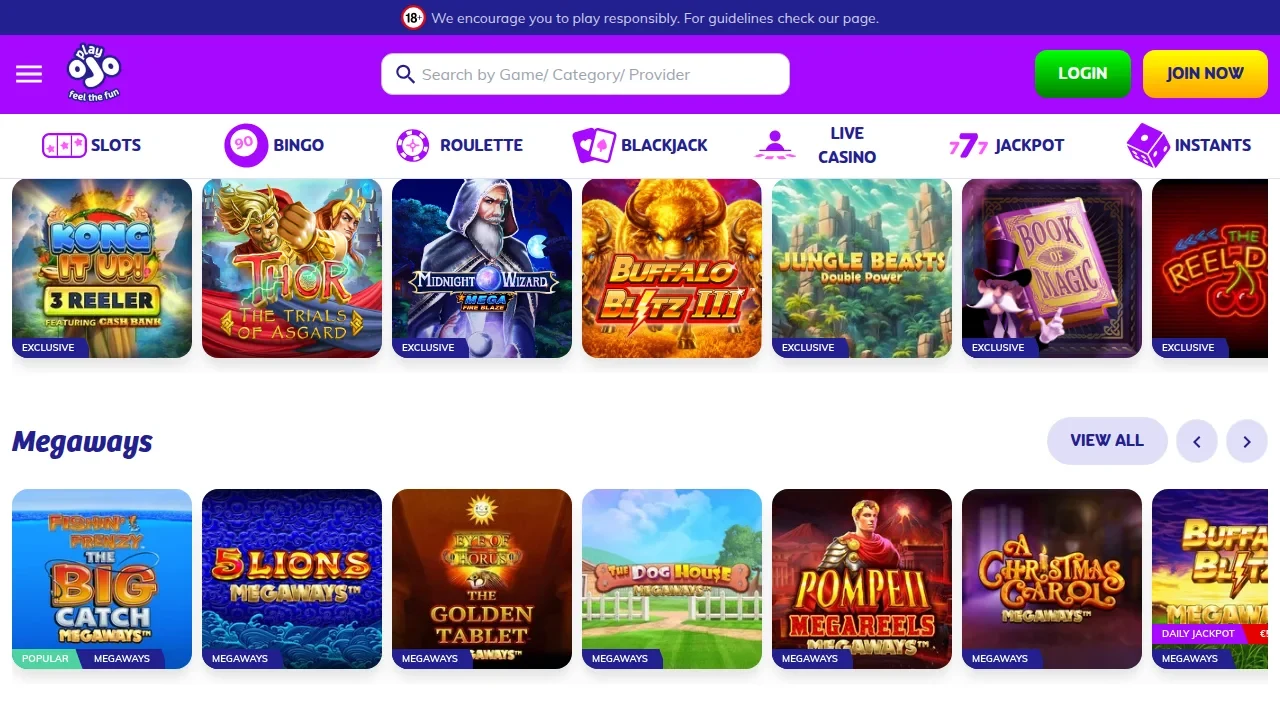
PlayOJO is built around this model, with no-wagering free spins and winnings paid as real cash.
- Min. deposit €10
- Over 80 Must Drop jackpots
- 24/7 live chat support
Crypto and payment choice
Payment flexibility is another area where international brands stand out. Alongside the methods Irish players use every day — debit card, PayPal, Apple Pay, Revolut, bank transfer and Paysafecard — several casinos accept cryptocurrency for both deposits and withdrawals.
- Duelbits: instant crypto cashier, 4,000+ games from 60+ studios.
- Puntit: crypto and PayPal deposits.
- 1xBet: 11 payment options listed.
- Roobet: crypto + fiat cashier.
- BitStarz: crypto-friendly across the board.
Duelbits suits players who want crypto withdrawals processed through a dedicated instant cashier.

- Instant crypto withdrawals
- 24/7 live chat and email
- Provably fair Originals
Puntit bridges both worlds, taking crypto and PayPal, with a €500 Starter Pack.

1xBet lists 11 payment options and a welcome offer of up to €1,500 + 150 FS.

- iOS and Android apps
- Weekly cashback offers
- 8 game studios listed
What changes when Irish remote gaming licences arrive
The GRAI expects to open remote gaming licensing in 2027-2028. Until then, online casino offered to Irish players runs on European licences such as the MGA. The betting side is already settled: since 1 July 2026, offering remote betting to Irish residents without a GRAI licence is an offence under s.67(1), and on 5 November 2026 the register showed 37 remote betting licences and 4 intermediary licences.
- Section 67(2), covering unlicensed remote gaming, has not yet been commenced.
- The Gaming and Lotteries Act 1956 remains in force alongside the 2024 Act.
- Section 75 lets the High Court order blocking and payment restrictions against operators offering or advertising unlicensed betting.
- Tax: winnings stay tax-free for players; the operator pays 2% Remote Betting Duty on bets from people in Ireland.
For players, the practical message is simple: keep using casinos whose licence you can check on a regulator’s registry, and keep an eye on GRAI announcements as the gaming licence framework takes shape.
Final word on casino licences for Irish players
A licence tells you who sets the rules and who you can turn to if something goes wrong. For Irish players in November 2026, the online casino market runs on international licences, and that market offers real advantages: catalogues of several thousand games, deeper live casinos, larger and more varied welcome offers, wager-free options and crypto payments. Check the licence once, set your limits on day one, and choose the casino whose product fits the way you play.
- Check: regulator, licence holder and registry page.
- Compare: catalogue, offer terms, payment methods and withdrawal times.
- Control: deposit limits and session reminders from the first session.
- Support: Gambling Care on 1800 936 725, free and open 24 hours.
Licence Holder Versus Brand Name: White Labels Explained
The casino name on your screen is often not the company that holds the licence. Much of the online casino industry runs on a white label model. A licensed platform provider supplies the software, payment processing, compliance systems and the licence itself. A separate business builds the brand, designs the site and handles marketing.
This matters for Irish players in three practical ways:
- Complaints go to the licence holder. If a dispute escalates to a regulator, the regulator deals with the licensed company, not the marketing brand. The company named in the footer and in the terms and conditions is the party responsible to you.
- One licence can cover dozens of sites. Brands sharing a licence holder often share account rules, verification procedures and withdrawal processes. A problem with one sister site can point to issues across the network.
- Self-exclusion may carry across. Some operators apply a self-exclusion to every brand under the same licence. Others do not. Check the terms before relying on it.
When you look at a casino, note the exact company name and registration number. Then compare them with the regulator’s register. If the brand does not appear under that company, or the company name differs between the footer and the terms, ask support to explain before you deposit.
UK, Gibraltar and Isle of Man Licences Compared
Many brands available to Irish players also hold licences from regulators close to home. Each works differently, so it helps to know what you are looking at.
- UK Gambling Commission (UKGC). This is one of the strictest regimes in Europe. It covers customers in Great Britain. A UKGC licence on a brand’s British site shows the operator can meet demanding standards. However, the UKGC does not automatically protect you as a player in Ireland. Your account is normally governed by the licence named in the terms for your jurisdiction.
- Gibraltar. The Gibraltar Licensing Authority and Gambling Commissioner license a small group of established operators. Many of them are large, long-running companies. Gibraltar licences are limited in number and have traditionally gone to businesses with a substantial local presence.
- Isle of Man. The Gambling Supervision Commission regulates operators based on the island. Its framework places strong emphasis on how player funds are held and on anti-money laundering controls.
The key point is that a brand’s best-known licence is not always the one covering your account. Always check which entity and which licence apply to customers in Ireland. The terms and conditions usually state this clearly in the opening clauses.
Game Fairness: Testing Labs and RNG Certification
A licence sets the rules. Independent testing laboratories check that the games follow them. Reputable regulators require casino games and random number generators (RNGs) to be certified by approved labs before release. Many also require periodic re-testing.
Well-known names in this field include eCOGRA, iTech Labs, Gaming Laboratories International (GLI) and BMM Testlabs. These organisations check three things:
- Outcomes are genuinely random and cannot be predicted.
- The game’s return to player (RTP) matches its stated value over a large sample.
- The game behaves as its rules and paytable describe.
As a player, you can look for:
- A testing certificate or seal that links to the lab’s own website, not just an image hosted by the casino.
- RTP information in each game’s help or information screen. Some slots come in several RTP versions, and the operator chooses which one to offer.
- Games from recognised studios. Established providers have their titles certified across multiple jurisdictions.
Certification does not mean you will win. It means the stated odds are real and the house edge works as advertised, with no hidden manipulation.
What Happens to Your Money If a Casino Loses Its Licence
Regulators can suspend or revoke licences for compliance failures, financial problems or breaches of player protection rules. Operators also close voluntarily. In either case, your balance is the main concern.
How well your money is protected depends largely on how the operator holds player funds. Some regulators require player balances to be kept separate from the company’s operating money. This segregation makes it harder for customer funds to be swallowed up if the business fails. The UKGC goes further and requires operators to tell customers how well their funds are protected, using rated levels. Other licensing regimes impose lighter requirements or leave it to the operator.
To reduce your exposure:
- Withdraw winnings regularly rather than leaving large balances sitting in your account.
- Read the terms on dormant and closed accounts so you know how balances are returned.
- Keep records of deposits, withdrawals and support conversations. Screenshots and emails help if you need to make a claim.
- Watch for warning signs. Sudden delays in withdrawals, unexplained changes to terms, or a brand moving to a different licence holder can all signal trouble.
If a casino announces it is closing, request a withdrawal of your full balance straight away. Contact the regulator named in its terms if the payment does not arrive.
Licences and Tax on Your Winnings in Ireland
A common question is whether the type of licence affects tax on what you win. For players in Ireland, the answer is generally reassuring. Winnings from gambling are not treated as taxable income for the player. This applies whether you play at an operator licensed in Malta, Gibraltar or elsewhere.
Gambling taxes in Ireland fall on operators through betting duty, not on the individual player’s winnings. That said, a few points are worth keeping in mind:
- Interest and investment returns are a separate matter. If you deposit winnings in a savings account or invest them, any interest or gains may be taxable under the normal rules.
- Professional gambling can raise different questions. If gambling is your trade rather than a pastime, seek proper tax advice.
- Large transfers may prompt questions from your bank. Anti-money laundering checks are common. Keeping withdrawal confirmations from the casino makes it easy to show where the money came from.
Rules can change, especially as Ireland’s new regulatory framework beds in. For anything beyond routine play, check guidance from Revenue or speak to a qualified tax adviser.