
Updated: 7 November 2026. Irish gambling law changed more in 2026 than in the previous seventy years. The Gambling Regulation Act 2024 (Act No. 35 of 2024) is now the main statute, the Gambling Regulatory Authority of Ireland (GRAI) is the regulator, and the betting side of the market moved to a new licensing system on 1 July 2026. Online casino is on a different timetable. Irish casino licences are not expected before 2027-2028.
This guide explains what the law says, who it applies to, how licences from Malta, Curaçao and Kahnawake compare, and what the international casinos we review offer an Irish player. Every legal claim is tied to the statute or an official source. Every brand figure comes from our own review data.
Irish gambling law at a glance
The table covers the facts most readers come for. Each row is explained in detail further down the page.
| Topic | Position in November 2026 | Source |
|---|---|---|
| Main law | Gambling Regulation Act 2024 (Act No. 35 of 2024) | Irish Statute Book |
| Regulator | Gambling Regulatory Authority of Ireland (GRAI) | Act 2024 |
| Legal age | 18+ (s.158) | Act 2024 |
| Remote betting | GRAI licence required since 1 July 2026 (s.67(1)) | Act 2024 |
| GRAI remote betting licences | 37, plus 4 intermediary licences (register at 5 November 2026) | GRAI register |
| Online casino | No Irish licence yet; GRAI remote gaming expected 2027-2028 | Act 2024 |
| Tax on player winnings | None (exempt from CGT) | Revenue |
| Operator betting duty | 2% Remote Betting Duty on stakes; 25% on intermediary commission | Revenue |
| Credit cards | Banned for gambling payments (s.165) | Act 2024 |
| National self-exclusion | In the Act (ss.44-49), not yet commenced | Oireachtas |
The legal framework: the Gambling Regulation Act 2024
Before 2024, Irish gambling law rested on three old statutes: the Betting Act 1931, the Gaming and Lotteries Act 1956 and the Betting (Amendment) Act 2015. None of them was written for smartphones, live dealer streams or crypto cashiers. The 2024 Act replaces most of that patchwork with one licensing system run by one regulator.
The Act is being switched on in stages through commencement orders. That detail matters: a section printed in the statute is not law in practice until the Minister commences it. Several of the provisions that get the most headlines, including the national exclusion register, are written but not yet active.
- Commenced and in force: the 18+ rule (s.158), the credit card ban (s.165), the parental-control link on licensed operators’ home pages (s.174), and the licensing requirement for remote betting (s.67(1)).
- Written but not yet commenced: the National Gambling Exclusion Register (ss.44-49) and the remote gaming offence in s.67(2).
- Still in force from the old regime: the Gaming and Lotteries Act 1956, until it is fully replaced.
What the GRAI does
The Gambling Regulatory Authority of Ireland is an independent statutory body. It issues licences, sets licence conditions, keeps a public register of licensees, and can investigate and sanction operators it licenses. It also has the power to seek court orders against unlicensed activity, which is covered in the next section.
- Licensing of betting, gaming and lotteries, in person and remote.
- Publishing the register of licence holders.
- Setting rules on advertising, sponsorship and promotions for licensees.
- Running the future National Gambling Exclusion Register once it is commenced.
- Applying to the High Court under s.75 against unlicensed providers and those who publicise them.
Betting and online casino: two different regimes in 2026
This is the single most misunderstood point in Irish gambling law right now. Sports betting and online casino are not in the same position, and most articles written before July 2026 are out of date.
| Question | Remote sports betting | Online casino (slots, table games, live dealer) |
|---|---|---|
| Irish licence available? | Yes, from the GRAI | Not yet; remote gaming licences expected 2027-2028 |
| Offering without an Irish licence | Criminal offence since 1 July 2026 (s.67(1)) | Not an offence under the 2024 Act yet (s.67(2) not commenced) |
| Old Revenue licences | Ended 30 June 2026 | Never existed for casino |
| Who serves Irish players today | 37 GRAI-licensed betting operators | Operators with European licences (MGA, Gibraltar and similar) and other international licences |
| Court blocking / payment orders | Available under s.75 | Available under s.75 once the relevant offence applies |
| Older law still relevant | Betting Acts largely replaced | Gaming and Lotteries Act 1956 still in force |
For online casino, then, there is no Irish-licensed product to compare against. Every online casino an Irish resident plays at today holds a licence from another jurisdiction. That is not a niche situation; it is the whole market until the GRAI opens remote gaming.
Pro tip: many international brands run a casino and a sportsbook under one account. Since 1 July 2026 the legal position of the two products differs in Ireland, so check which parts of a site are actually available to an Irish address before you register. What a brand advertises globally is not always what it offers to Irish residents.
Is it legal for you to play?
The 2024 Act regulates providers. The offence in s.67 is committed by the person who offers gambling without a licence, not by the person who places a bet or spins a slot. There is no offence in the Act for an adult in Ireland who plays at a casino licensed abroad.
What does apply to you as a player is the age rule. You must be 18 or over, and any reputable casino, wherever it is licensed, will verify your age and identity before you can withdraw. Lying about your age voids the account and any balance under every set of terms we have reviewed.
Tax on winnings
Irish players do not pay tax on gambling winnings. Betting and lottery winnings are exempt from Capital Gains Tax, as confirmed by Revenue. You do not declare a jackpot or a winning accumulator as income.
- Player: no tax on winnings, whether the operator is licensed in Ireland or abroad.
- Operator: 2% Remote Betting Duty on stakes placed by people in Ireland.
- Betting intermediaries (exchanges): 25% on the commission they earn.
Interest earned on money sitting in a bank account after a withdrawal is a separate matter and is taxed normally. The exemption covers the winnings themselves.
International licences compared: MGA, Curaçao, Kahnawake
A licence is a promise about who supervises the operator and what rules it signs up to. Licences differ in what they actually require, and it is more useful to compare them on those requirements than on vague reputation. The table below sets out the practical differences an Irish player will notice.
| Feature | Malta Gaming Authority (MGA) | Curaçao (Gaming Control Board, post-2023 regime) | Kahnawake Gaming Commission |
|---|---|---|---|
| Location | EU member state | Constituent country of the Kingdom of the Netherlands | Mohawk Territory, Quebec, Canada |
| Public licence register | Yes, searchable by company and domain | Yes, under the reformed system | Yes, list of permit holders |
| Player fund protection rules | Required, with segregation of player funds | Introduced with the reform; depends on licence terms | Set in commission regulations |
| Dispute route | Operator ADR, then complaint to the MGA | Operator complaint process, then the regulator | Complaint to the commission |
| Responsible gambling tools | Mandatory deposit limits, reality checks, self-exclusion at operator level | Required under the new framework | Required by regulation |
| Crypto payments | Restricted | Commonly permitted | Varies by permit holder |
| Typical brand profile | Large European casino groups | Crypto-first and high-volume international brands | Smaller number of established operators |
Malta Gaming Authority
The MGA is the most demanding of the three. Operators face capital requirements, regular audits, certified random number generators and rules on keeping player money apart from company money. Because Malta is inside the EU, an MGA operator also works under EU consumer and data protection law, which gives you GDPR rights over your account data.
The trade-off is product. MGA rules are stricter on crypto and on some bonus structures, so MGA casinos tend to lead on polish, game certification and payment speed in euro rather than on crypto or on the very largest welcome packages.
Curaçao
Curaçao reformed its system in 2023. The old model, where a handful of master licence holders issued sub-licences, has been replaced by direct licences from the regulator, with a public register and more detailed obligations on anti-money laundering, responsible gambling and complaints. A licence issued under the new regime is a different thing from a sub-licence issued years ago, and it is worth checking which one an operator holds.
Curaçao-licensed casinos are where most of the crypto cashiers, the largest game catalogues and the higher table limits are found. That is a deliberate product choice by operators, not a side effect.
Kahnawake
The Kahnawake Gaming Commission has licensed online gambling since the late 1990s. It publishes its permit holders and runs a complaints process. Fewer brands aimed at Irish players use it as their primary licence, so it appears more often as a secondary licence alongside another jurisdiction.
How to verify a casino licence, step by step
Checking a licence takes about five minutes and tells you exactly who you are dealing with. The process is the same for any jurisdiction.
- Scroll to the footer. Find the licensing statement. It should name the regulator and the company that holds the licence.
- Note the legal entity. Write down the exact company name and, if shown, the registration number. The brand name and the licensee are often different.
- Look for a licence number or seal. Many sites show a clickable seal. If a number is published, that is a sign of transparency and worth noting.
- Go to the regulator directly. Type the regulator’s address into your browser yourself rather than following the seal, then open its public register.
- Search by company and domain. Confirm the licensee is listed, the status is active, and the domain you are using appears on the licence where the register lists domains.
- Read the terms. The terms and conditions should name the same company and explain the complaints route, including any alternative dispute resolution body.
- Check the game certification. Look for an independent testing lab named in the footer or the fairness page.
If the operator does not publish a licence number, that alone is not a reason to walk away. Most international brands state the jurisdiction and the licensed company rather than a number. What matters is that the company named in the footer and in the terms is consistent and findable.
Pro tip: take a screenshot of the licensing footer and the terms page on the day you register, including the date. If a dispute ever reaches a regulator or ADR body, you will have a record of which company and which rules applied when you signed up.
For betting: checking the GRAI register
For remote sports betting the reference is the GRAI’s public register. At 5 November 2026 it listed 37 remote betting licences and 4 intermediary licences. The same method applies: search for the company, confirm the status, and match the domain.
- Search the GRAI register by the operator’s legal name.
- Check the licence type: remote betting or betting intermediary.
- Confirm the licence is current rather than pending or expired.
What international casinos offer Irish players
With no Irish casino licence in existence, the useful comparison is between international casinos themselves, and between their casino product and what Irish law allows licensed betting operators to do. On catalogue size, promotions, payment choice and table limits, international casinos give Irish players a wide range of options.
The table below uses figures from our own review data. Ratings are our editorial scores out of 100.
| Casino | Our rating | Headline offer | Key feature |
|---|---|---|---|
| LeoVegas | 87 | Up to €1,000 + 200 FS | 2,000+ games from 40+ studios |
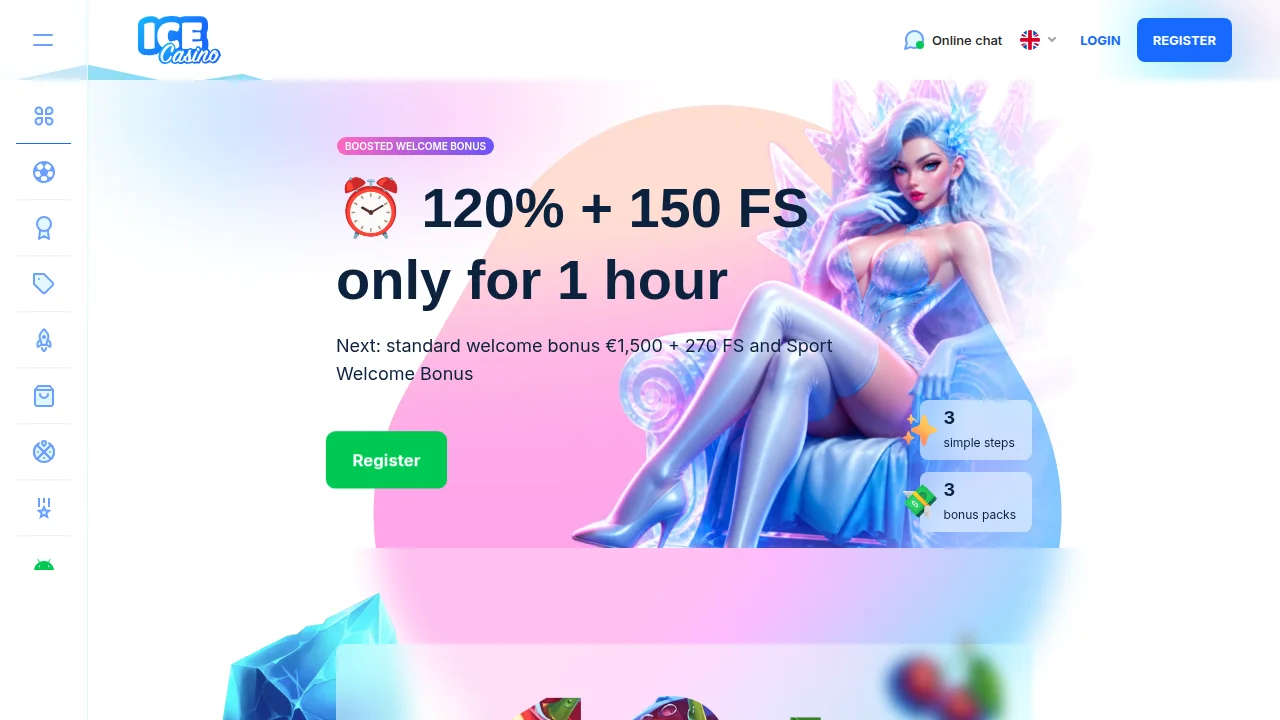
| ICE Casino | 87 | Up to €1,500 + 270 FS | 3,500+ slot games |
| Mr Green | 86 | €500 + 200 Free Spins | 2,000+ games, 24/7 support |
| BitStarz | 86 | €500 + 180 free spins | 9,000+ games, crypto-friendly |
| 22Bet | 85 | Up to €1,500 + 150 FS | About 9,000 casino games |
| Duelbits | 85 | Instant crypto cashier | 4,000+ games from 60+ studios |
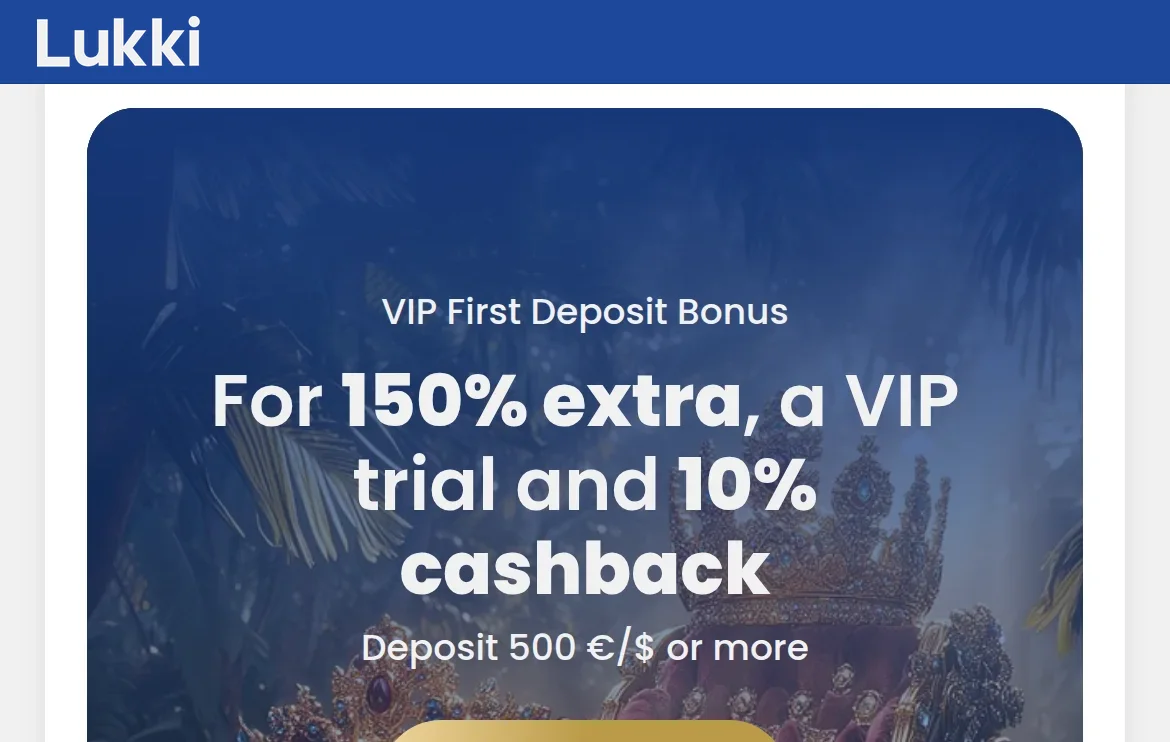
| Lukki Casino | 84 | €4,000 + 300 free | Four-deposit welcome offer |
| PlayOJO | 83 | No-wagering free spins | Winnings paid as real cash |
| Videoslots | 80 | Slot tournaments | Over 230 game providers |
Game catalogue size
Catalogue size is the clearest measurable difference between casinos. In our data, BitStarz lists 9,000+ games and 22Bet about 9,000 casino games. Videoslots works with over 230 game providers, the broadest studio list we have recorded, and Duelbits carries 4,000+ games from 60+ studios.
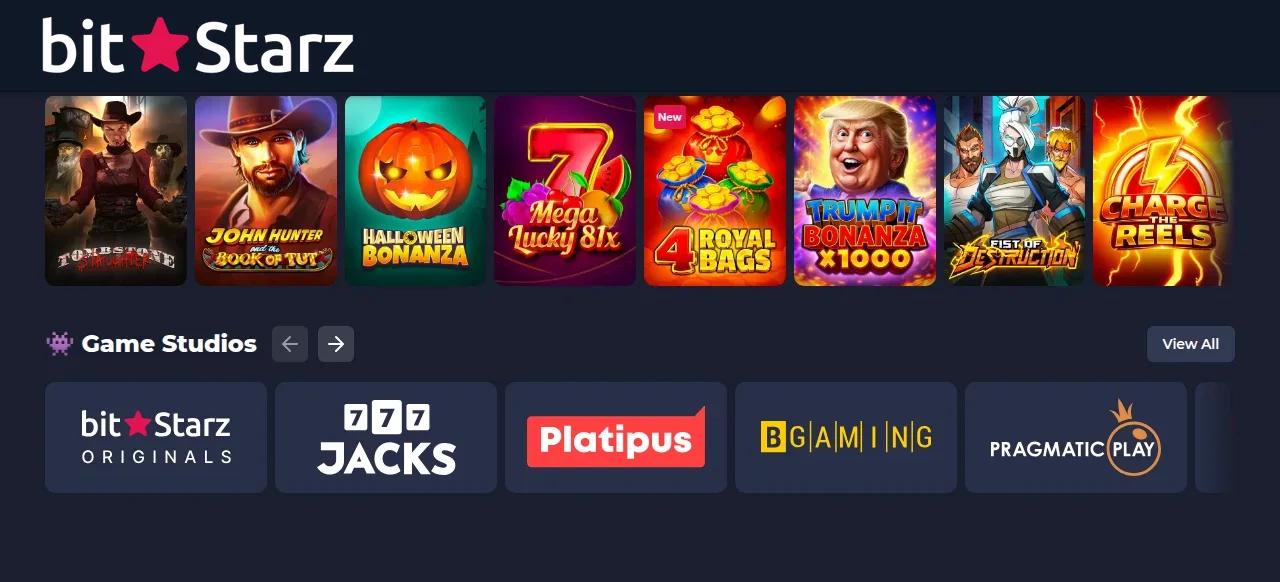
A larger catalogue matters for more than variety. More studios means more volatility profiles, more RTP versions to choose from, and access to niche content such as crash games, provably fair originals and game-show formats that smaller lobbies do not carry.
- Largest totals: BitStarz (9,000+) and 22Bet (about 9,000).
- Most providers: Videoslots (over 230).
- Slot-focused: ICE Casino with 3,500+ slot games.
- Curated lobbies: LeoVegas (2,000+ games from 40+ studios) and Mr Green (2,000+ games).
If you want the biggest library in a single account, BitStarz is the reference point in our reviews.

- 24/7 live chat support
- 180 free spins on deposit 1
- Cards, e-wallets and crypto
Bonuses and promotions
The 2024 Act restricts how licensed operators may use promotional inducements, and the GRAI sets advertising and promotion rules for its licensees. International casinos operate under their own licence rules, which is why multi-deposit welcome packages and large free spin bundles are still standard there.
| Casino | Casino welcome offer (from our data) | Offer type |
|---|---|---|
| Lukki Casino | €4,000 + 300 free | Four-deposit package |
| ICE Casino | Up to €1,500 + 270 FS | Deposit match plus spins |
| LeoVegas | Up to €1,000 + 200 FS | Deposit match plus spins |
| Mr Green | €500 + 200 Free Spins | Deposit match plus spins |
| Casumo | 100% up to €300 | Deposit match, plus 50 spins on Wild Wild Riches |
| PlayOJO | No-wagering free spins | Winnings paid as real cash |
The headline figure is only half the story. Lukki Casino spreads its €4,000 + 300 free across four deposits, so the full amount is only reached by claiming each stage. PlayOJO takes the opposite route: smaller in headline terms, but spin winnings are paid as real cash with no wagering requirement.
Pro tip: compare bonuses by the wagering requirement and the maximum bet allowed while the bonus is active, not by the headline. A no-wagering offer such as PlayOJO’s can return more real cash than a larger match bonus with heavy playthrough. Both details are in the bonus terms, usually in the first few clauses.
For the largest headline package in our data, Lukki Casino is the one to look at.

- 14,000+ casino games
- 24/7 live chat support
- Crypto deposits accepted
Live casino
Live dealer tables are where international casinos most clearly outclass anything a smaller lobby can offer. The large brands stream from multiple studios, run game shows alongside classic tables, and offer table limits from low entry stakes up to VIP levels on the same platform.
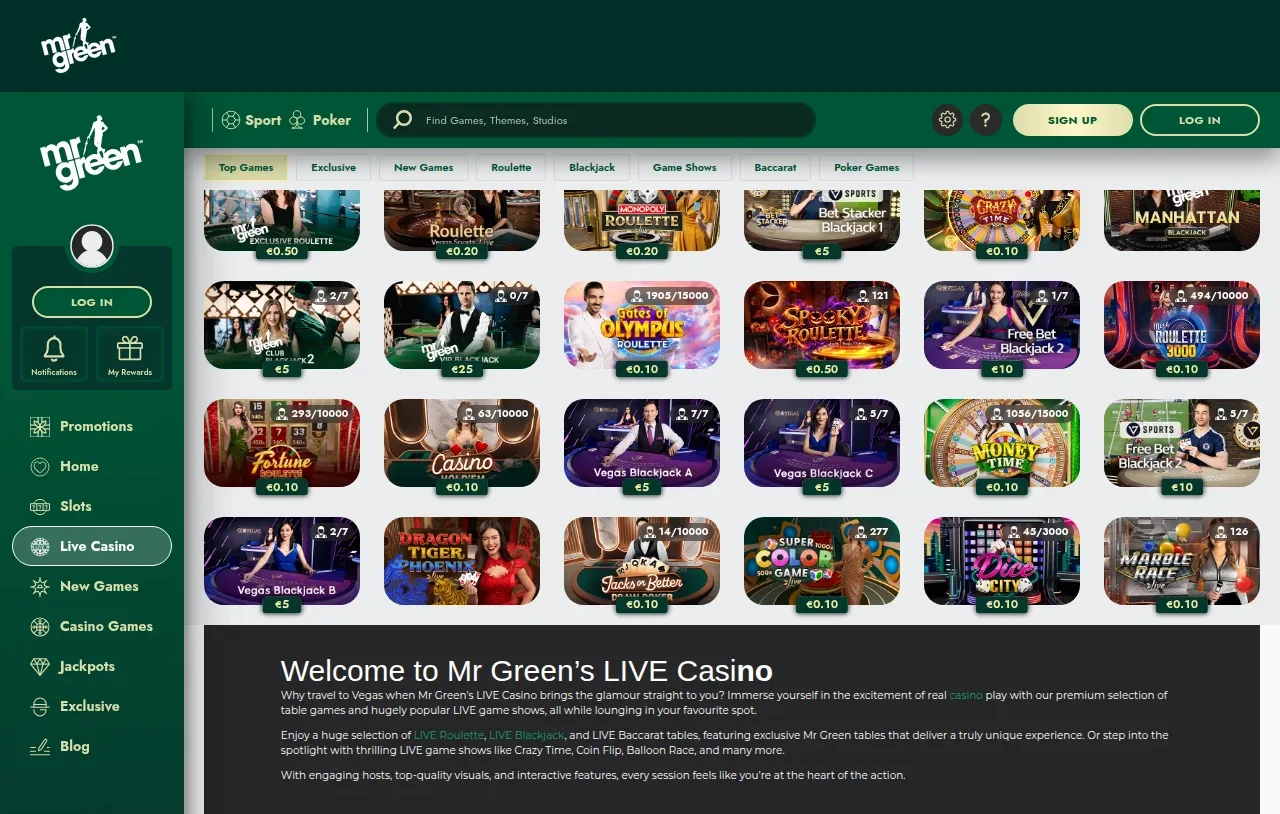
- Table variety: roulette in several formats, blackjack with standard and unlimited-seat tables, baccarat, poker variants and game shows.
- Limit range: the same lobby typically runs low-stake and high-limit tables side by side; limits are shown on each table before you sit.
- Support: Mr Green lists 24/7 support, useful if a live round is interrupted.
Higher table limits are information about the product, not a target. Set your own session budget before you open a live lobby; the table maximum is not a suggestion.

- 100% match up to €500
- 200 free spins included
- PayPal, Apple Pay & Trustly
Payments: euro methods and crypto
Irish law bans the use of credit cards for gambling (s.165). Within that rule, the methods Irish players use most are debit card, PayPal, Apple Pay, Revolut, bank transfer and Paysafecard. International casinos add crypto cashiers on top.
| Method | Typical use | Note for Irish players |
|---|---|---|
| Debit card | Deposits and withdrawals | Credit cards are banned; debit only |
| PayPal | Fast e-wallet deposits and withdrawals | Availability varies by casino |
| Apple Pay | Mobile deposits | Withdrawals usually go to another method |
| Revolut | Card or bank-based transfers | Widely used by Irish players |
| Bank transfer | Larger withdrawals | Slower but no e-wallet needed |
| Paysafecard | Prepaid deposits | Deposit only in most cashiers |
| Crypto | Deposits and fast withdrawals | Offered by crypto-first brands |
Duelbits is built around an instant crypto cashier, BitStarz is crypto-friendly, and Roobet runs a combined crypto and fiat cashier. Puntit accepts both crypto and PayPal deposits, and 1xBet lists 11 payment options.
For a crypto-first cashier, Duelbits is the clearest example in our reviews.

- Instant crypto withdrawals
- 24/7 live chat and email
- Provably fair Originals
Odds and margin: how to measure value
Where a site offers betting markets, the margin is the cleanest measure of value. You can calculate it yourself: divide 1 by each decimal price in a market, add the results, and subtract 1. On a two-way market priced 1.90 and 1.90, each side implies 52.6%, the total is about 105.3%, so the margin is about 5.3%.
- A lower total means a lower margin and better prices for the player.
- Compare the same market (for example, a Premier League match result) across sites at the same time.
- Margins usually widen on niche leagues and live markets.
Remember the legal split described above: since 1 July 2026, remote betting to Irish residents is reserved for GRAI licensees, so check what a given brand actually makes available to an Irish account.
Your rights as a player
Your rights depend on two things: Irish law, which applies to you as a consumer in Ireland, and the rules of the jurisdiction that licenses the casino. Together they give you a practical set of protections.
- Age and identity: you must be 18+ (s.158); the casino must verify you before paying out.
- Clear terms: bonus and withdrawal conditions must be published before you accept them.
- Data rights: MGA-licensed casinos are subject to GDPR, giving you access to and correction of your data.
- Complaints: first to the operator, then to its ADR body or regulator as stated in the terms.
- Responsible gambling tools: deposit limits, time-outs and self-exclusion at account level are standard at reputable casinos.
- No tax: your winnings are yours, exempt from CGT.
How a complaint works in practice
Most disputes concern withdrawals, verification documents or bonus terms. The route is the same at almost every reputable casino, and following it in order gives you the strongest position.
- Raise the issue with customer support by live chat or e-mail, and keep the reference number.
- Escalate in writing to the complaints department named in the terms.
- If unresolved within the stated period, refer it to the ADR body or regulator listed in the terms.
- Provide your screenshots, transaction IDs and the date-stamped terms you saved at registration.
Casumo, for example, sets out its offer of 100% up to €300 plus 50 spins on Wild Wild Riches in its terms, and those terms are the document any complaint about the bonus would be judged against. Reading them before claiming saves most disputes.
Responsible gambling: what is in force now
The National Gambling Exclusion Register is written into the Act (ss.44-49) but had not been commenced as of November 2026, so there is no national self-exclusion scheme yet. Account-level tools at each casino are therefore the main controls available, alongside free, confidential support services.
| Service | Contact | Hours |
|---|---|---|
| Gambling Care (Gambling Awareness Trust) | 1800 936 725 · gamblingcare.ie | Free, 24 hours |
| Extern Problem Gambling | 089 241 5401 · extern.org | See website |
| Gamblers Anonymous Ireland | +353 1 8721133 · gamblersanonymous.ie | 10:00-22:00, every day |
| HSE | www2.hse.ie | Public health information |
Set a deposit limit when you open any account, before you make the first deposit. Limits are easiest to set calmly at the start and, at most casinos, a lowered limit applies immediately while an increase takes a cooling-off period.
Beyond deposit limits, most international casinos offer a set of account tools. They are worth configuring in the same session as the deposit limit:
- Loss limits: cap net losses over a day, week or month. This is often more useful than a deposit cap, because it counts what has actually gone.
- Session reminders (reality checks): a pop-up every 30 or 60 minutes showing time played and net result.
- Session time limits: the account logs out automatically when the set time runs out.
- Time-outs: a short break of 24 hours to six weeks, during which the account cannot be used.
- Account self-exclusion: a longer block, usually six months to five years, which cannot be reversed early.
- Account closure: a permanent option. Ask support to confirm in writing that the closure is final.
Where these tools sit varies. Some casinos keep them under “Responsible Gaming” in the account menu, others under “Limits” or “Safer Play”. If a tool is not visible, live chat can usually apply it manually. A request to lower a limit or start a time-out should never need a justification.
Self-exclusion in Ireland: the current status
The Gambling Regulation Act 2024 creates a National Gambling Exclusion Register in sections 44 to 49. Those sections have not yet been commenced. As of November 2026, Ireland has no national self-exclusion scheme. Self-exclusion therefore works account by account and operator by operator, at both GRAI-licensed betting firms and international casinos.
Several other protections are already in force:
- Credit card ban (s.165): gambling with a credit card is prohibited. Debit cards, e-wallets and bank transfers remain available.
- Minimum age of 18 (s.158): under-18s may not gamble, and age checks form part of account verification.
- Parental control links (s.174): GRAI licensees must link to parental control software on their home page.
Where to get help
The services below are free, confidential and Irish. You do not need a diagnosis or a crisis to use them. Calling to check whether your own pattern looks normal is a perfectly good reason.
| Service | Contact | Details |
|---|---|---|
| Gambling Care (Gambling Awareness Trust) | 1800 936 725 | Free helpline, 24 hours · gamblingcare.ie |
| Extern Problem Gambling (formerly Problem Gambling Ireland) | 089 241 5401 | Support and counselling · extern.org/our-services/problem-gambling |
| Gamblers Anonymous Ireland | +353 1 8721133 | 10:00–22:00, every day · gamblersanonymous.ie |
| HSE | www2.hse.ie | Public health information and addiction services |
Risks of operators with no licence at all
The real risk is not where an operator is licensed. It is whether it is licensed anywhere. An MGA-licensed casino answers to an EU regulator with audit, anti-money-laundering and dispute obligations. A Curaçao or Kahnawake licensee answers to its own authority. A site with no licence of any kind answers to nobody. It can change terms mid-game, keep balances and disappear. Those are the operators to avoid.
The warning signs are concrete, and most can be checked in five minutes:
- No issuing authority named anywhere: no regulator, no licensed company and no registered address in the footer or the terms.
- A licence logo that leads nowhere: the seal is a static image instead of a link to a validation page on the regulator’s own domain.
- Games with no recognisable studio: unbranded slots whose return-to-player (RTP) figure cannot be checked against the provider’s published version.
- Terms that allow “voiding” winnings at the operator’s discretion, with no objective trigger such as a bonus rule breach.
- A withdrawal process that changes after deposit: new fees, new minimums or new document demands that did not appear at sign-up.
- No complaint route: no complaints procedure and no alternative dispute resolution (ADR) body named.
| What you can check | Internationally licensed casino | No licence anywhere |
|---|---|---|
| Named regulator and licensed company | Yes, in footer and terms | No |
| Certified games (RNG testing) | Required by the regulator | Unknown |
| Segregation or protection of player funds | Required under MGA rules; varies by jurisdiction | None |
| Escalation beyond the operator | Regulator and/or ADR body | None |
| Anti-money-laundering checks (KYC) | Mandatory | Inconsistent or absent |
Verification (KYC) is sometimes treated as a nuisance. In practice it protects you. A casino that asks for ID before the first withdrawal is following the rules its licence imposes. A site that pays anything to anyone, with no checks, is more likely to be one that eventually pays nobody.
Irish rules vs international casinos: what actually changes
Most readers comparing options want to know what is different in practice. For online casino, the honest starting point is that no GRAI casino licence exists yet. The GRAI will open remote gaming licensing in 2027–2028. So the comparison is between international casinos as they operate today and the direction the 2024 Act sets for Irish licensees.
The Act gives the GRAI wide powers to make rules on stakes, deposit limits, game design and promotions. It also restricts licensees from offering inducements, such as free bets or bonuses, designed to encourage people to gamble or keep gambling. The exact numeric caps for future casino licensees, such as a maximum stake per spin or a monthly deposit ceiling, have not yet been published. Any specific figure quoted online today is speculation.
| Area | Direction of the 2024 Act (Irish licensees) | International casinos today |
|---|---|---|
| Welcome bonuses | Inducements restricted by law | Multi-deposit packages are common, e.g. Lukki Casino’s €4,000 + 300 free |
| Stake and deposit limits | GRAI may set caps; figures not yet published | Set by the operator; player-set limits always available |
| Game catalogue | Depends on licensed suppliers once gaming licences open | From 2,000+ to 9,000+ titles; Videoslots lists over 230 providers |
| Payments | Credit cards banned (s.165) | Euro methods plus crypto at several operators |
| Live casino | Not yet licensed in Ireland | Full live lobbies with game shows, blackjack, roulette and baccarat |
For sports betting, the picture is different and already settled. Since 1 July 2026, offering remote betting to people in Ireland requires a GRAI licence (s.67(1)). On 5 November 2026 the register listed 37 remote betting licences. This guide’s comparisons therefore focus on the casino side of each operator. That is the area still served by European and international licences until Irish gaming licences open.
Bonuses: what the terms look like
International welcome offers come in three broad formats. Each one carries a different real value:
- Matched deposit + free spins: the casino matches a percentage of the deposit and adds spins. Casumo, for example, lists 100% up to €300. Check the wagering requirement and the maximum stake allowed while it applies.
- Multi-deposit packages: the offer is spread over several deposits. Lukki Casino’s is a four-deposit welcome offer. The headline total only applies if every stage is claimed.
- No-wagering offers: winnings from spins are paid as cash. PlayOJO’s model is built on this. The headline is smaller, but the value is easier to judge.
Two numbers decide whether a bonus is worth taking. The first is the wagering multiple: how many times the bonus, or bonus plus deposit, must be staked before it can be withdrawn. The second is the game weighting: slots usually count 100%, while table games may count 10% or nothing. A large offer with heavy wagering can be worth less than a smaller one with none.
The international casinos we review, side by side
The table below summarises the casinos reviewed on this site, using the headline offer and key feature from each review. Ratings are our own editorial scores out of 100. Bonus terms change often, so the full conditions in each review and on the casino’s own terms page take priority over any summary.
| Casino | Our rating | Headline offer | Key feature |
|---|---|---|---|
| LeoVegas | 87 | Up to €1,000 + 200 FS | 2,000+ games from 40+ studios |
| ICE Casino | 87 | Up to €1,500 + 270 FS | 3,500+ slot games |
| Mr Green | 86 | €500 + 200 Free Spins | 2,000+ games, 24/7 support |
| BitStarz | 86 | €500 + 180 free spins | 9,000+ games, crypto-friendly |
| 22Bet | 85 | Up to €1,500 + 150 FS | About 9,000 casino games |
| Duelbits | 85 | Instant crypto cashier | 4,000+ games from 60+ studios |
| 1xBet | 84 | Up to €1,500 + 150 FS | 11 payment options listed |
| Lukki Casino | 84 | €4,000 + 300 free | Four-deposit welcome offer |
| PlayOJO | 83 | No-wagering free spins | Winnings paid as real cash |
| Roobet | 81 | Crypto + fiat cashier | 15 top game studios |
| Puntit | 81 | €500 Starter Pack | Crypto & PayPal deposits |
| Casumo | 81 | 100% up to €300 | 50 spins on Wild Wild Riches |
| Videoslots | 80 | Slot tournaments | Over 230 game providers |
The largest game libraries
Catalogue size is one of the clearest differences between operators. BitStarz lists 9,000+ games, and 22Bet about 9,000 casino titles. Videoslots measures breadth by supplier rather than title count, with over 230 game providers. Duelbits combines 4,000+ games from 60+ studios. For slot-focused players, ICE Casino lists 3,500+ slot games alone.
A large library matters most if you play specific studios or want access to new releases on launch day. It also matters for RTP. The same slot can be offered at different RTP settings, so a casino carrying many studios gives more room to choose games with a higher configured return. The game’s info panel shows which version is loaded.
BitStarz combines its catalogue with a crypto-friendly cashier and a welcome offer of €500 + 180 free spins.
- 24/7 live chat support
- 180 free spins on deposit 1
- Cards, e-wallets and crypto
Live casino and established brands
LeoVegas and Mr Green are two of the longest-running names in European online casino. Both list 2,000+ games and complete live lobbies. LeoVegas draws on 40+ studios. Mr Green adds 24/7 support, which helps when a live table session raises a question late at night. Both operate from Malta, under the MGA framework described earlier.
The table limits on live dealer games are often what separates international casinos from more restricted markets. Roulette and blackjack tables usually range from low minimums to high-limit “salon privé” rooms. That is information about the product, not a reason to play at higher stakes. The limit tools described above apply to live games just as they do to slots.
Mr Green’s welcome offer is €500 + 200 Free Spins.
- 100% match up to €500
- 200 free spins included
- PayPal, Apple Pay & Trustly
LeoVegas’s promotions page lists its current welcome offer, up to €1,000 + 200 FS, together with ongoing campaigns.


- Wager-free Book of Dead spins
- 24/7 live chat in English
- PayPal, Trustly & Apple Pay
No-wagering and simple terms
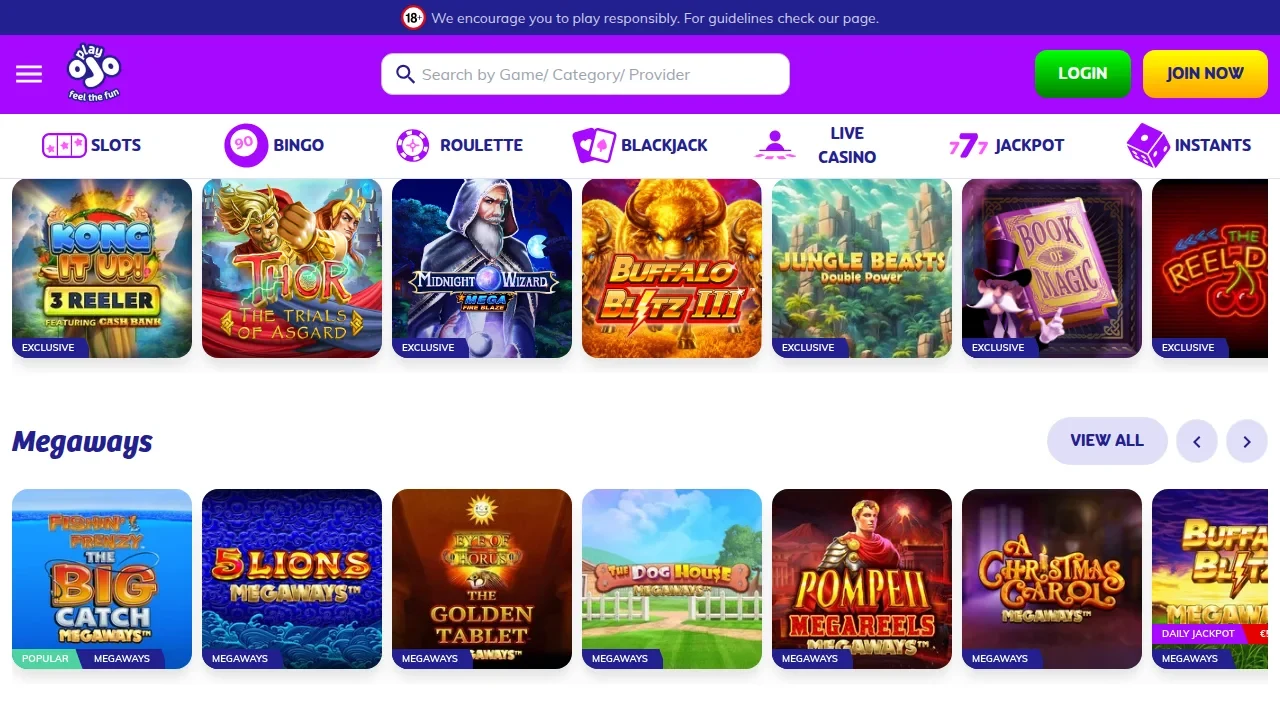
PlayOJO takes a different approach from the headline-bonus casinos. Its free spins carry no wagering requirement, and winnings are paid as real cash. The total looks smaller than a €1,500 package, but there is no wagering to clear and no maximum-bet trap. For players who care about clear terms, it is often the better value.
- Min. deposit €10
- Over 80 Must Drop jackpots
- 24/7 live chat support
Casumo sits in between. Its offer is 100% up to €300 plus 50 spins on Wild Wild Riches. Videoslots, meanwhile, puts slot tournaments ahead of a standard welcome bonus.
Crypto cashiers
Crypto payments are a key feature for some players, mainly for withdrawal speed. Duelbits is built around an instant crypto cashier. Roobet combines a crypto and fiat cashier with 15 top game studios. Puntit takes crypto and PayPal deposits and offers a €500 Starter Pack. BitStarz, as covered above, is crypto-friendly across its catalogue.
- Speed: once a withdrawal is approved, blockchain transfers often settle in minutes, compared with one to several working days for bank transfers.
- Volatility: the euro value of a coin can move between deposit and withdrawal. Stablecoins pegged to the euro or dollar reduce this.
- Tax: gambling winnings are exempt from CGT in Ireland. Selling crypto that has risen in value can be a separate taxable gain, so keep records.
- Verification: crypto casinos with a licence still apply KYC checks, particularly on larger withdrawals.
- Instant crypto withdrawals
- 24/7 live chat and email
- Provably fair Originals
Multi-product operators
22Bet and 1xBet are large multi-product brands. On the casino side, both list a welcome offer of up to €1,500 + 150 FS. 1xBet lists 11 payment options. Lukki Casino has the largest headline package among the brands we review: €4,000 + 300 free, spread across four deposits. For sports betting, remember the Irish rule covered earlier: from 1 July 2026, remote betting offered to residents requires a GRAI licence.
- 14,000+ casino games
- 24/7 live chat support
- Crypto deposits accepted
Paying safely from Ireland
Most international casinos that accept Irish players work in euro. The methods below are the ones Irish players use most. Credit cards are not on the list because s.165 bans them for gambling.
| Method | Deposits | Withdrawals | Worth knowing |
|---|---|---|---|
| Debit card (Visa/Mastercard) | Instant | Typically 1–5 working days | Most widely accepted; banks may offer a gambling block |
| PayPal | Instant | Often within 24 hours after approval | Not available at every operator |
| Apple Pay | Instant | Usually returned to the linked card | Deposit-only at many casinos |
| Revolut | Instant | Fast via card or bank rails | In-app gambling block available |
| Bank transfer | Same day to 2 days | 1–5 working days | Useful for larger withdrawals |
| Paysafecard | Instant, prepaid | Not possible; another method is needed | Good for budgeting; plan your withdrawal route |
Withdrawal times have two parts: the casino’s internal approval and the payment method’s own transfer time. The second part is fixed by the method. The first depends on the operator and on whether verification is already done. Look for a “pending period” in the terms, the window in which a withdrawal can be reversed, and check whether it can be skipped.
What happens next: the 2027–2028 timeline
Irish gambling law is mid-transition. Betting moved fully to GRAI licensing on 1 July 2026. Casino follows. These are the milestones to watch, and their status as of November 2026:
| Milestone | Legal basis | Status (November 2026) |
|---|---|---|
| GRAI licence required for remote betting | s.67(1) | In force since 1 July 2026 |
| Revenue remote betting licences end | Transition | Ended 30 June 2026 |
| High Court blocking and payment orders | s.75 | Available against unlicensed betting |
| GRAI remote gaming (casino) licences | s.67(2) | Not commenced; expected 2027–2028 |
| National Gambling Exclusion Register | ss.44–49 | Not commenced |
| Credit card ban, 18+, parental control links | ss.165, 158, 174 | In force |
Until s.67(2) is commenced, offering online casino to people in Ireland is not an offence under the 2024 Act. The older Gaming and Lotteries Act 1956 remains on the statute book, but it was written for physical gaming. Casino play from Ireland currently runs on European and international licences. When GRAI gaming licences open, some operators will apply and others will not. This guide will be updated as each section commences.
The bottom line
Irish gambling law in 2026 has two speeds. Remote betting is now a GRAI-licensed market. Online casino will not have an Irish licence until 2027–2028, and until then it runs on European and international licences. For Irish players, that means access to large game libraries, full live casinos, euro and crypto cashiers, and bonus formats ranging from no-wagering spins to multi-deposit packages.
The practical checklist is short:
- Confirm the licensing authority and licensed company using the steps above.
- Read the wagering requirement and maximum-bet rule before accepting any bonus.
- Complete verification early so your first withdrawal is not delayed.
- Set deposit and loss limits when you open the account.
- Keep the Gambling Care number, 1800 936 725, close at hand. It is free and open 24 hours.
Every casino named in this guide has a full review on this site, covering its catalogue, cashier, terms and support in detail.
How Irish Gambling Law Evolved Before 2024
The Gambling Regulation Act 2024 replaced a patchwork of statutes that had built up over almost a century. Knowing what came before explains why the old system was widely seen as unfit for online gambling, and why some long-standing practices are now changing.
The Betting Act 1931
For decades, the Betting Act 1931 was the foundation for bookmaking in Ireland. It set up a licensing system for bookmakers and their premises, with permits and licences handled by the Gardaí and the Revenue Commissioners. It was written for a world of racecourses and high-street betting shops, and it said nothing about remote or digital betting, which did not yet exist.
The Gaming and Lotteries Act 1956
The Gaming and Lotteries Act 1956 covered gaming and lotteries more broadly: slot-style machines, amusement halls, funfairs, raffles and charitable lotteries. Its approach was restrictive. The earlier framework predated online play and simply had no category for remote gaming; the 2024 Act creates one, and it opens in 2027-2028. This gap is why “private members’ clubs” grew up in Irish cities, operating in a legal grey area rather than under a dedicated casino licence.
Patching the gaps: 2013, 2015 and 2019
Three later laws tried to modernise parts of the system without replacing it:
- The National Lottery Act 2013 set up a separate licensing model for the National Lottery, supervised by the Regulator of the National Lottery.
- The Betting (Amendment) Act 2015 brought remote bookmakers and betting exchanges taking bets from people in Ireland into the licensing and tax net, so online sportsbooks serving Irish customers needed an Irish remote licence and had to pay betting duty.
- The Gaming and Lotteries (Amendment) Act 2019 updated the 1956 Act, raising long-outdated stake and prize limits, tightening the rules for gaming machine permits, and giving local authorities a clearer role in deciding whether gaming machines are allowed in their area.
Even after these changes, online casino games were not covered by a dedicated licensing regime. Responsibility was split between several bodies, including the Department of Justice, the Revenue Commissioners, An Garda Síochána and the District Courts, and there was no single regulator with real enforcement powers. The 2024 Act was designed to end that fragmentation.
Advertising, Sponsorship and Bonus Rules
Some of the most noticeable changes for ordinary people in Ireland concern how gambling is marketed. The 2024 Act contains some of the strictest advertising provisions in Europe. Some of these rules are being brought into force in stages, so the exact start date for each obligation depends on commencement orders and on the regulator’s own codes.
The broadcast watershed
The Act provides for a ban on gambling advertising on television, radio and audiovisual on-demand services between 5:30am and 9pm. Outside those hours, adverts are still allowed but must follow content rules. The aim is to reduce children’s exposure, since daytime and early-evening schedules include family viewing and most live sport.
Content restrictions
Under the new framework, gambling advertising must not:
- be aimed at, or be especially appealing to, children;
- suggest that gambling can solve financial or personal problems, or is a route to social or sexual success;
- exaggerate the chances of winning or play down the risks;
- encourage excessive or compulsive gambling.
Licensed operators must also include safer gambling information in their advertising, in a form set by the regulator.
Online marketing and consent
Licensed operators need a person’s explicit consent before sending direct marketing. People must be able to choose which kinds of gambling they want to hear about and to withdraw consent easily. Online platforms and social media advertising are covered too: gambling adverts should be shown only to users who have chosen to see them.
Sponsorship
The Act restricts sponsorship involving children. Gambling brands may not sponsor events aimed at or mainly attended by children, and gambling logos may not appear on children’s clothing, including replica sports jerseys in children’s sizes. Sponsorship of adult sport is still allowed, but it is now subject to rules that did not exist under the old statutes.
Free bets and inducements
For licensed operators, the Act bans many common promotional tools: free bets, free spins, bonus credit and similar offers designed to encourage someone to start or keep gambling. Loyalty and VIP-style schemes that reward people for gambling more are also targeted. This is one of the clearest differences between the Irish-licensed market and the welcome packages that some offshore operators still promote. Under Irish law, an offer being widely advertised does not make it compliant.
Tax on Gambling in Ireland
Tax is one of the most common questions from Irish players, and the answer for individuals is simpler than in many other countries.
Players: winnings are not taxed
In Ireland, gambling winnings are generally not subject to income tax or capital gains tax for individuals who gamble recreationally. A win on a sportsbook, a jackpot on a casino game or a Lotto prize does not normally need to be declared as income. This applies whether the operator is Irish or based abroad.
There are some practical points to keep in mind:
- Interest and investment returns are a separate matter. If winnings are placed in a savings account or invested, any interest, dividends or gains that money produces can be taxable under the normal rules.
- Gifts of winnings to family or friends may fall under Capital Acquisitions Tax for the person who receives them, depending on the amount and on the relationship between the people involved.
- Professional gambling as a trade is a grey area. Revenue looks at the facts of each case, and anyone who considers gambling their main source of income should get professional tax advice.
Operators: betting duty and other levies
The tax burden falls on operators. Bookmakers, both retail and remote, pay betting duty on bets placed by people in Ireland. Since 2019 the rate has been 2% of turnover. Betting intermediaries, such as exchanges, pay duty on the commission they earn. Gaming machines and amusement machines are subject to licence duties. Under the 2024 Act, licensed operators will also have to contribute to the Social Impact Fund, which is intended to pay for problem gambling research, education, awareness and treatment.
For players, these duties are mostly invisible. They can, however, affect the odds and margins an operator offers, and they are one reason why operators sometimes structure their Irish offering differently from their offering in other markets.
Land-Based Gambling: Bookmakers, Arcades and Clubs
Most of this guide is about online play, but the 2024 Act also covers in-person gambling, and the land-based sector has its own history and quirks.
Betting shops and racecourses
- Betting shops are a familiar part of Irish towns.
- They have historically been licensed under the Betting Act 1931.
- Under the new regime, in-person betting moves into the GRAI’s licensing system, with the same core obligations on age checks, safer gambling and anti-money laundering that apply online.
- On-course bookmakers at racecourses and greyhound tracks also come under the new licensing structure.
- The Tote, the pool betting system at Irish racecourses, has historically operated under its own legislation linked to Horse Racing Ireland.
Gaming machines and amusement arcades
Gaming machines, the cash-prize machines found in arcades and some other premises, were regulated under the 1956 Act as amended in 2019. That framework relied on permits and on local authorities deciding whether to allow gaming machines in their area at all. As a result, the availability of arcades varies a great deal from one county to another. Under the 2024 Act, gaming machines operated by licensees are brought under the national regulator, and specific rules on stakes, prizes and machine standards are set through the licensing regime.
Private members’ clubs
Ireland has never had a traditional licensed casino sector. The proposal for a “super casino” in Tipperary in the early 2010s never went ahead. Instead, venues offering card games and table games operated as private members’ clubs, relying on the ambiguities of the 1956 Act. The 2024 Act is meant to end this ambiguity by requiring anyone offering gambling to hold an appropriate licence. Venues that cannot fit within the new licence categories will face a choice between adapting and closing.
Age limits in person
- The minimum age for gambling in Ireland is 18, both online and in person.
- Under the new law, staff must refuse service to anyone who appears underage and cannot prove their age.
- Letting a child gamble is a criminal offence for the operator.
Lotteries, Raffles and Charity Gaming
Lotteries in Ireland follow a partly separate legal track. This matters for clubs, schools and charities as well as for players.
The National Lottery
The National Lottery is run under a state-granted licence, currently held by Premier Lotteries Ireland, and is supervised by the Regulator of the National Lottery under the National Lottery Act 2013. Its games, including Lotto, EuroMillions and scratchcards, are not part of the GRAI’s licensing regime in the same way as commercial gambling. A share of its revenue goes to good causes. The rules for buying tickets, including the minimum age of 18, are set by the National Lottery framework.
Charitable and club lotteries
Raffles and lotteries run by GAA clubs, sports clubs, parishes, schools and charities have long relied on the Gaming and Lotteries Act 1956 as amended, with permits issued by the Gardaí for smaller lotteries and licences from the District Court for larger ones. The 2024 Act brings charitable and philanthropic gambling into the GRAI’s remit through a dedicated licence category. Its stated aim is to support legitimate fundraising while making sure funds actually reach the intended causes and that the activity is properly supervised.
Lottery betting
- Betting on the outcome of a lottery draw, rather than buying an official ticket, is a separate product offered by some operators.
- In Ireland it is treated as betting, not as participation in the National Lottery.
- People who use it should understand that any winnings are paid by the betting operator, not by the lottery itself.
Safer Gambling Tools and Where to Get Help in Ireland
The 2024 Act places safer gambling at the centre of the new system. Some protections apply automatically, while others depend on people knowing they exist.
The National Gambling Exclusion Register
The Act provides for a National Gambling Exclusion Register run by the GRAI. A person who adds themselves to it can be excluded from all licensed gambling services in Ireland at once, rather than having to contact operators one by one. Licensees must check the register and refuse to serve anyone on it. It is important to know that the register binds only operators licensed in Ireland. The national register will cover GRAI licence holders; with internationally licensed sites you set the same limits directly in each account, and the tools are described in every review on this site.
Mandatory operator safeguards
Under the new regime, licensed operators must provide tools such as:
- deposit and spending limits set by the player;
- clear information on time spent and money spent;
- self-exclusion directly with the operator;
- a ban on gambling with credit cards;
- systems to identify and respond to signs of harmful gambling.
The regulator can also set rules on game design, for example limits on features that speed up play or blur the line between winning and losing.
Signs that gambling is becoming a problem
Common warning signs include chasing losses, gambling with money set aside for bills, borrowing to gamble, hiding gambling from family, feeling anxious or irritable when not gambling, and needing to stake more to get the same excitement. Any of these is a reason to pause and use the tools above or to seek support.
Support services in Ireland
- HSE Drugs and Alcohol Helpline (freephone 1800 459 459): offers confidential support and referrals, including for gambling problems.
- Gamblers Anonymous Ireland: runs peer support meetings around the country.
- Problem Gambling Ireland: provides information and counselling for people affected by gambling, including family members.
- Extern Problem Gambling: offers support services for people experiencing gambling harm and for those close to them.
- Your GP: can be a first point of contact and can refer you to addiction services.
Practical tools can also help: blocking software that stops access to gambling sites on your devices, and gambling transaction blocks offered by several Irish banks through their apps. These work whether or not the operator is licensed in Ireland, which makes them especially useful for anyone who has played on international sites.
Key Terms in Irish Gambling Law: A Glossary
Irish gambling regulation uses a number of specific terms. This short glossary explains the ones you are most likely to come across.
- GRAI: the Gambling Regulatory Authority of Ireland, the independent body set up under the 2024 Act to license, supervise and enforce gambling law.
- B2C licence: a business-to-consumer licence for operators offering gambling directly to the public, covering betting, gaming or lotteries, in person, remotely or both.
- B2B licence: a business-to-business licence for suppliers, such as game developers and platform providers, whose products are used by licensed operators.
- Charitable/philanthropic licence: the licence category for fundraising lotteries and gaming run for good causes.
- Remote gambling: gambling carried out over the internet, phone or any other remote channel, as opposed to in person.
- Betting intermediary: a platform, such as a betting exchange, that lets people bet against each other and takes a commission.
- Betting duty: the tax operators pay on bets placed from Ireland, charged on turnover for bookmakers and on commission for intermediaries.
- Social Impact Fund: a fund financed by licensee contributions to support research, education and treatment related to gambling harm.
- Exclusion register: the national self-exclusion system that all Irish-licensed operators must check.
- Watershed: the period from 5:30am to 9pm during which gambling advertising on TV, radio and on-demand services is prohibited.
- Inducement: any offer, such as a free bet, bonus or free spin, designed to persuade someone to gamble or to keep gambling. These are restricted for Irish licensees.
- Commencement order: a ministerial order bringing specific sections of an Act into force. Many provisions of the 2024 Act take effect through these orders rather than all at once.
Knowing these terms makes it easier to read operator terms and conditions, GRAI announcements and news coverage, and to tell whether a site you are considering actually meets Irish requirements.