

Payment Methods for Irish Betting and Casino Sites: What International Brands Offer
Irish players who use internationally licensed casinos are usually comparing three things: how much they can move in and out, how quickly, and with which methods. The answer varies a great deal between operators. Some cashiers stop at debit cards and bank transfers. Others list e-wallets, prepaid vouchers and a dozen cryptocurrencies, with withdrawal ceilings well above what a domestic betting account normally allows.
This guide covers the payment methods Irish players actually use, how each one behaves at international sites, and what the legal framework says. It also explains how to check a licence yourself.
The methods that matter most in Ireland are:
- Debit card (Visa Debit, Mastercard Debit). Credit cards are banned under the Irish framework.
- PayPal, which is widely trusted and fast for withdrawals where it is offered.
- Apple Pay, a card deposit through your phone’s wallet in one tap.
- Revolut, very common among Irish account holders and usually processed as a card or an instant bank payment.
- Bank transfer (SEPA), which is slower but has high ceilings.
- Paysafecard, a prepaid voucher used for deposits only.
- Cryptocurrency, available at crypto-focused international brands, often with the shortest withdrawal times.
Quick comparison of the main methods
| Method | Deposit | Withdrawal | Typical speed (withdrawal) | Best suited to |
|---|---|---|---|---|
| Debit card | Yes | Usually yes | 1–5 banking days | Everyday use, universal acceptance |
| PayPal | Yes, where offered | Yes | Same day to 2 days | Speed and keeping card details private |
| Apple Pay | Yes | Rarely; paid back to the card | Follows the card | Quick mobile deposits |
| Revolut | Yes | Yes, as a card or bank account | Often within hours once approved | Irish users who budget in-app |
| Bank transfer | Yes | Yes | 1–5 banking days | Large withdrawals |
| Paysafecard | Yes | No | Not applicable | Fixed-amount, card-free deposits |
| Crypto | Yes, at crypto cashiers | Yes | Minutes to a few hours after approval | High ceilings and fast payouts |
Speeds are typical ranges seen across the market, not guarantees from any one operator. The operator’s own approval time, known as the pending period, usually matters more than the method.
The Legal Framework in Ireland: Facts Without Spin
Gambling in Ireland is governed by the Gambling Regulation Act 2024 (Act No. 35 of 2024). The regulator is the Gambling Regulatory Authority of Ireland (GRAI). The Act is being commenced in stages, so what applies on 7 November 2026 is not the same as what applied a year ago or will apply in 2028.
Betting: licensed operators only since 1 July 2026
Since 1 July 2026 it is an offence to offer remote betting to people in Ireland without a GRAI licence (s.67(1)). The old remote licences issued by Revenue ended on 30 June 2026. Under s.75 the High Court can order blocking and the cutting of payment services to anyone who offers or advertises unlicensed betting.
- On 5 November 2026 the GRAI register listed 37 remote betting licences and 4 betting intermediary licences.
- The offence falls on the operator. The Act does not make it a crime for a player to place a bet.
- Payment blocking under s.75 targets the operator’s payment routes. It is a court process, not an automatic ban.
Online casino: no Irish licence exists yet
The GRAI will only open remote gaming licences in 2027–2028. Until then, online casino games offered to Irish players run on European licences: the Malta Gaming Authority, Gibraltar, and others. Offering online casino to Irish residents is not yet an offence under the 2024 Act, because s.67(2) has not been commenced. The Gaming and Lotteries Act 1956 remains in force.
In practice, every online casino an Irish player uses today is licensed outside Ireland. That makes this the casino market, not a fallback from it.
| Area | Status in November 2026 | Legal basis |
|---|---|---|
| Remote betting | GRAI licence required; offence for unlicensed operators | s.67(1), from 1 July 2026 |
| Blocking and payment cut-off | Available by High Court order | s.75 |
| Online casino | No Irish licence yet; operates on European licences | s.67(2) not commenced; 1956 Act in force |
| Credit cards | Banned for gambling | s.165 |
| Minimum age | 18+ | s.158 |
| National self-exclusion register | In the Act but not yet commenced | ss.44–49 |
Tax on winnings
Irish players pay no tax on betting and lottery winnings, which are exempt from Capital Gains Tax. The operator pays 2% Remote Betting Duty on bets placed by people in Ireland, or 25% of the commission for betting intermediaries. Withdrawing €1,250.50 to your debit card is therefore not a taxable event for you, whichever method you use.
Pro tip: Keep your cashier history, which most sites let you download, together with your bank statements. Winnings are tax-free, but a clear record makes it easy to explain large incoming payments if your bank ever asks where funds came from.
What Changes at International Brands Compared with the Local Framework
Readers comparing offers want specifics, not reassurance. The 2024 Act lets the GRAI attach conditions to licences, covering promotions, inducements and spending controls. Domestic licensees work within those conditions. International casinos follow the rules of their own regulator. That is why the product feels different.
| Feature | GRAI-licensed betting sites | International brands on our list |
|---|---|---|
| Casino catalogue | Casino not yet licensable in Ireland | 2,000+ to 9,000+ games; Videoslots lists over 230 providers |
| Welcome offers | Tighter promotion rules under the Act | Matched deposits plus free spins, multi-deposit packages, no-wagering spins |
| Payment range | Cards, e-wallets, bank transfer | Same, plus crypto cashiers at several brands |
| Deposit and withdrawal ceilings | Set by licence conditions and operator policy | Set by operator and licence; crypto cashiers usually allow higher amounts |
| Credit cards | Banned (s.165) | Use debit or other methods; this guide covers only lawful methods |
Catalogue size, in numbers
Provider count is the clearest difference. Here is what our published reviews record:
- Videoslots: over 230 game providers.
- BitStarz: 9,000+ games, crypto-friendly cashier.
- 22Bet: about 9,000 casino games.
- Duelbits: 4,000+ games from 60+ studios.
- ICE Casino: 3,500+ slot games.
- LeoVegas: 2,000+ games from 40+ studios.
- Mr Green: 2,000+ games with 24/7 support.
Odds margins: how to measure them yourself
Margin is the bookmaker’s built-in edge. You can calculate it from any two-way market. Add up 1 divided by each price, then subtract 1.
- Prices of 1.91 / 1.91: (0.5236 + 0.5236) − 1 = 4.7% margin.
- Prices of 1.95 / 1.95: (0.5128 + 0.5128) − 1 = 2.6% margin.
- On a €100 stake at evens, 1.95 returns €195 against €191 at 1.91, a €4 difference on the same outcome.
Lower margins are information, not a reason to bet more. Compare the same market at the same moment, because prices move.
Bonuses that are still on offer
International brands keep offer formats that have become rare elsewhere. Whatever the headline figure, check the wagering requirement and which payment methods qualify. Some cashiers exclude e-wallets or prepaid vouchers from welcome bonuses.
| Brand | Offer (as listed in our data) | Highlight |
|---|---|---|
| Lukki Casino | €4,000 + 300 free | Four-deposit welcome offer |
| ICE Casino | Up to €1,500 + 270 FS | 3,500+ slot games |
| 22Bet | Up to €1,500 + 150 FS | About 9,000 casino games |
| 1xBet | Up to €1,500 + 150 FS | 11 payment options listed |
| LeoVegas | Up to €1,000 + 200 FS | 2,000+ games from 40+ studios |
| Mr Green | €500 + 200 Free Spins | 2,000+ games, 24/7 support |
| BitStarz | €500 + 180 free spins | 9,000+ games, crypto-friendly |
| Puntit | €500 Starter Pack | Crypto & PayPal deposits |
| Casumo | 100% up to €300 | 50 spins on Wild Wild Riches |
| PlayOJO | No-wagering free spins | Winnings paid as real cash |
MGA, Curaçao, Kahnawake: How the Licences Differ
“International licence” covers very different regimes. Judge each one by what the regulator actually does: audits, complaint handling, fund segregation, enforcement. Reputation alone tells you little.
| Licence | Jurisdiction | What it does in practice | Player complaints |
|---|---|---|---|
| Malta Gaming Authority (MGA) | EU member state | Detailed licence conditions, compliance audits, player-fund protection requirements, AML supervision under EU rules | Formal complaint route with the regulator after the operator’s own process |
| Gibraltar | British Overseas Territory | Small number of established licensees, close supervision | Regulator-backed dispute process |
| Curaçao (Gaming Control Board, reformed regime) | Kingdom of the Netherlands constituent country | Reform since 2023 moved licensing to direct GCB licences, with stronger AML and corporate requirements; supervision depth still varies between older and newer licensees | Complaints route via the regulator; operator ADR varies |
| Kahnawake Gaming Commission | Mohawk Territory, Canada | Long-standing licensor with its own regulations and a hosting requirement | Commission accepts player complaints |
What this means for payments
Licence type shapes the cashier. MGA licensees tend to work with mainstream processors such as cards, PayPal and bank transfer, under EU AML rules. Curaçao licensees are more likely to run crypto cashiers alongside fiat. That is a product difference rather than a quality ranking. Pick the regime that fits how you prefer to pay.
- Prefer PayPal or Revolut? Brands under EU-based licences usually offer the broadest e-wallet range.
- Prefer crypto? Crypto-first brands, typically Curaçao-licensed, offer more coins and higher ceilings.
- Want both? Hybrid cashiers, such as Roobet with crypto plus fiat, cover both routes.
How to Verify a Casino Licence, Step by Step
Checking a licence takes about two minutes and works for any jurisdiction:
- Scroll to the footer. Find the licensing statement: regulator name, licensed company, and licence number if one is published.
- Note the company name exactly, including “Ltd” or “B.V.”, and its registered address.
- Open the regulator’s official register by typing its address yourself. Do not follow a link from the casino’s own page.
- Search by company or licence number. Confirm that the status is active and that the licence covers the activity on offer, such as casino or B2C gaming.
- Match the domain. Many registers list approved domains or brands. Check that the site you are on appears there.
- Check the payment descriptor. After a small deposit, the name on your bank statement should match the licensed entity or its stated payment agent.
A published licence number that you can confirm in the regulator’s register is a positive transparency signal. Many international brands name only the jurisdiction and the licensed entity. In that case, search the register by company name instead.
Payment Methods in Detail
Each method has its own logic for fees, limits and speed. Below is how each one behaves at international casinos, with the Irish specifics.
Debit cards (Visa Debit, Mastercard Debit)
Debit cards are the default deposit method at almost every brand. Irish banks sometimes decline gambling transactions or apply their own blocks, so a declined deposit is often a bank decision rather than a casino problem.
- Deposit: instant, usually from €10.
- Withdrawal: back to the same card where supported; otherwise to a bank transfer.
- Watch for: the card must be in your name, and some cashiers ask for a photo of the card with middle digits covered.
- Credit cards: banned for gambling under s.165. Use debit only.
PayPal
PayPal is selective about which gambling merchants it serves, so its presence varies by brand and region. Where it is listed, it is one of the quickest withdrawal routes and keeps your card details away from the casino. Puntit lists PayPal alongside crypto.
- Deposit: instant.
- Withdrawal: often same day after approval.
- Watch for: some welcome offers exclude e-wallet deposits. Read the bonus terms first.
Apple Pay
Apple Pay is a card in your iPhone wallet. Deposits are fast and tokenised, so the casino never sees your card number. Withdrawals almost always go back to the underlying debit card or to a bank account.
- Deposit: instant, authenticated with Face ID or Touch ID.
- Withdrawal: to the linked card or by bank transfer.
Revolut
Revolut is popular in Ireland. At a casino it usually works either as a Mastercard or Visa debit card, or as an IBAN for bank transfers. Its in-app spending categories and card freeze function make it a practical budgeting tool.
- Deposit: instant by card; SEPA Instant by IBAN where supported.
- Withdrawal: to the Revolut IBAN, often credited within hours once the casino releases it.
- Useful feature: you can block gambling merchants in the app if you want a hard stop.
Bank transfer (SEPA)
Bank transfer is slow but reliable, and it carries the highest ceilings. Bank-transfer withdrawals usually reach Irish accounts in one to five banking days, depending on the casino’s processor and whether SEPA Instant is used.
- Best for: large withdrawals that exceed card or e-wallet caps.
- Watch for: intermediary bank fees on non-SEPA transfers. Ask for EUR SEPA payouts.
Paysafecard
Paysafecard is a prepaid voucher bought in shops or online in fixed values. It is deposit-only, so you will need a second method, usually a bank transfer, to withdraw. Many players use it precisely because the amount is fixed in advance.
- Deposit: instant, enter the 16-digit PIN.
- Withdrawal: not possible to the voucher.
Cryptocurrency
Crypto cashiers are where international brands differ most from the domestic market. Bitcoin, Ethereum, Litecoin, USDT and others are accepted at crypto-focused sites. Once a withdrawal is approved, it arrives on-chain in minutes, and limits are typically much higher than card limits.
- Speed: network confirmation in minutes to an hour, depending on the coin.
- Volatility: stablecoins such as USDT avoid price swings between deposit and withdrawal.
- Fees: network fees apply. Some cashiers absorb them and others pass them on.
- Tax: gambling winnings are exempt, but disposing of crypto that has risen in value can raise a separate CGT question. Keep records.
Pro tip: Before a first crypto withdrawal, send a small test amount to your wallet and confirm the network (for example, USDT on TRC-20 versus ERC-20). Choosing the wrong network is the most common cause of lost crypto payouts, and casinos cannot reverse it.
Our Reviewed Brands by Payment Profile
The brands below are grouped by what their cashier does best. Ratings come from our own reviews. Bonus figures are copied exactly from our data and are separate from any sportsbook offers.
| Brand | Rating | Cashier profile |
|---|---|---|
| LeoVegas | 87 | Mainstream fiat: cards, e-wallets, bank |
| ICE Casino | 87 | Wide fiat range, large slot catalogue |
| Mr Green | 86 | Mainstream fiat, 24/7 support |
| BitStarz | 86 | Crypto-friendly hybrid |
| Duelbits | 85 | Instant crypto cashier |
| 1xBet | 84 | 11 payment options listed |
| Roobet | 81 | Crypto + fiat cashier |
LeoVegas: mainstream methods, mobile-first
LeoVegas is built around mobile play, which suits Apple Pay and Revolut card deposits. Its catalogue runs to 2,000+ games from 40+ studios, and the welcome offer listed in our data is Up to €1,000 + 200 FS.
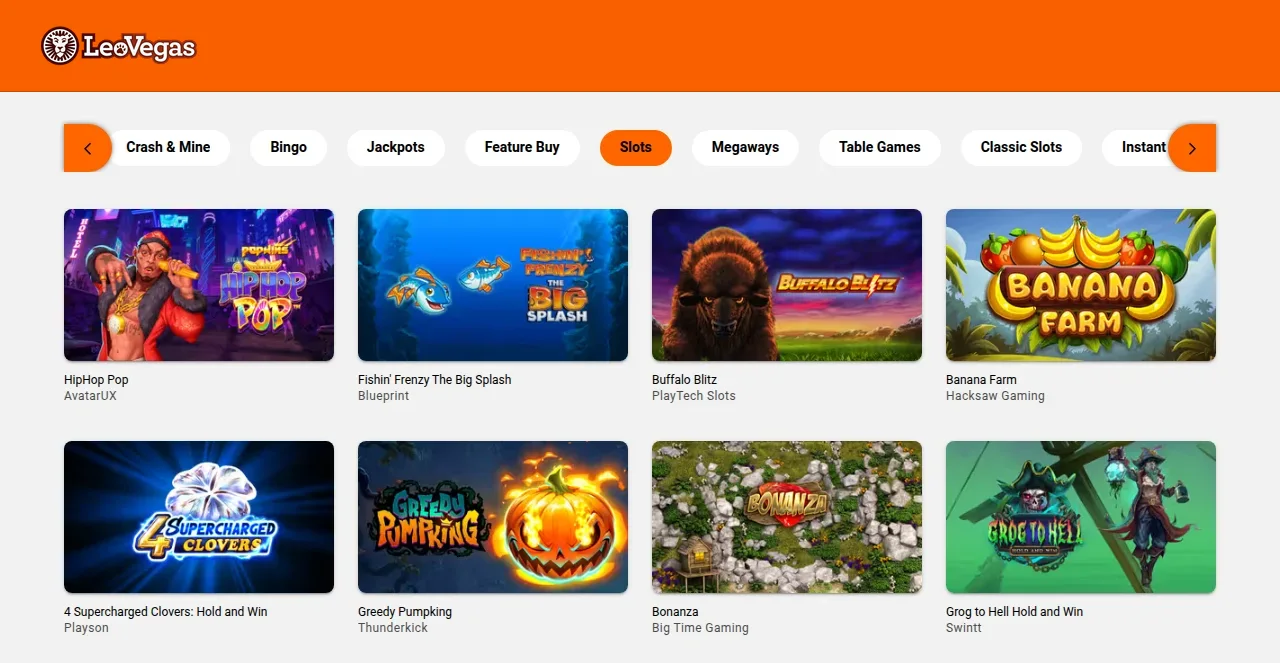
Promotions sit in a dedicated section. Check there which deposit methods count towards each offer.


- Wager-free Book of Dead spins
- 24/7 live chat in English
- PayPal, Trustly & Apple Pay
ICE Casino: slot depth with a broad fiat cashier
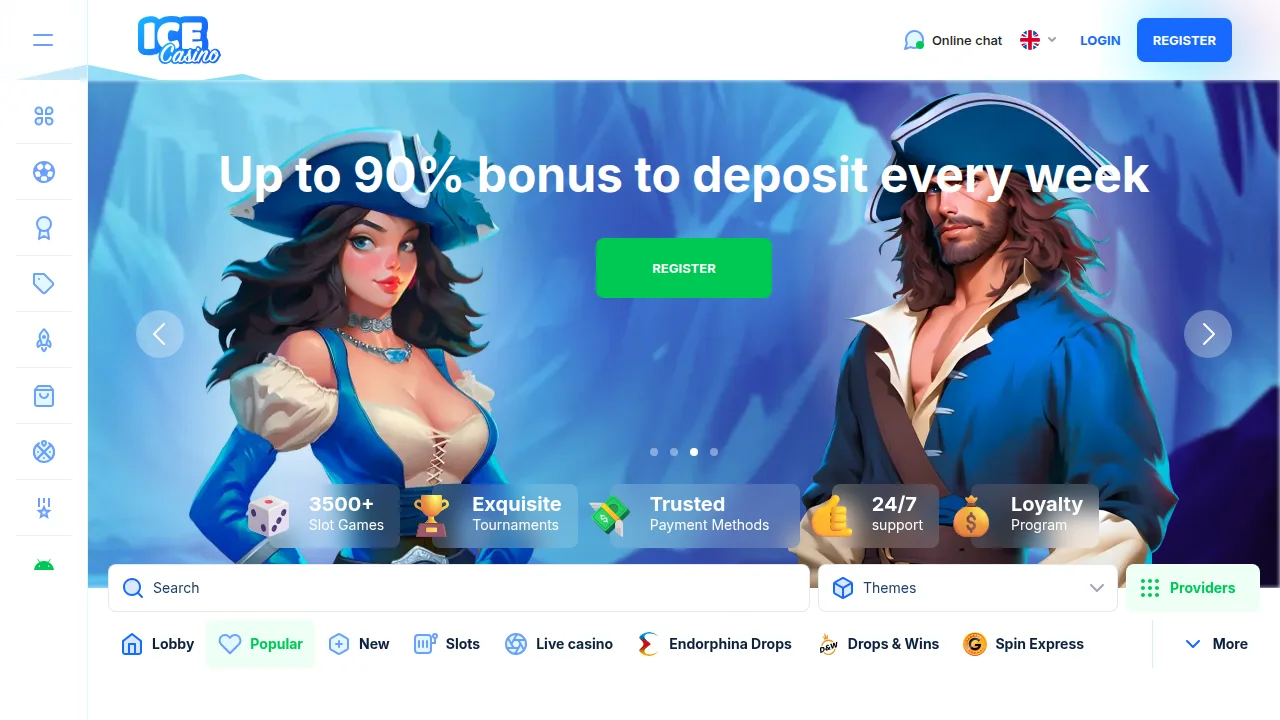
ICE Casino carries 3,500+ slot games. Its listed welcome offer is Up to €1,500 + 270 FS. It suits players who mainly deposit by debit card or e-wallet and want the largest possible slot selection.

The game zones are easy to filter by provider, which is useful in a catalogue this size.

- Welcome pack over 4 deposits
- 24/7 live chat and phone
- Crypto, Skrill and Neteller
Mr Green: support around the clock
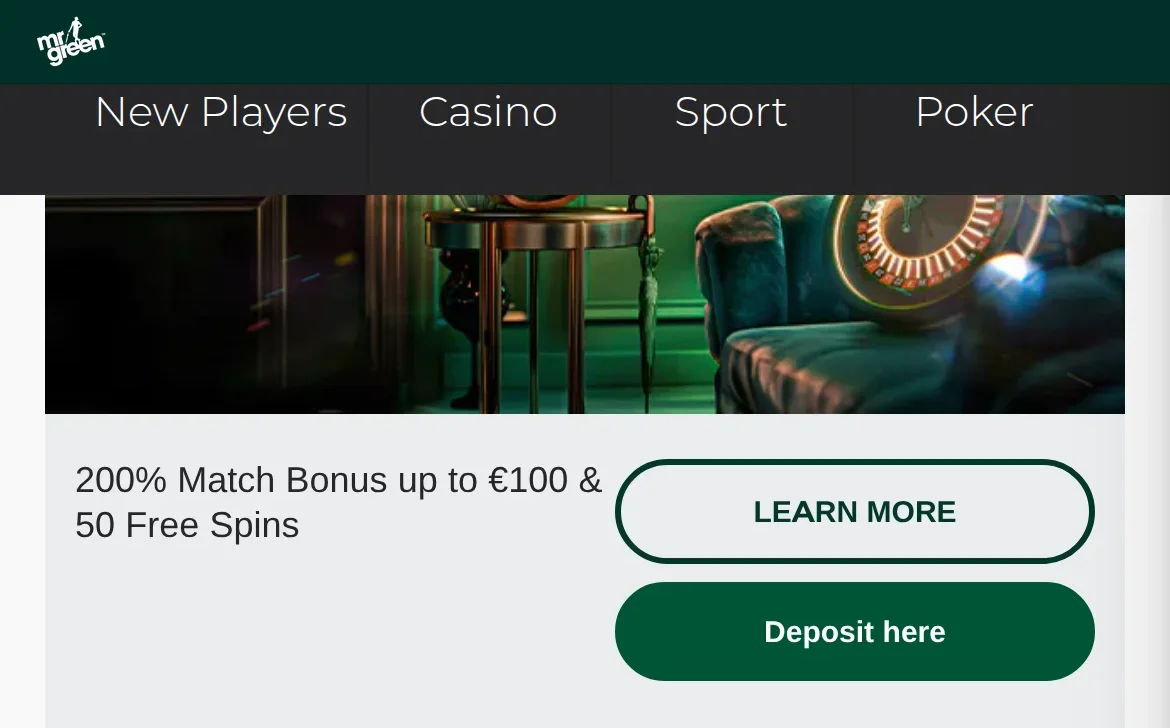
Mr Green pairs 2,000+ games with 24/7 support, which helps when a withdrawal needs verification outside office hours. Its listed offer is €500 + 200 Free Spins. The live casino is a real strength.


- 100% match up to €500
- 200 free spins included
- PayPal, Apple Pay & Trustly
BitStarz: crypto and fiat side by side
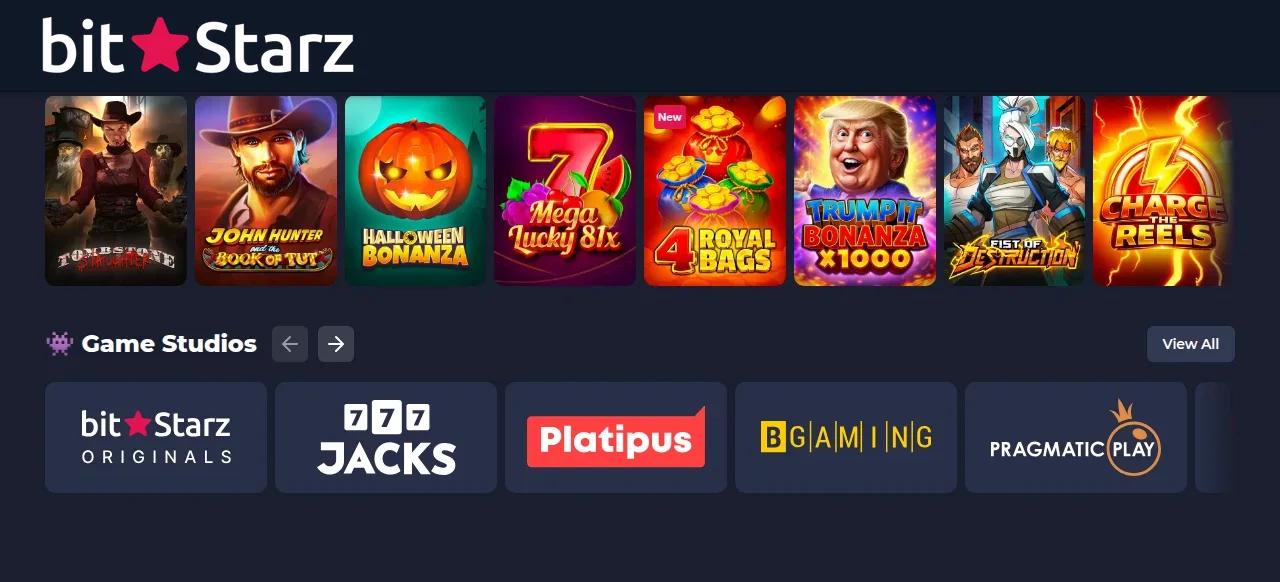
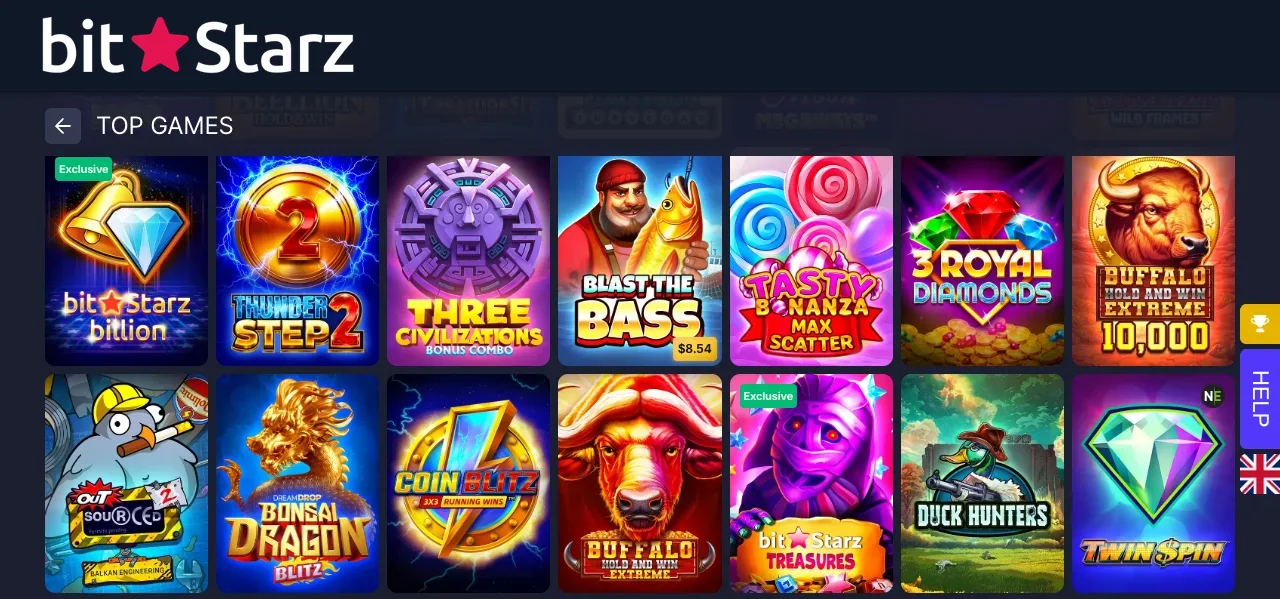
BitStarz combines 9,000+ games with a crypto-friendly cashier. Players can deposit in euro by card and withdraw in crypto, or the other way round, subject to the cashier’s rules. The listed offer is €500 + 180 free spins.

- 24/7 live chat support
- 180 free spins on deposit 1
- Cards, e-wallets and crypto
22Bet and 1xBet: the widest method menus
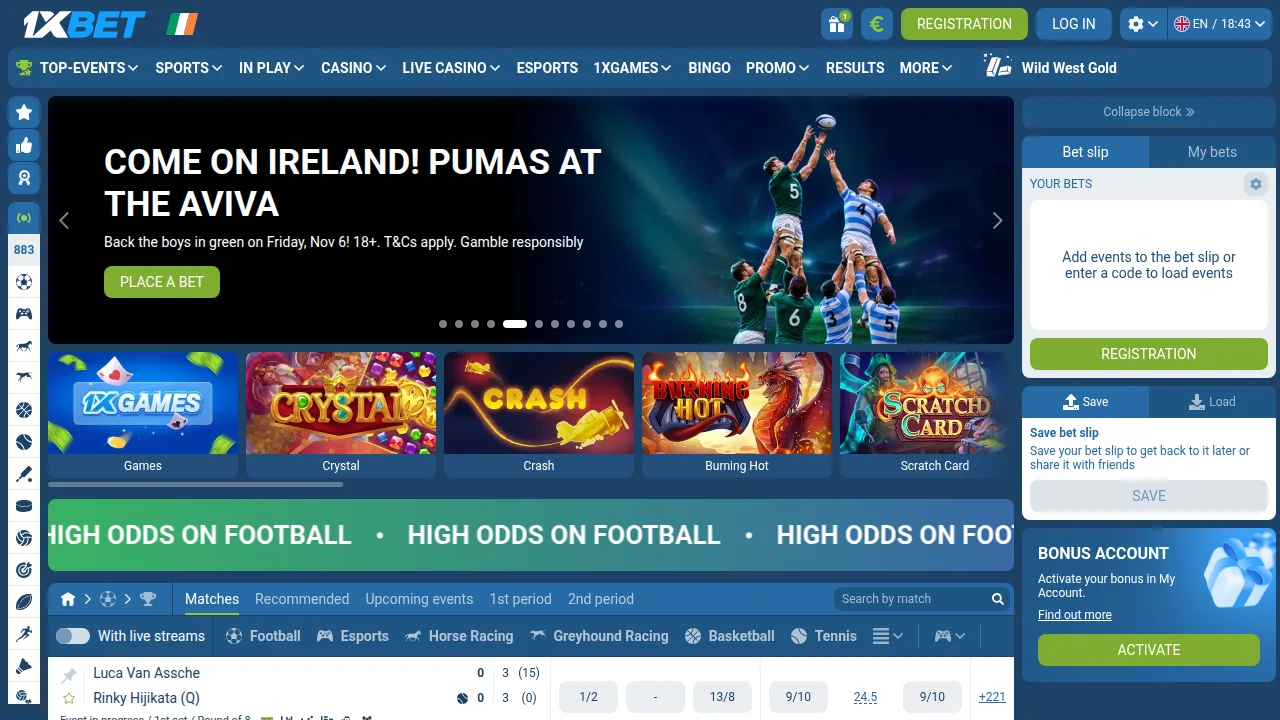
Both brands list unusually long cashiers. 1xBet shows 11 payment options in our data, and 22Bet pairs about 9,000 casino games with a similar spread. Both list a casino offer of Up to €1,500 + 150 FS.


- 35x wagering requirements
- Minimum deposit €10
- 24/7 live chat and email

- iOS and Android apps
- Weekly cashback offers
- 8 game studios listed
Duelbits and Roobet: crypto-first cashiers
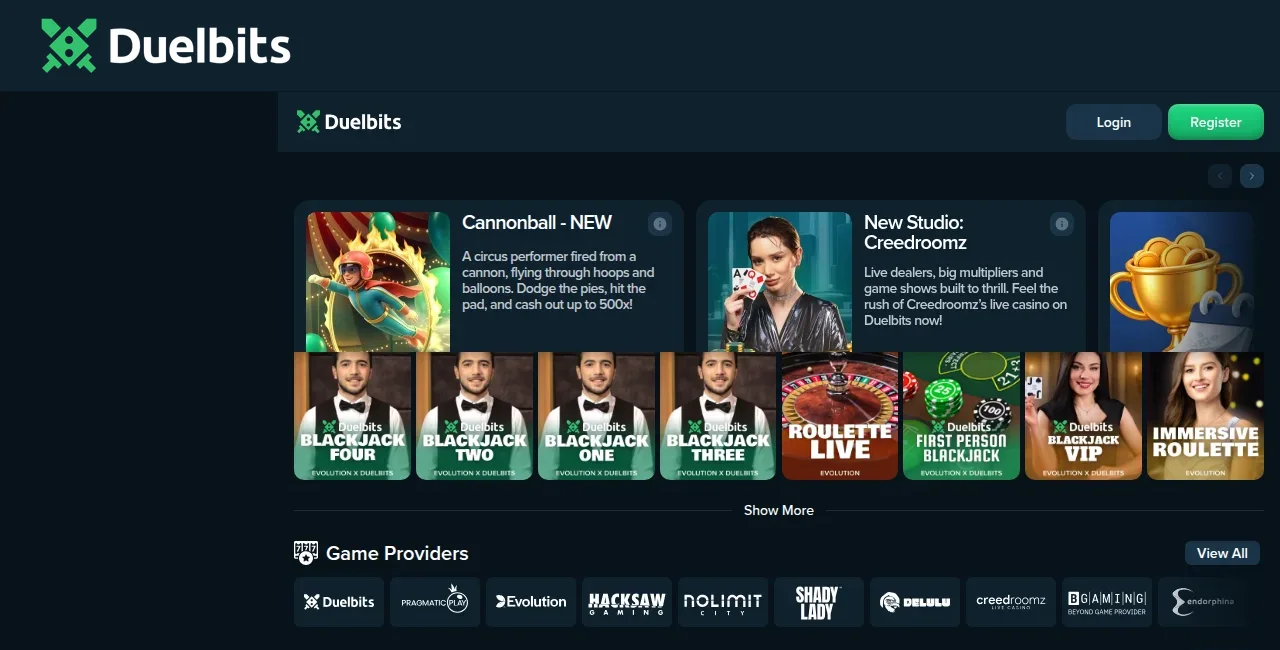
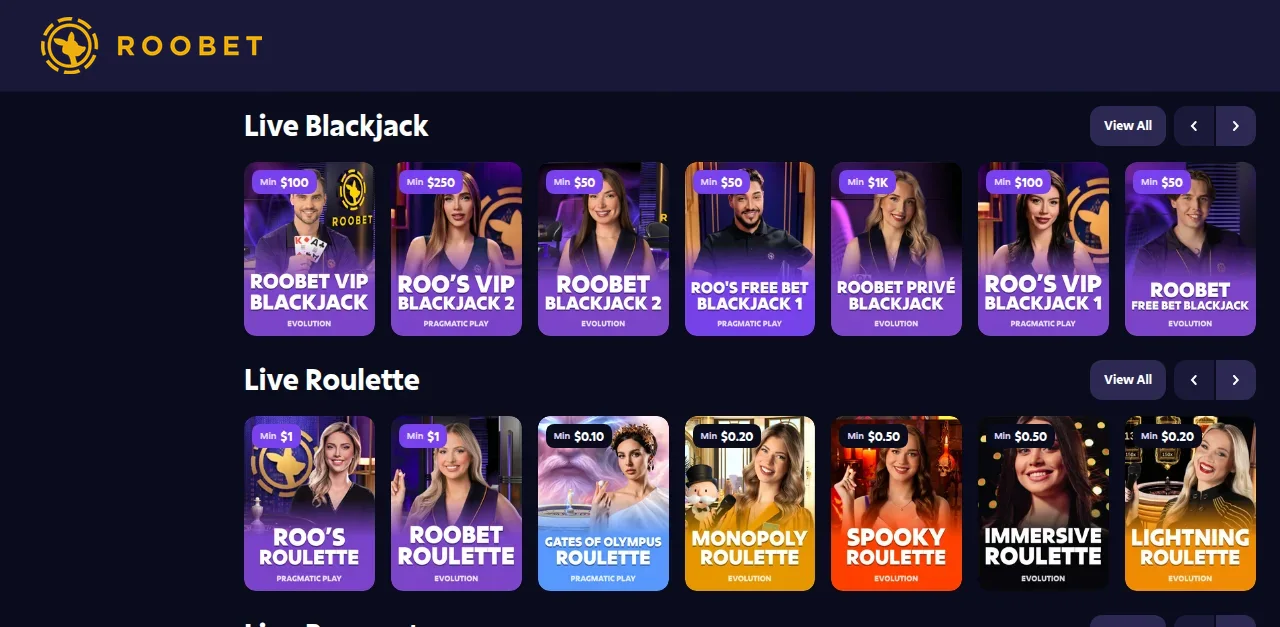
Duelbits runs an instant crypto cashier with 4,000+ games from 60+ studios. Roobet offers a crypto plus fiat cashier and works with 15 top game studios. Both suit players who want on-chain payouts.

- Instant crypto withdrawals
- 24/7 live chat and email
- Provably fair Originals

- 24/7 live chat support
- Evolution live casino
- Browser play, iOS & Android
Lukki Casino and PlayOJO: two opposite bonus models
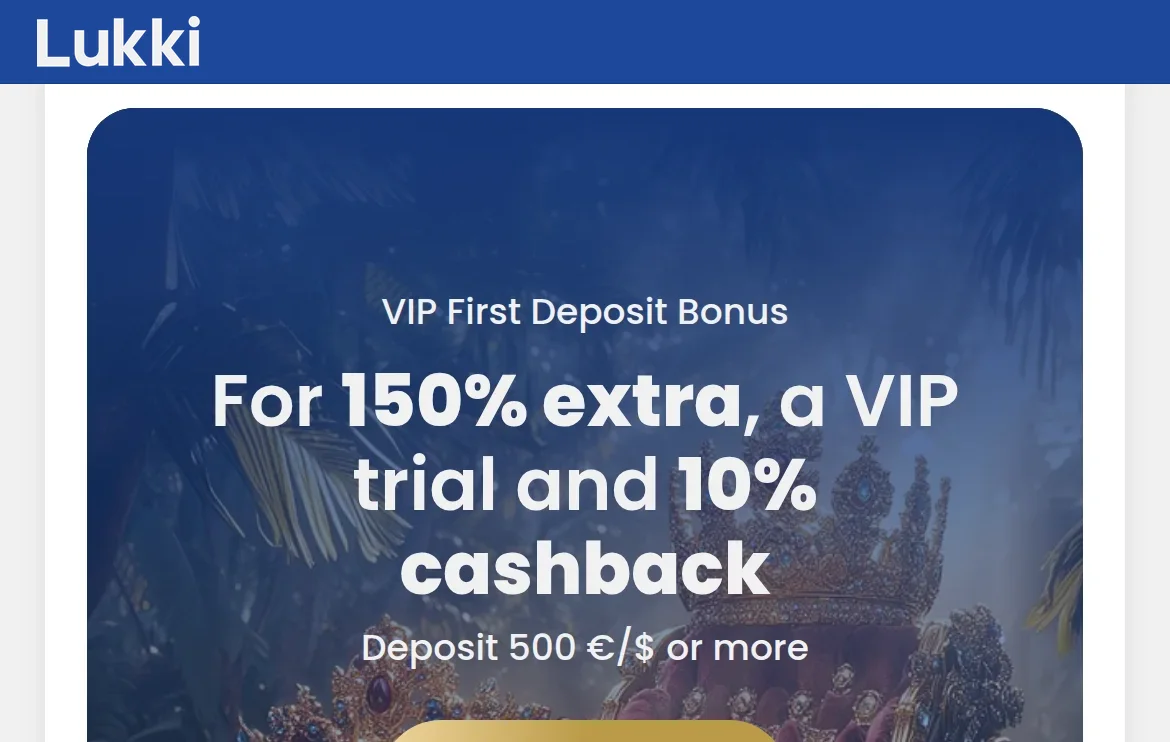
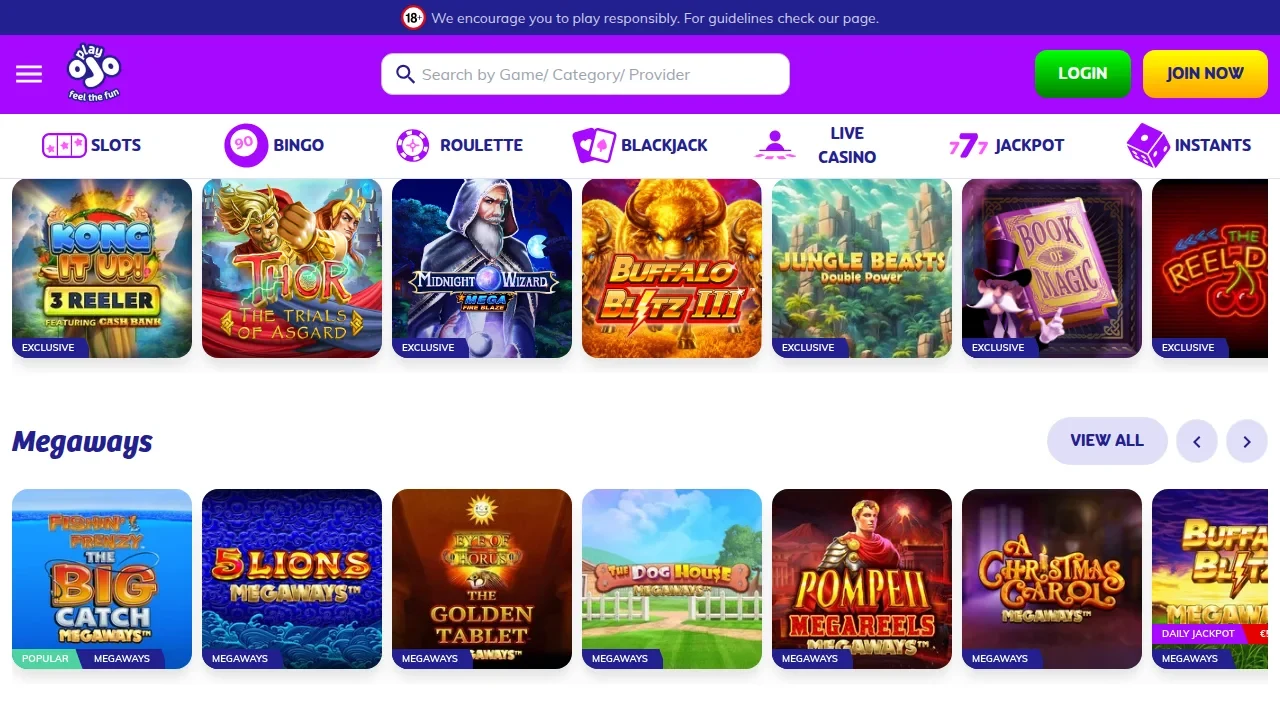
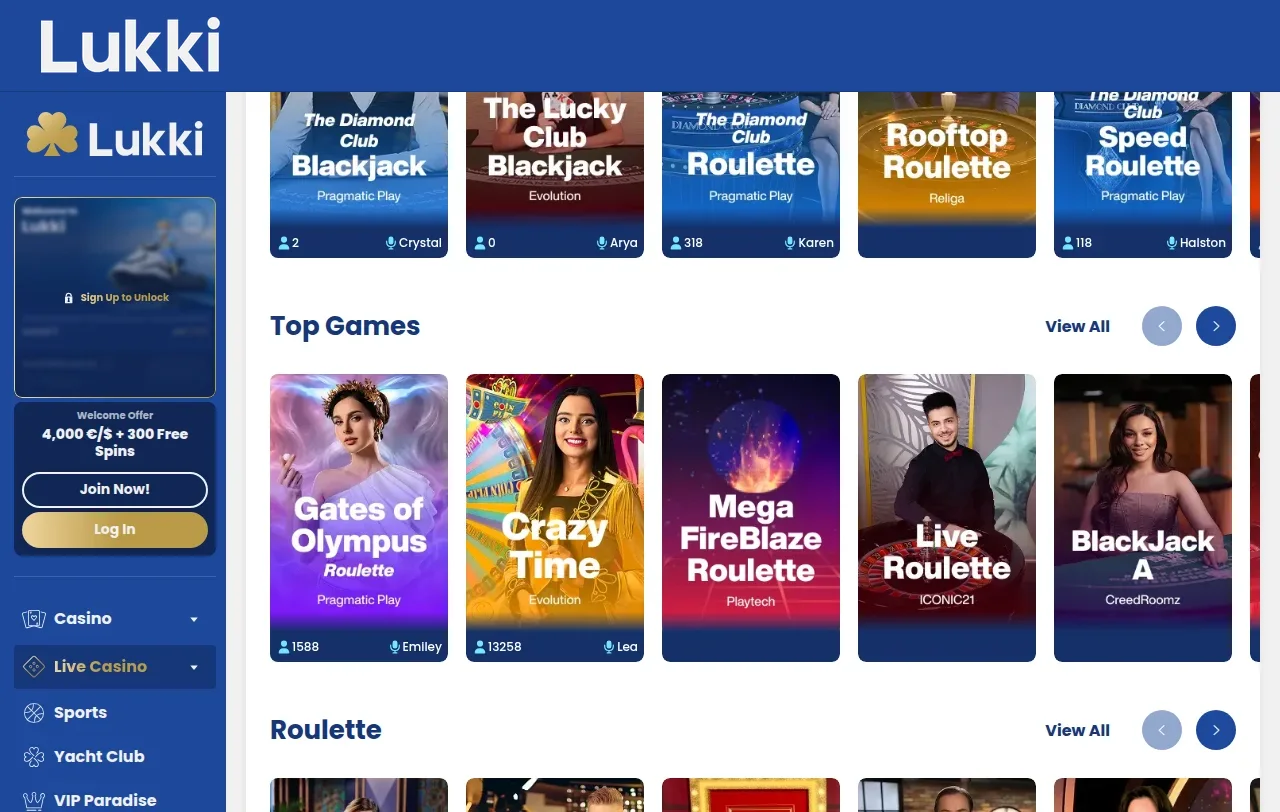
Lukki Casino spreads €4,000 + 300 free across a four-deposit welcome offer. PlayOJO goes the other way, with no-wagering free spins whose winnings are paid as real cash. If you withdraw often, the PlayOJO model avoids wagering locks on your balance.

- 14,000+ casino games
- 24/7 live chat support
- Crypto deposits accepted

- Min. deposit €10
- Over 80 Must Drop jackpots
- 24/7 live chat support
Also on our list: Casumo (100% up to €300 with 50 spins on Wild Wild Riches), Puntit and Videoslots. All three are covered in the second half of this guide.
- Need help with gambling? Gambling Care runs a free 24-hour line on 1800 936 725 (gamblingcare.ie).
- Extern Problem Gambling: 089 241 5401.
- Gamblers Anonymous Ireland: +353 1 8721133 (10:00–22:00 daily).
Withdrawals: Timelines, Verification and Fees
Depositing is the easy half. What separates one cashier from another is how a withdrawal moves: how long the operator holds it in “pending”, which documents trigger approval, and whether the payout returns to the method you deposited with. International brands generally process withdrawals in two stages: internal approval by the operator, then transfer by the payment provider. Only the second stage depends on the method you choose.
Typical processing windows by method
The figures below are typical industry windows after the operator has approved the request. They are not guarantees from any single brand, so check each cashier page for its own stated times.
| Method | Withdrawals possible? | Typical time after approval | Notes |
|---|---|---|---|
| Debit card (Visa/Mastercard) | Yes | 1–5 business days | Depends on the issuing bank; credit cards are banned under s.165 |
| PayPal | Yes, where offered | Often within 24 hours | Usually requires a previous PayPal deposit |
| Apple Pay | Usually routed to the linked card | As for debit card | A deposit wallet more than a payout method |
| Revolut | Yes (card or IBAN) | Minutes to 2 business days | Fast when paid to the Revolut card or by SEPA Instant |
| Bank transfer (SEPA) | Yes | 1–3 business days | SEPA Instant can land in seconds if both sides support it |
| Paysafecard | Rarely | n/a | A deposit-only voucher at most brands |
| Cryptocurrency | Yes, at crypto-enabled brands | Minutes to about an hour | Network fees and confirmations apply |
KYC: what gets asked and when
Know-your-customer checks are standard under MGA rules and are increasingly applied at Curaçao-licensed brands too. Most operators ask for documents at the first withdrawal rather than at sign-up, and that request is the most common reason a first payout takes longer than later ones.
- Identity: passport or Irish driving licence, both sides where relevant.
- Address: a utility bill or bank statement from the last three months.
- Payment ownership: a photo of the card with the middle digits covered, or a screenshot of the e-wallet account showing your name.
- Source of funds: requested only above certain cumulative thresholds; payslips or bank statements are typical.
Fees and currency conversion
Most reviewed brands do not charge their own fee on standard deposits and withdrawals in euro. Costs, where they exist, usually come from three places: a crypto network fee, a conversion margin if the account runs in a currency other than euro, or a monthly free-withdrawal allowance after which a small fee applies. Setting your account currency to EUR at registration removes the conversion step completely.
At BitStarz, for instance, a euro balance and a crypto balance can sit in the same account. Players who deposit in euro and play in euro never touch an exchange rate. Players who move between the two should check the rate shown at the moment of conversion, because that is where the hidden cost sits.
Deposit and Stake Limits: Local Framework vs International Brands
Readers comparing cashiers usually want one concrete answer: how much can I move, and how much can I stake per round? Under the Gambling Regulation Act 2024, the GRAI attaches conditions to its licences, and those conditions can include deposit and stake controls for licensed betting operators. International casino brands set their own cashier minimums and maximums and let you set personal limits on top.
| Aspect | GRAI-licensed betting operators | International brands (MGA, Curaçao, Kahnawake) |
|---|---|---|
| Who sets the ceiling | Licence conditions issued by the regulator | The operator’s cashier rules, then your own personal limit |
| Per-round stakes | Subject to the regulator’s conditions | Set per game by the studio and operator; high-limit tables are common in live casino |
| Withdrawal caps | Operator-specific | Daily, weekly or monthly caps stated in the terms; VIP tiers often raise them |
| Crypto | Not offered | Available at crypto-enabled brands |
| Personal limit tools | Required | Available in the account settings at reviewed brands |
Higher cashier ceilings are a product fact, not a target. The same account settings that show the operator’s maximum also let you set a lower deposit, loss or session limit that suits your own budget. Lowering a limit normally applies immediately, while raising one usually comes with a cooling-off delay.
Where withdrawal caps actually bite
The figure to read in the terms is the withdrawal cap, not the deposit maximum. A brand may accept large deposits yet pay out in weekly instalments above a set amount. Weekly or monthly caps matter most after a large jackpot win, so look for the clause covering progressive jackpots: many operators exempt jackpot wins from the standard cap.
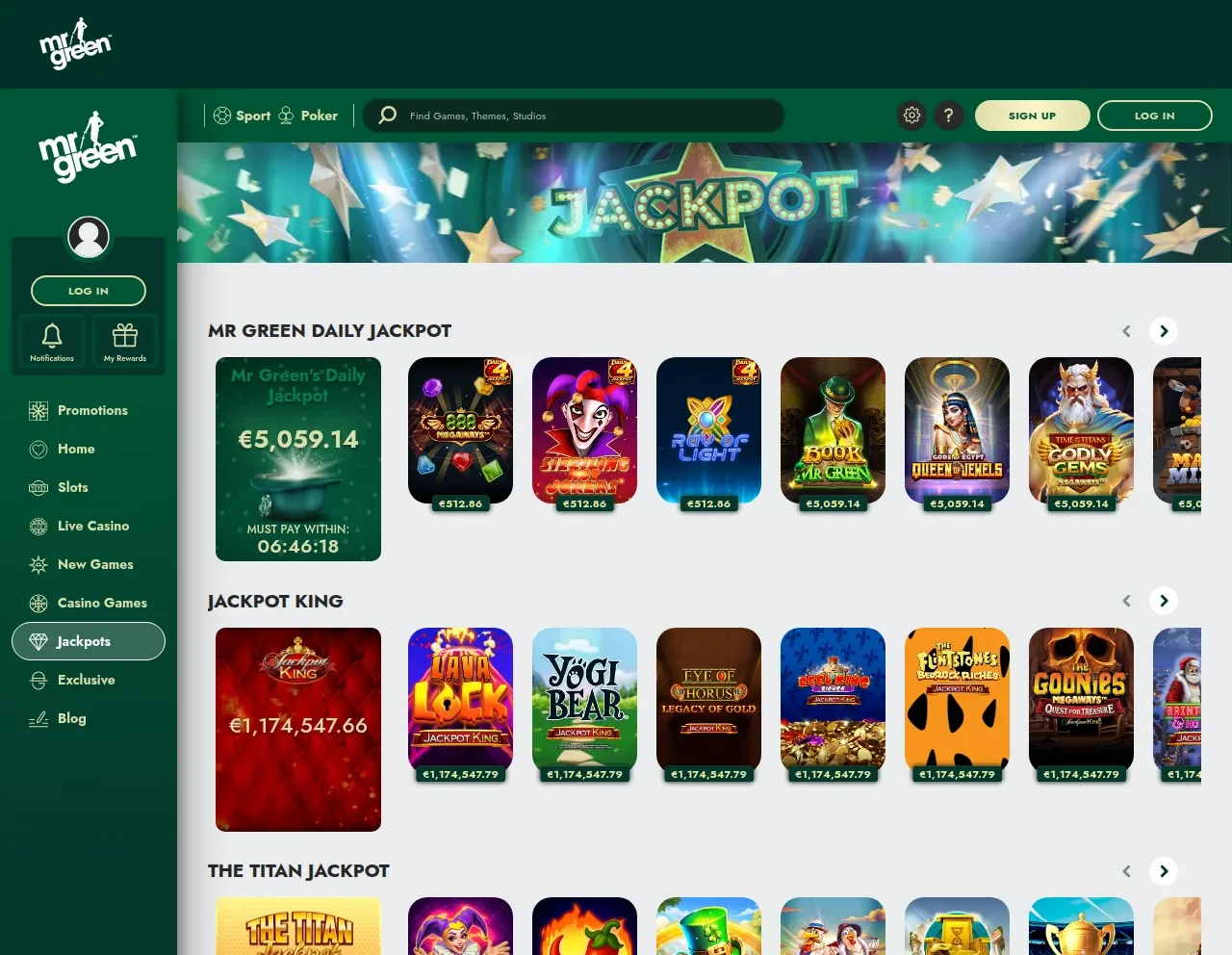
At Mr Green, as with other reviewed brands, the jackpot section sits apart from the standard slot lobby. If you play progressives, it is worth reading how a jackpot win is paid before you play, rather than after.
Your Rights as a Player When Paying
Your rights depend on two layers: the licence the operator holds and the payment method you used. The licence decides who handles a complaint. The payment method decides what your bank or wallet can do for you.
Under an MGA licence
- A written complaint to the operator first, with a reply deadline set by the operator’s own procedure.
- Escalation to an approved alternative dispute resolution (ADR) body named in the terms, free for the player.
- Player funds held separately from operating funds, as an MGA licence condition.
- EU consumer-law protections, because the licensee is established in an EU member state.
Under Curaçao and Kahnawake
Curaçao’s licensing overhaul introduced a more structured complaints route through the Curaçao Gaming Authority, and newer licensees must publish a complaints procedure. The Kahnawake Gaming Commission runs its own complaint process for its licensees. In both cases the first step is still the operator’s support team and a written record of every exchange.
- Keep screenshots of the cashier, the transaction ID and any bonus terms in force on the day.
- Ask support for a ticket number and the expected resolution time.
- Escalate to the licensing body named in the site footer only after the operator’s own process has run.
Bank and wallet protections
Debit-card disputes go through your bank under Visa or Mastercard scheme rules. A chargeback is meant for unauthorised transactions or services not provided, not for losses on games played. E-wallet buyer-protection schemes often exclude gambling, so do not assume a payment is covered: read the wallet’s own policy.
Risks of Sites With No Licence at All
There is a clear difference between an international brand holding an MGA, Curaçao or Kahnawake licence and a site that holds no verifiable licence at all. The first has a regulator, published rules and a complaints route. The second has none of these, and that is where real payment risk sits.
- No licence seal that links to a register entry, or a seal that is only a static image.
- No company name or registered address in the terms.
- Withdrawal terms that change after a win, or vague “security review” holds with no time limit.
- Deposit-only cashiers with no stated withdrawal method or processing time.
- Requests to pay a “release fee” before a withdrawal is processed, a classic scam pattern.
- Cloned brand names that copy the look of a known operator on a different domain.
The verification steps covered earlier in this guide filter out all of these in a few minutes. Every brand on this page is listed because its licence and cashier terms could be checked against a public source.
Payment Blocking and Your Cashier
Section 75 of the 2024 Act allows the High Court to order the blocking of websites and the cutting of payment services to operators offering remote betting in Ireland without a GRAI licence, or advertising it. Since 1 July 2026 this covers betting only. Online casino is not yet licensed in Ireland, so the casino offer reaching Irish players continues to run under European licences until the GRAI opens remote gaming in 2027–2028.
- Card schemes and banks apply their own merchant-category rules, which is why one bank may approve a gambling payment that another declines.
- A declined card says nothing about the operator’s licence; it reflects the issuer’s policy.
- Method menus at international brands vary over time as payment providers adjust their own risk policies.
Choosing a Method for Your Profile
No single method is best for everyone. The right one depends on what you value most: payout speed, privacy, budget control or bonus eligibility. The profiles below match each priority to the methods and reviewed brands that suit it.
| Your priority | Best-fit methods | Reviewed brands to look at |
|---|---|---|
| Fastest payout | Crypto, PayPal, Revolut | Duelbits, Roobet, BitStarz |
| Familiar Irish banking | Debit card, SEPA, Apple Pay | LeoVegas, Mr Green, PlayOJO |
| Privacy on deposit | Paysafecard, crypto | ICE Casino, 22Bet, 1xBet |
| Bonus-driven play | Card or e-wallet (check exclusions) | Lukki Casino, ICE Casino, Casumo |
| Widest catalogue | Any fiat or crypto | Videoslots, BitStarz, 22Bet |
Speed first
Crypto-first cashiers approve and send payouts fastest, because the transfer itself takes minutes. Duelbits lists an instant crypto cashier and 4,000+ games from 60+ studios. Roobet combines crypto with a fiat cashier and focuses on 15 top game studios. Both suit players who already hold crypto and know how to manage a wallet.
Familiar banking first
If you prefer the debit card or Apple Pay already on your phone, mainstream brands are the natural fit. LeoVegas offers 2,000+ games from 40+ studios with a welcome offer listed as up to €1,000 + 200 FS. PlayOJO takes a different approach: no-wagering free spins, with winnings paid as real cash.
Privacy on deposit
Paysafecard lets you deposit without sharing card details, though you will still need a bank account or wallet to withdraw. ICE Casino pairs 3,500+ slot games with a broad fiat cashier. 22Bet lists about 9,000 casino games, and 1xBet shows 11 payment options. Both run some of the widest method menus on this site.
Bonus-driven play
Welcome offers often exclude certain deposit methods, most commonly Paysafecard and some e-wallets. Lukki Casino lists €4,000 + 300 free across a four-deposit welcome offer, so the method you choose for the first deposit should also qualify for the next three. Read the excluded-methods line before you deposit, not after.
More Reviewed Brands and Their Cashiers
Three further brands round out the payment picture, each with a distinct cashier or catalogue profile.
Puntit: crypto and PayPal in one cashier
Puntit accepts both crypto and PayPal deposits, an uncommon pairing that covers players at both ends of the payment spectrum. Its welcome offer is listed as a €500 Starter Pack. Check which deposit methods qualify for each part of the pack before choosing between PayPal and crypto.

Casumo: a straightforward match offer
Casumo lists a 100% match up to €300, together with 50 spins on Wild Wild Riches. Because the match is a straight percentage, the bonus equals your qualifying deposit up to the cap: a €100 deposit adds €100, a €300 deposit adds €300.

- 53 game studios listed
- PayPal, Skrill & Neteller
- €10 debit card deposit
Videoslots: catalogue breadth
Videoslots works with over 230 game providers, one of the largest studio rosters on this site, and runs slot tournaments rather than leading with a deposit match. For players who rank catalogue depth above bonus size, it is the reference point.

Security Checklist Before Your First Deposit
- Confirm the licence seal links to a live register entry on the regulator’s own domain.
- Check that the cashier page lists withdrawal methods and processing times, not only deposits.
- Enable two-factor authentication on the casino account and on your e-wallet.
- Use a debit card, never a credit card: credit cards are banned for gambling under s.165.
- Set your account currency to EUR at registration.
- Upload KYC documents before your first withdrawal request.
- Set a deposit limit in the account settings before you play.
- Save the bonus terms as a PDF or screenshot on the day you accept an offer.
Responsible Gambling and Self-Exclusion Tools
Responsible-gambling tools work at three levels: the law, the operator and your own bank. Each does something different, and using them together gives the firmest control over spending.
What the law already enforces
- Credit-card ban (s.165): gambling payments by credit card are prohibited.
- Age 18+ (s.158): operators must verify age; KYC documents serve this purpose.
- Parental-control links (s.174): licensed operators must link to parental-control software on their home page.
National register: in law, not yet commenced
The National Gambling Exclusion Register is written into the 2024 Act (ss.44–49) but had not been commenced as of November 2026. In practice, self-exclusion today is done operator by operator, through the account settings, and through blocking tools at your bank.
Tools you can switch on today
| Tool | Where to find it | What it does |
|---|---|---|
| Deposit limit | Casino account settings | Caps deposits per day, week or month |
| Loss and session limits | Casino account settings | Caps net losses or time played |
| Time-out | Casino account settings | Pauses the account for a short set period |
| Self-exclusion | Casino account settings or support | Closes the account for months or permanently |
| Gambling block | Banking app (offered by Revolut and several Irish banks) | Declines card payments to gambling merchants |
| Blocking software | Phone or computer | Blocks gambling websites across devices |
A bank-level gambling block is the strongest single tool, because it works across every operator at once. Combined with an operator self-exclusion, it closes both the account and the payment route.
Free, confidential support:
- Gambling Care: 24-hour freephone 1800 936 725 (gamblingcare.ie)
- Extern Problem Gambling: 089 241 5401
- Gamblers Anonymous Ireland: +353 1 8721133, 10:00–22:00 daily
- HSE public-health information: hse.ie
Final Word
For Irish players, the payment question at international brands comes down to matching the method to the priority: crypto or Revolut for speed, debit card and Apple Pay for familiarity, Paysafecard for deposit privacy, and a careful read of exclusions when a bonus is part of the plan. The licence tells you who handles a complaint; the cashier terms tell you how fast and in what amounts your money moves.
- Verify the licence once, then judge the brand on its cashier, catalogue and terms.
- Set your account to EUR and upload KYC documents on day one.
- Set a deposit limit before your first session, and keep the helplines above to hand.
Currency, Exchange Rates and Hidden Conversion Costs
Ireland uses the euro, but not every international casino or sportsbook handles euro balances the same way. Some brands let you open an account in EUR. Others fix your balance in another currency, often US dollars, British pounds or a crypto-denominated unit. A deposit can look free in the cashier and still cost you money. The fee sits in the exchange rate.
When your account currency differs from your card or bank currency, a conversion happens somewhere in the chain. It can be done by your bank, by the card scheme, by the payment processor or by the operator. Each party may apply its own margin on top of the market rate. On a single small deposit the difference is minor. Over months of regular deposits and withdrawals it adds up, and it applies twice: once on the way in and once on the way out.
A few practical points help Irish players keep this under control:
- Choose EUR at registration whenever it is offered. The account currency usually cannot be changed later without contacting support, and some operators will not change it at all.
- Watch for dynamic currency conversion prompts. If a payment page offers to charge you “in your home currency”, the rate offered is often worse than the one your card issuer would apply. Declining and paying in the merchant’s currency is frequently cheaper, but check your own bank’s terms.
- Check e-wallet currency settings. E-wallets can hold balances in several currencies. If your wallet is set to a different primary currency than your casino account, you may pay a conversion fee at each transfer.
- Remember that crypto adds a separate layer. Converting euro to a coin and back exposes you to exchange spreads, network fees and price movement between deposit and withdrawal. Even a stablecoin pegged to the US dollar still carries a EUR/USD conversion.
The simplest test is to compare the euro amount that left your bank with the balance credited to your account, and later the balance withdrawn with the euro amount that arrived. Any gap that the cashier did not show as a fee is a conversion cost.
How Bonus Terms Interact With Your Payment Method
Many players pick a payment method first and read the promotion terms afterwards. That order can cost you a welcome offer. International brands commonly exclude certain deposit methods from bonus eligibility. E-wallets such as Skrill and Neteller are the most frequent examples, and some operators also exclude prepaid vouchers or specific crypto options. The reason usually cited is bonus abuse prevention. These methods have historically been linked to multi-accounting, so operators restrict them in promotional terms.
Before making a first deposit with the intention of claiming an offer, look for these details in the bonus terms:
- Excluded deposit methods. This is usually a short list in the general or specific promotion terms. A deposit through an excluded method normally means no bonus. There may be no warning at the cashier.
- Minimum qualifying deposit. This can differ from the cashier minimum. A deposit that the cashier accepts may still fall below the bonus threshold.
- Withdrawal restrictions while a bonus is active. Requesting a withdrawal before wagering requirements are met often cancels the bonus and any winnings tied to it.
- Closed-loop rules. Many operators require withdrawals to go back to the method used for deposit where possible. If you deposited with a method that cannot receive payouts, such as a prepaid voucher, the operator will ask for an alternative. That usually means bank transfer, which adds verification steps.
If a bonus matters to you, the safest approach is to deposit with a card or bank transfer the first time, confirm the offer has been credited, and only then consider other methods for later sessions. If a bonus does not matter to you, declining it often brings faster, less conditional withdrawals. Many players overlook this benefit.
Gambling Winnings and Tax in Ireland
Payment questions often lead to a tax question: does money arriving in your bank account from a betting or casino site create a tax liability? For individuals in Ireland, gambling winnings are generally not subject to income tax or capital gains tax. The tax burden in the Irish system falls mainly on the operator side. Betting duty is charged on bookmakers’ turnover, and licensing costs and other levies apply to operators. These are not deductions from your payouts.
There are still points worth keeping in mind:
- Interest and investment income are different. If you move winnings into a savings account or investment product, the returns on that money follow normal tax rules, including DIRT on deposit interest.
- Crypto gains can be taxable. If you hold cryptocurrency after a withdrawal and it rises in value before you sell or exchange it, that gain may be treated as a chargeable gain for capital gains tax purposes. The fact that the coins originated from gambling does not automatically shelter later price movements.
- Large inflows can trigger bank questions. Irish banks are obliged under anti-money laundering rules to understand the source of funds. A sizable transfer from an overseas gambling operator may lead your bank to ask for an explanation. Keeping operator statements and withdrawal confirmations makes this straightforward.
- Individual circumstances vary. People whose gambling activity looks more like a trade, or who have cross-border tax residency, should take advice from a qualified tax adviser or check Revenue guidance directly rather than relying on general rules.
Winnings can be tax-neutral and still leave a trail. Keep that trail organised, as the next section explains.
Keeping Records of Your Transactions
Good record-keeping is rarely discussed in casino guides. It still solves more payment problems than almost any other habit. When a withdrawal goes missing, a bank queries a transfer or a dispute reaches an operator’s complaints team, the player with clear records usually gets a faster resolution.
A simple system is enough:
- Download the operator’s transaction history regularly. Most cashiers allow you to export or at least view deposits, withdrawals and adjustments by date. Accounts can be closed, restricted or migrated to new platforms, and history is not always retained in an accessible form afterwards.
- Save withdrawal confirmation emails. These usually carry a reference number. That reference is the first thing support teams and banks ask for.
- Note the payment method and last digits used for each transaction. If you use more than one card or wallet, this avoids confusion when matching statements.
- Keep copies of the documents you submitted for verification, along with the date you sent them. If an operator later claims documents were never received, you have evidence.
- Record net results, not just balances. A running total of money deposited against money withdrawn gives a far more honest picture of your gambling than a casino balance on a good day.
A spreadsheet or a dedicated note on your phone works fine. The goal is to reconstruct any transaction within a minute, using information you control rather than information held by the operator.
Third-Party Payments, Shared Accounts and Name Mismatches
One of the most common causes of frozen withdrawals is a mismatch between the account holder’s name and the name on the payment method. Reputable operators, whatever their licence, are required to check that funds come from and return to the registered player. In practice, the following situations cause problems:
- Using a partner’s or family member’s card. Even with permission, this breaches almost every operator’s terms. It can lead to the deposit being refunded, winnings being voided and the account being closed.
- Joint bank accounts. These are usually acceptable if your name appears on the account. Operators may still ask for a statement showing both names, so be ready to provide one.
- E-wallets registered with different details. If your wallet uses a nickname, a former surname or an old address, verification may stall until the details match your casino profile.
- Business accounts. Paying from a company or sole-trader business account is generally not accepted. It also complicates your own bookkeeping.
Recent EU payment rules have added another check. Under the Instant Payments Regulation, payment providers in the euro area must offer a Verification of Payee service. Your bank checks that the name you enter matches the IBAN before a euro transfer goes out. This mostly matters when you send a bank transfer to an operator. If your bank warns of a name mismatch with the operator’s receiving account, stop and verify the details with the operator through its official site before proceeding. A mismatch can be innocent, such as a payment processor’s trading name. It can also signal a fraudulent or cloned payment page.
Instant Bank Transfers and the Changing Euro Payments Landscape
For years, Irish players treated cards and e-wallets as the fast options and bank transfers as the slow fallback. That distinction is narrowing. The same EU Instant Payments Regulation requires payment providers in the euro area that offer standard SEPA credit transfers to also offer SEPA Instant transfers at no higher cost. These settle within seconds, at any time of day.
For gambling payments, this has two practical effects. First, deposits by bank transfer can now arrive almost immediately, provided the operator’s payment partner supports SEPA Instant. Second, the speed of your withdrawal increasingly depends on the operator’s internal approval process rather than on the banking rails. A withdrawal that still takes several days to arrive is rarely held up by your bank. It is more often waiting in the operator’s pending queue, in a manual review or in a batch payout schedule.
Open banking payment services, which let you authorise a transfer directly from your bank app without entering card details, are also becoming more common at international brands. These services are regulated payment initiation providers under EU rules. They never hold your funds, and you approve each payment inside your own banking app. When one appears in a cashier, check which provider is being used and confirm that the authorisation screen belongs to your actual bank.