

Searching for new online casinos in Ireland in 2026 usually means comparing what international brands offer against the Irish framework. That means game catalogues, live tables, welcome packages, limits and payment methods. This guide covers both sides with facts: the law, the regulator, how licences work, and what each type of operator actually provides.
- Law: Gambling Regulation Act 2024 (Act No. 35 of 2024)
- Regulator: Gambling Regulatory Authority of Ireland (GRAI)
- Legal age: 18+
- Tax on winnings: none for the player
- Irish online casino licences: not yet issued (remote gaming expected 2027–2028)
What Changed in 2026: The Short Version
2026 is the year the Gambling Regulation Act 2024 started to bite. The changes are not uniform, though. Sports betting and online casino games now sit under two very different regimes, and confusing them is the most common mistake in Irish gambling coverage. The timeline below sets out the dates that matter.
| Date | What happened | Who it affects |
|---|---|---|
| 30 June 2026 | Revenue remote betting licences ended | Online bookmakers |
| 1 July 2026 | Offering remote betting to Irish residents without a GRAI licence became an offence (s.67(1)) | Betting operators |
| 1 July 2026 | High Court blocking and payment-cutting orders available against unlicensed betting offers and their advertising (s.75) | Betting operators, advertisers |
| 5 November 2026 | GRAI register shows 37 remote betting licences and 4 betting intermediary licences | Betting market |
| 2027–2028 | GRAI expected to open remote gaming (online casino) licensing | Casino operators |
Betting and casino: two different rules
For sports betting, the position is settled: since 1 July 2026, only GRAI-licensed operators may take remote bets from people in Ireland. For online casino, there is no Irish licence to hold yet. The casino games offered to Irish players run on European and international licences, and offering them is not yet an offence under the 2024 Act, because s.67(2) has not been commenced.
- Sportsbook: GRAI licence required since 1 July 2026
- Online casino: no Irish licence exists yet; operators use licences such as MGA or Gibraltar
- Older law: the Gaming and Lotteries Act 1956 remains in force alongside the 2024 Act
That distinction drives the rest of this guide. Everything below about international brands refers to their casino product. If you are looking at a sportsbook, check the GRAI register first. For betting, that is now the legal line, not a matter of preference.
What this means for you as a player
The 2024 Act regulates operators. The offences in s.67 are about offering gambling without a licence; they do not make a resident a criminal for playing. Your practical concerns are therefore about service and payment terms, not about your own legal position. They are product questions: is the licence real, are the terms fair, do withdrawals arrive, and which tools let you keep control of your play.
Pro tip: When a site offers both a sportsbook and a casino, treat them as two separate decisions. The casino lobby can be a strong international product, while the betting side is governed by the GRAI register for Irish residents. Reading the footer for the operating entity tells you which licence covers which product.
The Legal Framework: Gambling Regulation Act 2024 and the GRAI
The Gambling Regulation Act 2024 replaced a patchwork that went back to the Betting Act 1931 and the Gaming and Lotteries Act 1956. It created a single regulator, a single licensing system and a set of consumer rules. Several parts are already in force. Others, including the national exclusion register and remote casino licensing, are on the statute book but not yet commenced.
Who the GRAI is and what it licenses
The Gambling Regulatory Authority of Ireland is the independent body set up under the 2024 Act. It issues licences, keeps the public register, writes codes of practice and can take enforcement action, including court applications. In November 2026 its active licensing covers remote betting and betting intermediaries. Remote gaming, the category for online slots and live tables, is scheduled for later.
- Licenses now: remote betting, betting intermediaries
- Licenses later: remote gaming (online casino), expected 2027–2028
- Keeps: the public licence register
- Enforces: s.67 offences, s.75 court orders, advertising rules
The sections that matter in practice
Most commentary on the Act stays vague. These are the specific provisions, with their status in November 2026, that affect what you see on a casino or betting site.
| Section | What it does | Status (Nov 2026) |
|---|---|---|
| ss.44–49 | National Gambling Exclusion Register | In the Act, not commenced |
| s.67(1) | Offence to offer remote betting without a GRAI licence | In force since 1 July 2026 |
| s.67(2) | Equivalent offence for remote gaming | Not commenced |
| s.75 | High Court orders to block and cut payments to unlicensed providers and advertisers | In force |
| s.158 | Minimum age 18 | In force |
| s.165 | Ban on credit card payments for gambling | In force |
| s.174 | Licensees must link to parental control software on their homepage | In force for licensees |
The full text is on the Irish Statute Book. If a site or article quotes a section number, that is where to check it.
The Gaming and Lotteries Act 1956 is still on the books
Until the GRAI opens remote gaming licensing and s.67(2) is commenced, the 1956 Act has not been fully replaced. It was written for physical gaming premises and has never mapped neatly onto online casinos, which is one reason internationally licensed operators have served Irish players for years. The practical result in 2026: the online casino market for Irish residents runs on licences issued elsewhere.
- The 1956 Act predates the internet and targets premises-based gaming
- Online casino operators serving Ireland hold licences from European or international regulators
- The 2024 Act will eventually bring remote gaming under GRAI licensing
Tax: what you keep
Winnings from betting and lotteries are exempt from Capital Gains Tax, and the player pays no tax on them. The tax burden falls on the operator side: 2% Remote Betting Duty on bets placed by people in Ireland, and 25% on the commission of betting intermediaries. Revenue sets this out on its CGT exemptions page.
| Who | Tax | Rate |
|---|---|---|
| Player (winnings) | None (CGT-exempt) | 0% |
| Betting operator | Remote Betting Duty on bets by people in Ireland | 2% |
| Betting intermediary | Duty on commission | 25% |
A simple illustration: a €200 win is €200 in your account, with no deduction at source and nothing to declare as a gain. What changes between casinos is not tax but withdrawal rules: minimums, processing times and any fees the cashier lists.
Why International Casinos Lead the Irish Market
With no Irish remote gaming licence in existence, every online casino available to Irish players in 2026 is, by definition, licensed abroad. This is not a fringe arrangement. It is how the market has always worked here, and it is the norm in most countries where local casino licensing is late, restrictive or absent. Regulation that stays closed does not remove demand; it determines where that demand goes.
The useful question is therefore not “international or not?” but “which international operator, under which licence, offers what?” The sections below compare the product itself.
Game catalogue size
Catalogue size is the clearest difference between operators. Some lobbies are curated around a few dozen studios; others aggregate hundreds. The figures below come from the brand records on this site.
| Casino | Catalogue (as listed) | Our rating |
|---|---|---|
| Videoslots | Over 230 game providers | 80 |
| BitStarz | 9,000+ games | 86 |
| 22Bet | About 9,000 casino games | 85 |
| Duelbits | 4,000+ games from 60+ studios | 85 |
| ICE Casino | 3,500+ slot games | 87 |
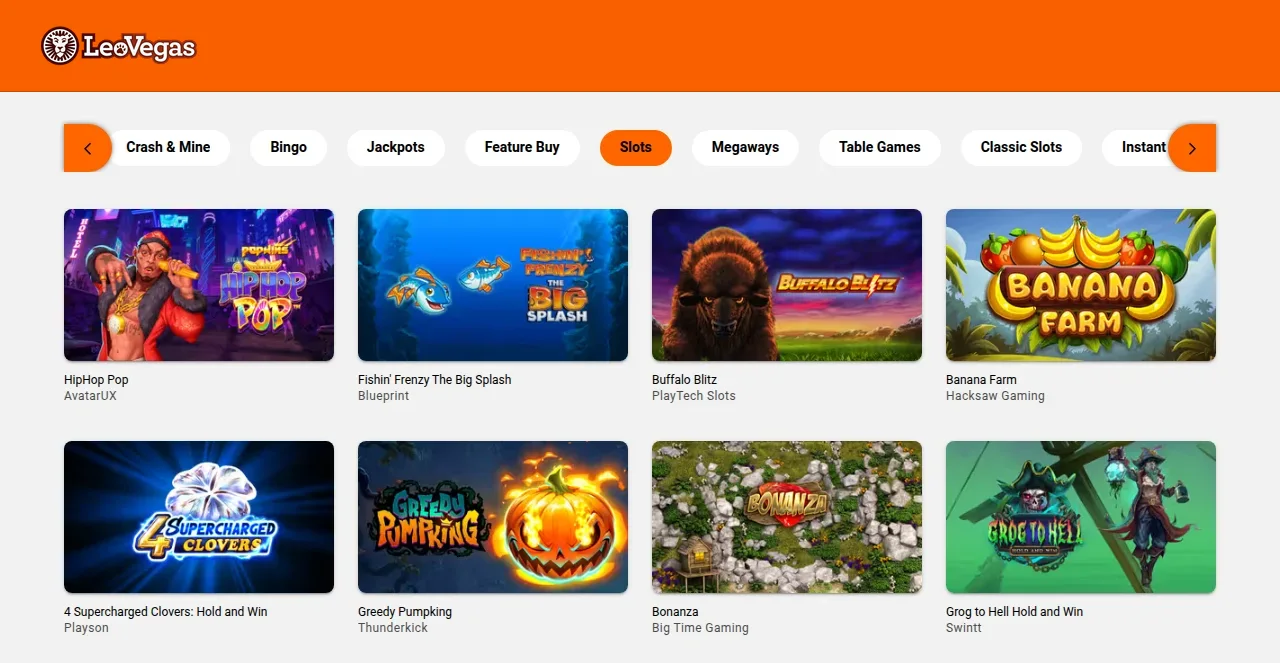
| LeoVegas | 2,000+ games from 40+ studios | 87 |
| Mr Green | 2,000+ games | 86 |
| Roobet | 15 top game studios | 81 |
A bigger number is not automatically better. What counts is whether the studios you actually play are there, whether the search and filters work, and whether the RTP for each title is shown in the game info. A 9,000-game lobby with poor filtering can be slower to use than a 2,000-game one with good categories.
- Aggregator-heavy lobbies (Videoslots, BitStarz, 22Bet): maximum breadth, including smaller studios
- Curated lobbies (LeoVegas, Mr Green): fewer studios, tighter presentation
- Slot-focused (ICE Casino): depth in one category
For players who know the studios they like, a casino listing its provider count, as Videoslots does with over 230, makes it easier to judge coverage before registering.

Live casino
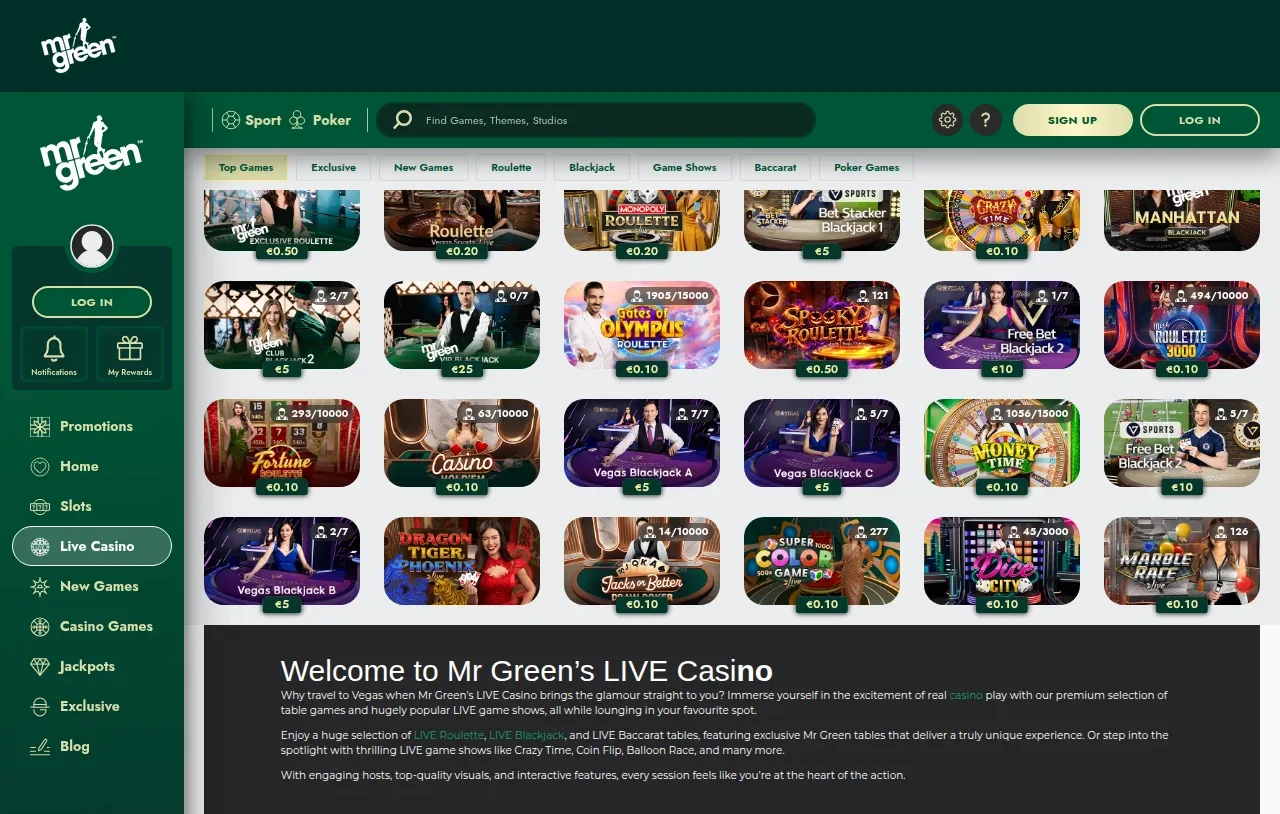
Live dealer content is where international operators often stand apart. Large studios run dozens of tables simultaneously: blackjack, roulette, baccarat, game shows and native-language tables. Lobbies vary in how many tables they carry, the range of table limits, and whether they include private or VIP rooms.
- Table range: look for low-minimum and higher-limit versions of the same game
- Game shows: wheel-based and multiplier formats sit alongside classic tables
- Opening hours: major studios run 24/7, but some branded tables have set hours
- Bonus contribution: live games often contribute little or nothing to wagering; read the terms
Mr Green pairs its 2,000+ game catalogue with 24/7 support, which matters for live play, where a disconnection mid-hand needs a quick answer.

- 100% match up to €500
- 200 free spins included
- PayPal, Apple Pay & Trustly
Welcome bonuses
International casinos are not bound by GRAI codes on inducements, because those codes apply to GRAI licensees. Their welcome packages therefore tend to be larger and more varied. Below are the offers exactly as they appear in the brand records. Always read the full terms on the casino’s own site before opting in.
| Casino | Welcome offer (as listed) | Notable feature |
|---|---|---|
| Lukki Casino | €4,000 + 300 free | Four-deposit welcome offer |
| ICE Casino | Up to €1,500 + 270 FS | 3,500+ slot games |
| 22Bet | Up to €1,500 + 150 FS | About 9,000 casino games |
| 1xBet | Up to €1,500 + 150 FS | 11 payment options listed |
| LeoVegas | Up to €1,000 + 200 FS | 2,000+ games from 40+ studios |
| Mr Green | €500 + 200 Free Spins | 2,000+ games, 24/7 support |
| BitStarz | €500 + 180 free spins | 9,000+ games, crypto-friendly |
| Puntit | €500 Starter Pack | Crypto & PayPal deposits |
| Casumo | 100% up to €300 | 50 spins on Wild Wild Riches |
| PlayOJO | No-wagering free spins | Winnings paid as real cash |

The headline figure is only one variable. What determines the real value of a bonus is the combination of wagering requirement, game contribution, maximum bet while wagering, time limit and any cap on winnings. A smaller offer with light terms can be worth more than a larger one with heavy terms.
- Wagering: how many times the bonus (or bonus plus deposit) must be played
- Contribution: slots usually count fully; table and live games often count partially or not at all
- Max bet rule: exceeding it while a bonus is active can void winnings
- Expiry: unused bonus funds and spins lapse after a set period
- Multi-deposit packages: each stage has its own minimum deposit and terms
Lukki Casino’s four-stage structure suits players who prefer to evaluate a casino over several sessions rather than commit everything to a single first deposit.

- 14,000+ casino games
- 24/7 live chat support
- Crypto deposits accepted
No-wagering offers
The opposite approach to large matched bonuses is the no-wagering model. PlayOJO is built around it: free spin winnings are paid as real cash, with no playthrough before withdrawal. That removes the most common source of bonus disputes.
| Model | Strength | Trade-off |
|---|---|---|
| Matched deposit bonus | Large headline value | Wagering, contribution and max-bet rules |
| Multi-deposit package | Value spread over time | Terms apply separately to each stage |
| No-wagering spins | Winnings are withdrawable cash | Smaller headline value |
| Crypto cashier focus | Speed of deposits and withdrawals | Less emphasis on a fixed welcome offer |

- Min. deposit €10
- Over 80 Must Drop jackpots
- 24/7 live chat support
Limits and stakes
Readers comparing international casinos with the Irish framework often ask about deposit ceilings and maximum stakes. The honest position for November 2026: because there are no GRAI-licensed online casinos yet, there is no published Irish remote gaming deposit cap or per-spin stake limit to compare against. The 2024 Act gives the GRAI powers to set conditions for licensees, but remote gaming rules have not been issued.
- Irish remote gaming caps: not yet published, as licensing has not opened
- International casinos: deposit and stake limits are set per operator and per game
- Table limits: live tables show their minimum and maximum before you sit down
- Your own limits: deposit, loss and session limits can be set in account settings
Higher maximums at an international casino are a description of the product, not a reason to play more. The most useful limit on any site is the one you set yourself on day one, before the first deposit. Every brand listed on this site offers self-set deposit limits in its account area.
Pro tip: Set your deposit limit during registration, not later. Most casinos apply a reduction immediately but impose a cooling-off period, often 24 hours to 7 days, before an increase takes effect. Setting a sensible figure from the start means that delay works in your favour.
Payments, including crypto
The payment methods most familiar to Irish players are Debit card, PayPal, Apple Pay, Revolut, Bank transfer and Paysafecard. Credit cards are banned for gambling under s.165. International casinos vary widely in which of these they support, and several add cryptocurrency cashiers with fast settlement.
| Casino | Payment angle (as listed) |
|---|---|
| Duelbits | Instant crypto cashier |
| Roobet | Crypto + fiat cashier |
| BitStarz | Crypto-friendly |
| Puntit | Crypto & PayPal deposits |
| 1xBet | 11 payment options listed |
- Debit card: the standard; check whether withdrawals go back to the card
- E-wallets: PayPal and Revolut often process withdrawals faster than bank transfer
- Paysafecard: deposit-only in most cashiers; plan another withdrawal method
- Crypto: fast, but values move; the amount you withdraw is fixed at conversion
- Verification: most casinos request ID before the first withdrawal, whatever the method
Duelbits pairs its instant crypto cashier with 4,000+ games from 60+ studios, which makes it one of the more complete crypto-first lobbies on this site.

- Instant crypto withdrawals
- 24/7 live chat and email
- Provably fair Originals
Roobet takes a mixed approach, supporting both crypto and conventional payments, with a lobby built around 15 top game studios rather than sheer volume.

- 24/7 live chat support
- Evolution live casino
- Browser play, iOS & Android
International Licences Compared: MGA, Gibraltar, Curaçao, Kahnawake
Not all international licences do the same job. The useful comparison is functional: what the regulator requires before issuing a licence, how it supervises afterwards, whether it runs a public register, and what route exists for a player complaint. Reputation follows from these, not the other way round.
| Licence | Jurisdiction | Public register | Player complaint route | Typical profile |
|---|---|---|---|---|
| MGA | Malta (EU member state) | Yes | Operator first, then ADR; MGA player support | Established European brands |
| Gibraltar | Gibraltar | Yes | Operator first, then regulator | Large, long-standing operators |
| Curaçao (CGA, new regime) | Curaçao | Yes, under the reformed system | Operator first, then the regulator’s complaints process | Broad range, many crypto casinos |
| Kahnawake | Mohawk Territory, Canada | Yes | Operator first, then regulator complaints | Smaller set of operators |
MGA (Malta Gaming Authority)
The MGA is the most established European licensing body for online casinos. Malta is an EU member, so licensees operate within EU rules on anti-money laundering and data protection. The MGA vets ownership and finances before licensing, requires segregation of player funds, audits game fairness and publishes a searchable register of licensees.
- Pre-licence checks: ownership, source of funds, technical systems
- Ongoing supervision: compliance audits, reporting obligations
- Player funds: segregation requirements
- Complaints: operator procedure, then an approved ADR body
- Data: GDPR applies
For Irish players, the EU dimension is concrete: your personal data is handled under the same GDPR framework that applies to Irish companies, and you have the same rights to access and erasure.
Gibraltar
Gibraltar licenses a relatively small number of remote gambling operators and is selective about who it admits. Its licensees tend to be large and long-established. The regulator runs a public list of licence holders and expects robust compliance and responsible gambling standards. For a player, a Gibraltar licence typically signals an operator with substantial infrastructure.
- Small, selective licensee base
- Public list of licensed operators
- Strong emphasis on compliance and corporate substance
Curaçao under the new regime
Curaçao has historically been the most widely used licence for international casinos, especially crypto-first brands. The old master-licence model, where a handful of master holders issued sub-licences, was replaced by reform under the National Ordinance on Games of Chance, with the Curaçao Gaming Authority issuing licences directly. Under the reformed system, licensees appear on a public register.
| Aspect | Old master-licence system | Reformed system |
|---|---|---|
| Who issues | Master licence holders (sub-licences) | The regulator directly |
| Register | Fragmented | Central public register |
| Verification | Seal linked to master holder | Licence searchable with the regulator |
| Requirements | Lighter | Stricter compliance and AML obligations |
This is why “Curaçao” on its own says less than it used to. A licence issued directly under the reformed system, visible on the regulator’s register, is a different thing from an old sub-licence. When comparing two Curaçao casinos, the date and type of licence matter.
Kahnawake
The Kahnawake Gaming Commission has licensed online gambling operators from the Mohawk Territory of Kahnawake, in Canada, since the late 1990s. It keeps a public list of authorised operators and runs a complaints process for players. Its licensee base is smaller than Malta’s or Curaçao’s, and it is often held alongside another licence.
- Long-running regulator, active since the late 1990s
- Public list of authorised operators
- Player complaints process with the Commission
- Frequently paired with a second licence
Other licensing jurisdictions
Beyond these four, some casinos hold licences from newer offshore authorities. These can be legitimate, but they have shorter track records and less public information on how complaints are handled. The same functional test applies: is there a public register, can you find the operator on it, and is there a documented complaints route?
Pro tip: Some operators hold two licences, for example MGA for one market and Curaçao for another. The licence that governs your account is the one tied to the entity named in your terms and conditions. Check the “Operator” or “Company” clause in the T&Cs, not just the logos in the footer.
How to Verify a Casino Licence Step by Step
Verifying a licence takes a few minutes and does not require any special knowledge. The process is the same for any regulator; only the register URL changes. These steps check that the licence a casino claims actually exists and belongs to the company running the site.
Step 1: Read the footer and the terms
Scroll to the bottom of the casino homepage. A licensed operator states its company name, registered address and licensing authority there, and often the licence number. Then open the terms and conditions and find the clause naming the operating company. The two should match.
- Company name (for example “… Ltd” or “… N.V.”)
- Registered address and jurisdiction
- Licensing authority
- Licence number, if published
Step 2: Click the licence seal
Many regulators issue a clickable seal or validator. Clicking it should open a page on the regulator’s own domain, not the casino’s, showing the licence status. If the seal is a static image that goes nowhere, or opens a page hosted on the casino site, that is not verification.
- Good: opens on the regulator’s domain with live status
- Weak: static image with no link
- Warning: link opens a page on the casino’s own domain
Step 3: Search the regulator’s public register
Go directly to the regulator’s website by typing the address yourself, and search its register for the company name. Confirm three things: the licence is active, the company name matches the casino’s T&Cs, and the domain you are using is listed or associated with that licensee where the register shows domains.
| Check | What you want to see |
|---|---|
| Status | Active or valid, not suspended, revoked or expired |
| Licensee name | Identical to the company in the casino’s T&Cs |
| Licence type | Covers casino or gaming, not only another vertical |
| Domains (where listed) | Includes the site you are using |
Step 4: Check the licence covers casino games
Some licences are split by vertical. A licence for one product does not necessarily cover another. On registers that show licence class or type, confirm it covers casino-style games. This is also the moment to remember the Irish split: a sportsbook taking bets from Irish residents needs a GRAI licence, which you can check on the GRAI register.
- Casino product: check the international regulator’s register
- Sportsbook for Irish residents: check the GRAI register
Step 5: Match the company to the payment descriptor
After a small first deposit, look at how the transaction appears on your bank or Revolut statement. Payment processors often appear under a different name, which is normal, but the descriptor should be traceable to the operator or its named processor. Unexplained, unrelated merchant names are worth querying with support.
When no licence number is published
Many international casinos today state their licensing authority and operating entity but do not print a licence number in the footer. That alone is not a reason to rule a brand out. Publishing the number is a mark of transparency and counts in a casino’s favour. Without it, the check simply relies on the entity name and the regulator’s register.
- Number published and confirmed on the register: strongest position
- No number, but entity and authority stated: search the register by company name
- No entity, no authority, nothing in the T&Cs: this is the genuine red flag
On this site, a licence number is only quoted where it has been confirmed on the issuing regulator’s register. Where it has not, the page states the jurisdiction and the entity the operator declares.
Your Rights as a Player at an International Casino
Playing at an internationally licensed casino does not leave you without rights. Your protections come from three sources: the licence conditions set by the issuing regulator, the general law that applies to the operator, such as EU data rules for an MGA licensee, and the casino’s own terms, which form your contract.
| Right | Where it comes from |
|---|---|
| Fair, independently tested games | Licence conditions and testing requirements |
| Payout of legitimate winnings | Licence conditions and the contract (T&Cs) |
| Clear bonus terms | Licence conditions; the published terms |
| Responsible gambling tools | Licence conditions |
| Data access and erasure | GDPR for EU-based licensees |
| Complaint escalation | Operator procedure, then ADR or regulator |
Fair games and published RTP
Licensed casinos must use games that have been tested by independent laboratories. Reputable studios publish the return-to-player (RTP) figure in each game’s information panel. Some slots exist in several RTP versions, and the casino chooses which to run. Checking the info panel before playing tells you which version you are on.
- Open the game’s “i” or info menu
- Find the RTP figure
- Compare it with the studio’s stated range for that title
Withdrawals and verification
You have a right to withdraw legitimate winnings under the casino’s published terms. In practice, the casino will verify your identity (KYC) before the first withdrawal. Expect to provide photo ID and proof of address, and sometimes proof of the payment method. Completing this soon after registering avoids delays later.
- Photo ID: passport or driving licence
- Proof of address: recent utility bill or bank statement
- Payment proof: card with middle digits covered, or e-wallet screenshot
- Source of funds: may be requested for larger transactions
Complaints and dispute resolution
Every licensed casino must have a complaints procedure. Start there, in writing, keeping copies. If the casino does not resolve the matter, the next step depends on the licence: MGA licensees are linked to approved alternative dispute resolution (ADR) bodies, while other regulators run their own complaint processes. Note the date of each message.
- Raise the complaint with support, in writing (chat transcript or email)
- Ask for a formal complaint reference
- Allow the response time stated in the T&Cs
- Escalate to the ADR body or regulator named in the terms
Your data
For EU-based licensees, GDPR gives you the right to see the data held about you, correct it and, subject to legal retention rules, ask for it to be erased. Casinos must keep some records for anti-money-laundering purposes, so erasure is not always immediate, but access requests must be answered.
Debit card disputes
If a debit card payment was taken without your authorisation, or a service paid for was not provided, your card issuer has a dispute process. This is a payment-system right, separate from the casino. It does not cover losses from games you chose to play; it is for unauthorised or failed transactions.
Pro tip: Before depositing, take a quick note of the casino’s operating entity and the complaints clause in its T&Cs. If you ever need to escalate, you will already know which ADR body or regulator applies, instead of searching after the fact.
Risks of Genuinely Unlicensed Operators
An internationally licensed casino and an operator with no licence anywhere are two completely different things. The first answers to a regulator, uses tested games and has a complaints route. The second answers to no one. The real risks sit with sites that cannot show a licence from any regulator at all.
| Red flag | Why it matters |
|---|---|
| No operating company named anywhere | No legal entity to hold responsible |
| No licensing authority stated | No regulator, no complaints route |
| Licence seal that links nowhere or to the site itself | Suggests a fake or copied seal |
| Company not found on the claimed regulator’s register | Licence claim is false |
| Games from unknown or unlisted studios | No independent testing assurance |
| Terms that let the site void winnings at its discretion | No enforceable payout right |
| Accepts credit cards for gambling | Ignores s.165; signals weak compliance overall |
What can go wrong
Without a regulator, the most common problems are withheld withdrawals, accounts closed after a win, and bonus terms applied retrospectively. Games may be unofficial copies of known titles, with altered RTP. Personal data may be stored without proper safeguards. And with no complaint route, there is nowhere to escalate.
- Withdrawals delayed indefinitely or refused
- Accounts closed after winning
- Copied games with unverified RTP
- Weak data security
- No external complaint route
How to stay on the right side of the line
The verification steps above separate the two groups quickly. A casino that names its company, states its licensing authority and appears on that authority’s register is a regulated operator, whatever the jurisdiction. Every brand listed on this site states its operating details, and the reviews set out the jurisdiction each operator declares.
ICE Casino, for example, combines a 3,500+ slot catalogue with an up to €1,500 + 270 FS welcome offer, and its operator details are set out in its footer and terms.

- Welcome pack over 4 deposits
- 24/7 live chat and phone
- Crypto, Skrill and Neteller
Self-Exclusion and Responsible Gambling in Ireland in 2026
Responsible gambling tools in Ireland are in transition. Some protections in the 2024 Act are already in force; others, including the national exclusion register, are written into the law but not yet commenced. Knowing what exists today, and what each operator provides, lets you put your own controls in place now.
| Protection | Legal basis | Status (Nov 2026) |
|---|---|---|
| National Gambling Exclusion Register | ss.44–49 | Not commenced; no national self-exclusion yet |
| Credit card ban | s.165 | In force |
| Minimum age 18 | s.158 | In force |
| Parental control link on homepage | s.174 | In force for GRAI licensees |
The national register: where it stands
The National Gambling Exclusion Register is provided for in sections 44 to 49 of the Act. Once commenced, it will let a person exclude themselves from all GRAI-licensed operators in one step. As confirmed in a parliamentary answer in October 2026, it had not been commenced, so in November 2026 there is no national self-exclusion scheme in Ireland. The record is on the Oireachtas website.
Tools every casino on this site provides
Operator-level tools are available today at international casinos and take effect immediately on the account where you set them. They are found in the account or “Responsible Gaming” section.
- Deposit limits: daily, weekly or monthly
- Loss limits: cap net losses over a period
- Session limits and reality checks: time reminders during play
- Time-out: a short break, from 24 hours to several weeks
- Self-exclusion: account closure for a fixed period or permanently
- Activity statements: deposit and play history
Self-exclusion at one casino applies to that casino, and usually to sister sites run by the same company. If you want a break from gambling across sites, combine operator self-exclusion with device-level blocking.
Device-level blocking
Blocking software installed on your phone, tablet and computer prevents access to gambling sites on those devices, regardless of where the operator is licensed. Banks and Revolut also offer gambling transaction blocks in their apps, which stop card payments to gambling merchants.
- Blocking apps: install on every device you use
- Bank gambling block: switch on in your banking or Revolut app
- Parental controls: for households with under-18s
Where to get help
Free, confidential support is available in Ireland by phone and online. You do not need to have a “problem” to call; the services also help people who want to talk through their gambling or support someone else.
| Service | Contact | Hours / notes |
|---|---|---|
| Gambling Care (Gambling Awareness Trust) | 1800 936 725 · gamblingcare.ie | Free, 24 hours |
| Extern Problem Gambling (formerly Problem Gambling Ireland) | 089 241 5401 · extern.org | Support and counselling |
| Gamblers Anonymous Ireland | +353 1 8721133 · gamblersanonymous.ie | 10:00–22:00, every day |
| HSE | www2.hse.ie | Public health information and services |
Simple habits that keep play in proportion
The most effective controls are set before you play, not during. A fixed budget, a time limit and a rule about not chasing losses do more than any single tool.
- Decide a monthly budget and set it as a deposit limit
- Treat deposits as the cost of entertainment, not as an investment
- Never chase losses by increasing stakes
- Take regular breaks; use reality checks
- Do not gamble when stressed, tired or after drinking
Gambling is entertainment with a cost. No casino, bonus or strategy produces guaranteed winnings. If play stops being enjoyable, the services above are free and available today.
The Irish Framework and International Casinos, Side by Side
If you are weighing an international casino against what the Irish framework provides, the useful question is what each one actually delivers today. In November 2026 the answer depends on the product. Remote betting is now licensed by the GRAI. Online casino games have no Irish licence yet, because the GRAI only opens remote gaming in 2027-2028. Every casino lobby an Irish player uses today runs under a European or other international licence.
That gives a split picture. The rules written into the Gambling Regulation Act 2024 show what the future Irish casino market will look like. The international casinos show what is available now.
| Area | Irish framework (Act No. 35 of 2024) | International casinos on this site |
|---|---|---|
| Online casino licence | Not yet issued; remote gaming opens 2027-2028 | Operating now under international licences |
| Deposit and stake limits | The Act lets the GRAI set them by regulation; no casino figures published as of November 2026 | Set per operator and per game; you set your own deposit limits in the account |
| Promotions | The Act restricts inducements by licensees | Welcome packages, free spins, no-wagering offers, tournaments |
| Catalogue | Will depend on which studios hold Irish supplier licences | From 15 top studios up to more than 230 providers, depending on the brand |
| Payment cards | Credit cards banned (s.165) | Debit card, e-wallets, bank transfer, vouchers; crypto at some brands |
| Minimum age | 18+ (s.158) | 18+ |
Deposit and stake limits: what is set and what is not
Discussion of Irish online gambling often assumes there is already a fixed monthly deposit ceiling and a maximum stake per spin. For casino games, there is not. The Act gives the GRAI the power to make regulations on limits, but no casino-specific figures had been published by November 2026. Any number you read elsewhere for the Irish casino market is either a proposal or a figure from another country.
At international casinos, limits work differently:
- Table and slot limits are set per game by the studio and the operator, so the range differs between a low-stakes video slot and a live blackjack table
- Deposit limits are something you set yourself, daily, weekly or monthly, in the responsible gambling area of the account
- Withdrawal limits are set per operator and usually appear in the payments page or terms, often with higher tiers for verified or long-standing accounts
Higher ceilings are a fact about the product, not a target. The useful part is control: you decide your own limit rather than working to one fixed for everyone.
Promotions under the 2024 Act
The Act restricts licensees from offering inducements such as free bets or bonuses designed to persuade people to gamble or keep gambling. As the GRAI rolls out its codes, the familiar welcome package may look very different for Irish-licensed operators. International casinos are not bound by those future codes, which is why multi-deposit welcome offers, free spins and slot tournaments remain standard on the brands listed below.
A bonus is only worth what its terms allow you to withdraw. The section on reading bonus terms further down walks through the arithmetic.
Catalogue and studios
Catalogue size is where the difference is most visible. Brands on this site list catalogues ranging from about 2,000 games to more than 9,000, and one lists over 230 game providers. A future Irish licensed lobby will only carry studios that hold the relevant Irish supplier approvals, which typically narrows the range at the start of any newly regulated market.
International Casinos Featured on This Site
The table below summarises the casinos currently published on this site, using the data from each brand’s listing. Ratings are our own editorial scores out of 100. Offers are shown exactly as they appear on each listing; the full wagering and eligibility terms are on each operator’s site and should be read before you opt in.
| Casino | Our rating | Headline offer | Standout feature |
|---|---|---|---|
| LeoVegas | 87 | Up to €1,000 + 200 FS | 2,000+ games from 40+ studios |
| ICE Casino | 87 | Up to €1,500 + 270 FS | 3,500+ slot games |
| Mr Green | 86 | €500 + 200 Free Spins | 2,000+ games, 24/7 support |
| BitStarz | 86 | €500 + 180 free spins | 9,000+ games, crypto-friendly |
| 22Bet | 85 | Up to €1,500 + 150 FS | About 9,000 casino games |
| Duelbits | 85 | Instant crypto cashier | 4,000+ games from 60+ studios |
| 1xBet | 84 | Up to €1,500 + 150 FS | 11 payment options listed |
| Lukki Casino | 84 | €4,000 + 300 free | Four-deposit welcome offer |
| PlayOJO | 83 | No-wagering free spins | Winnings paid as real cash |
| Roobet | 81 | Crypto + fiat cashier | 15 top game studios |
| Puntit | 81 | €500 Starter Pack | Crypto & PayPal deposits |
| Casumo | 81 | 100% up to €300 | 50 spins on Wild Wild Riches |
| Videoslots | 80 | Slot tournaments | Over 230 game providers |
Each profile below covers what the brand is known for, who it suits and what to check before you sign up. Apply the licence verification steps from earlier in this guide to any of them before your first deposit.
LeoVegas
LeoVegas carries one of the top ratings on this site at 87. Its listing shows more than 2,000 games from 40+ studios, a catalogue that mixes depth with careful curation rather than sheer volume. The headline offer is up to €1,000 + 200 FS.
- Suits: players who want a polished, mobile-first lobby with well-known studios
- Check before claiming: how the €1,000 is split across deposits and which games the 200 free spins apply to
- Worth noting: a dedicated jackpot section makes progressive titles easy to find

- Wager-free Book of Dead spins
- 24/7 live chat in English
- PayPal, Trustly & Apple Pay
ICE Casino
ICE Casino shares the top rating of 87. Its strength is slots: the listing counts more than 3,500 slot games, placing it among the larger slot-focused lobbies on this site. The welcome offer reads up to €1,500 + 270 FS.
- Suits: slot players who like to browse widely across studios and themes
- Check before claiming: the number of deposits needed to unlock the full €1,500 and the free spin release schedule
- Worth noting: a large slot count means filters and search matter, so use the provider filter to narrow the lobby

- Welcome pack over 4 deposits
- 24/7 live chat and phone
- Crypto, Skrill and Neteller
Mr Green
Mr Green scores 86. The listing highlights more than 2,000 games and 24/7 support, which matters if you play late or want help with verification outside office hours. The offer is €500 + 200 Free Spins.
- Suits: players who value round-the-clock support and a strong live casino
- Check before claiming: the wagering on the €500 portion and whether free spin winnings carry separate terms
- Worth noting: the live section is a core part of the lobby, not an afterthought
- 100% match up to €500
- 200 free spins included
- PayPal, Apple Pay & Trustly
BitStarz
BitStarz is rated 86 and lists more than 9,000 games, which puts it at the top end of catalogue size on this site. It is described as crypto-friendly, so it suits players who already hold digital currency and want to deposit and withdraw in it. The offer is €500 + 180 free spins.
- Suits: players who want the widest possible slot range and crypto banking
- Check before claiming: whether the bonus applies to crypto deposits in the same way as card deposits
- Worth noting: with 9,000+ titles, the “top games” and studio filters save a lot of scrolling

- 24/7 live chat support
- 180 free spins on deposit 1
- Cards, e-wallets and crypto
22Bet
22Bet scores 85 and lists about 9,000 casino games. Its welcome offer is up to €1,500 + 150 FS. The brand is known for a broad cashier and a dense lobby that covers slots, live tables and instant games.
- Suits: players who want volume and variety in a single account
- Check before claiming: which offer you are opting into at registration, as the sign-up form lets you choose
- Worth noting: the size of the lobby rewards using favourites lists
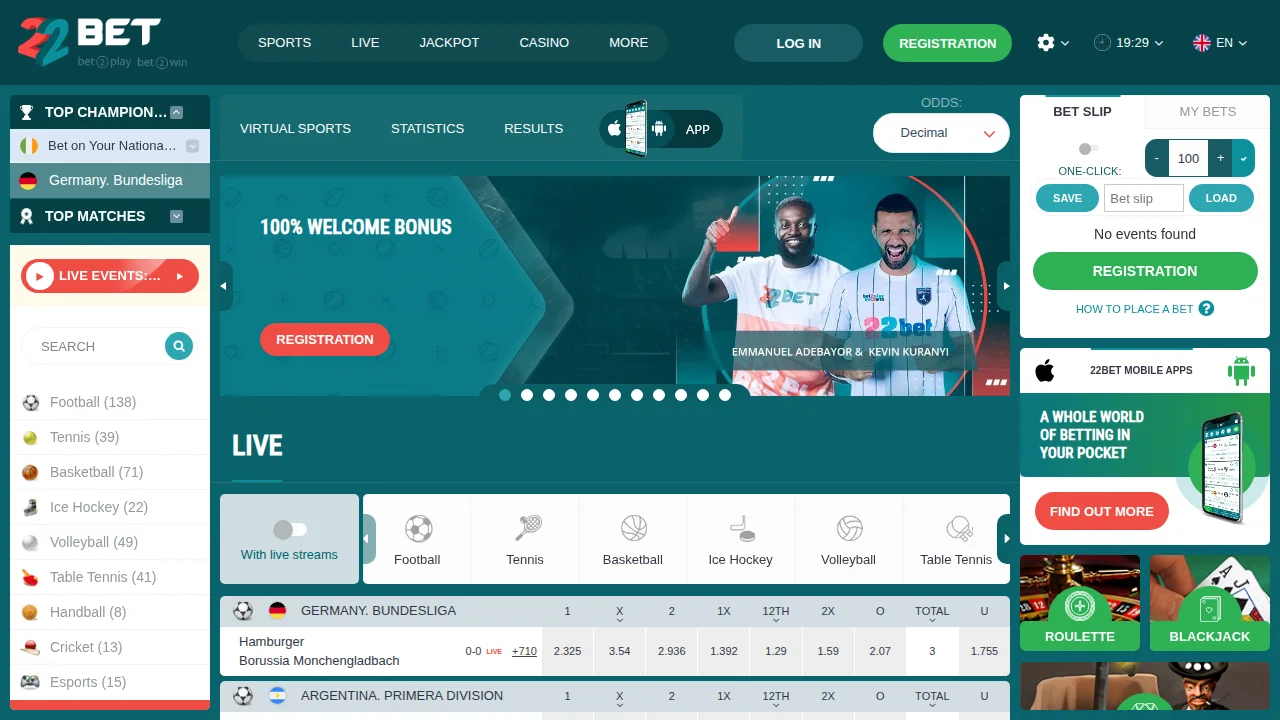

- 35x wagering requirements
- Minimum deposit €10
- 24/7 live chat and email
Duelbits
Duelbits is rated 85, with more than 4,000 games from 60+ studios. Rather than a headline deposit match, its listing highlights an instant crypto cashier, which is the main reason players choose it. Speed of payment is the product here.
- Suits: crypto users who prioritise fast deposits and withdrawals
- Check before playing: supported coins, network options and any minimum withdrawal per coin
- Worth noting: 60+ studios is a strong spread for a crypto-first lobby
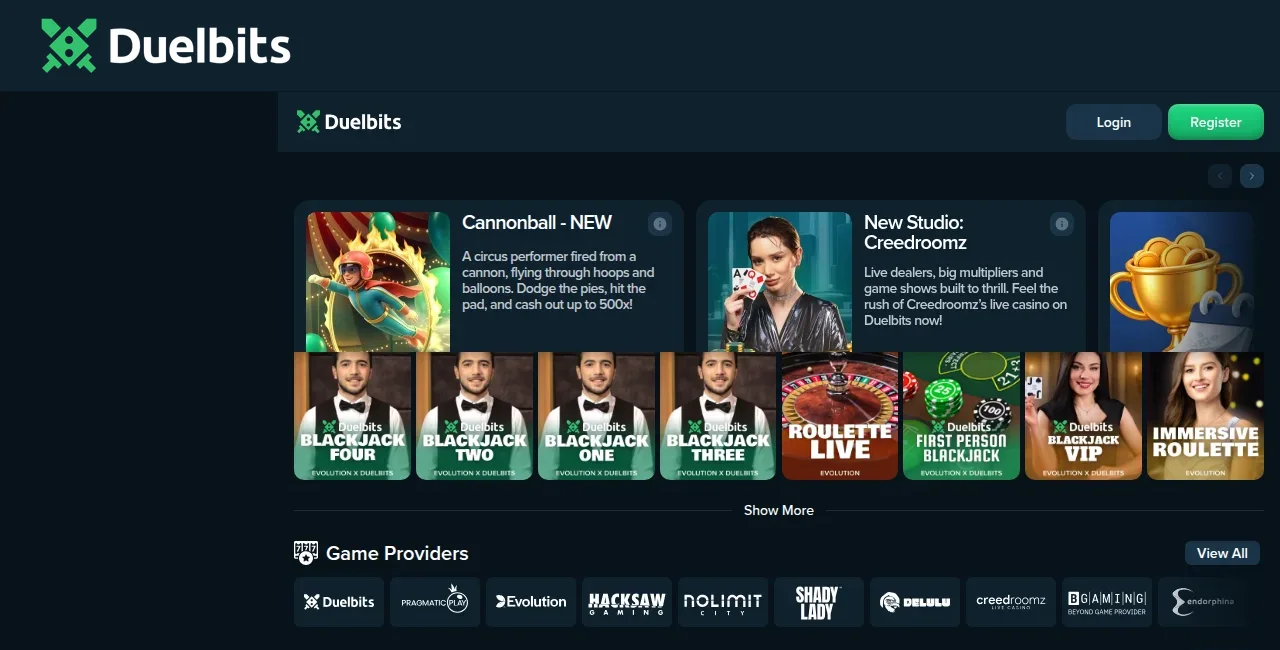
- Instant crypto withdrawals
- 24/7 live chat and email
- Provably fair Originals
1xBet
1xBet scores 84. Its listing points to 11 payment options, one of the wider cashier menus on this site, and a welcome offer of up to €1,500 + 150 FS. The lobby is large and busy, with a strong emphasis on slots and live games.
- Suits: players who want plenty of payment choice
- Check before claiming: whether the casino offer or another product’s offer is selected at sign-up
- Worth noting: match your withdrawal method to your deposit method to avoid delays
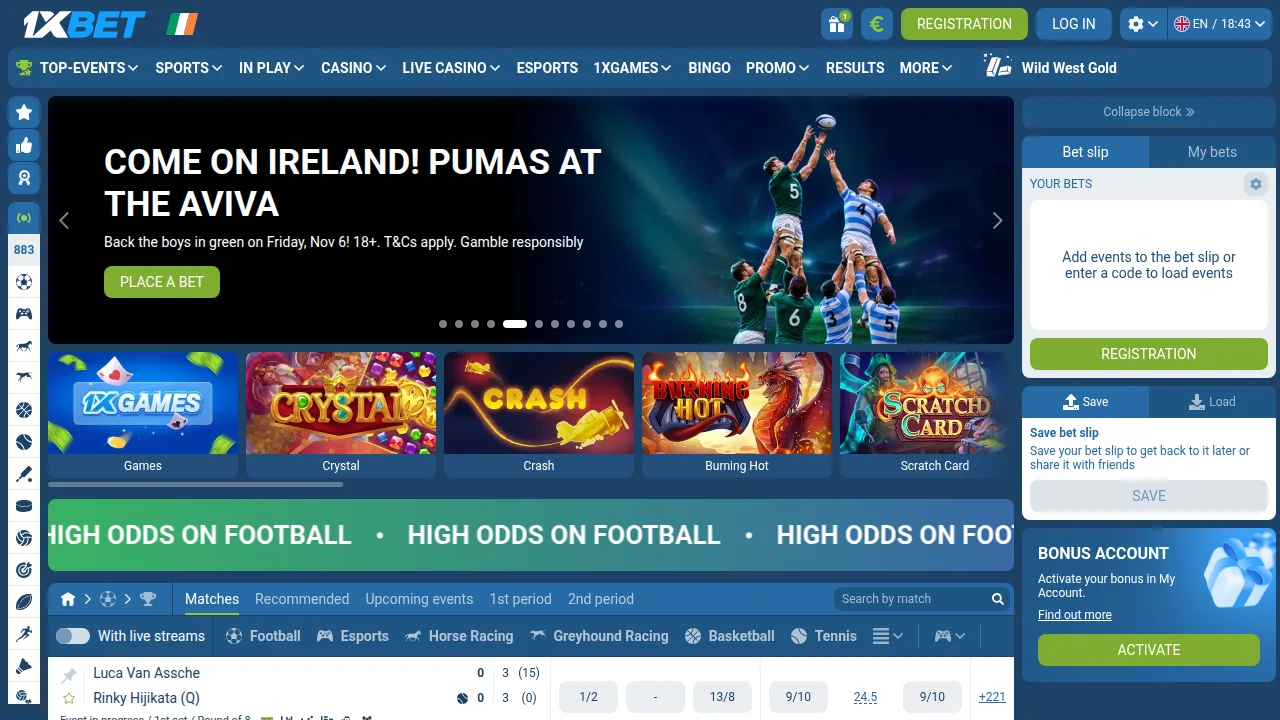

- iOS and Android apps
- Weekly cashback offers
- 8 game studios listed
Lukki Casino
Lukki Casino is rated 84. Its headline is the largest on this site in nominal terms, €4,000 + 300 free, spread across a four-deposit welcome offer. Splitting a package over four deposits means the value depends on how many of those deposits you actually make.
- Suits: players who prefer a structured package over a single match
- Check before claiming: the match percentage and cap at each of the four stages, and the time window for each
- Worth noting: you do not have to complete all four stages; take only what fits your budget
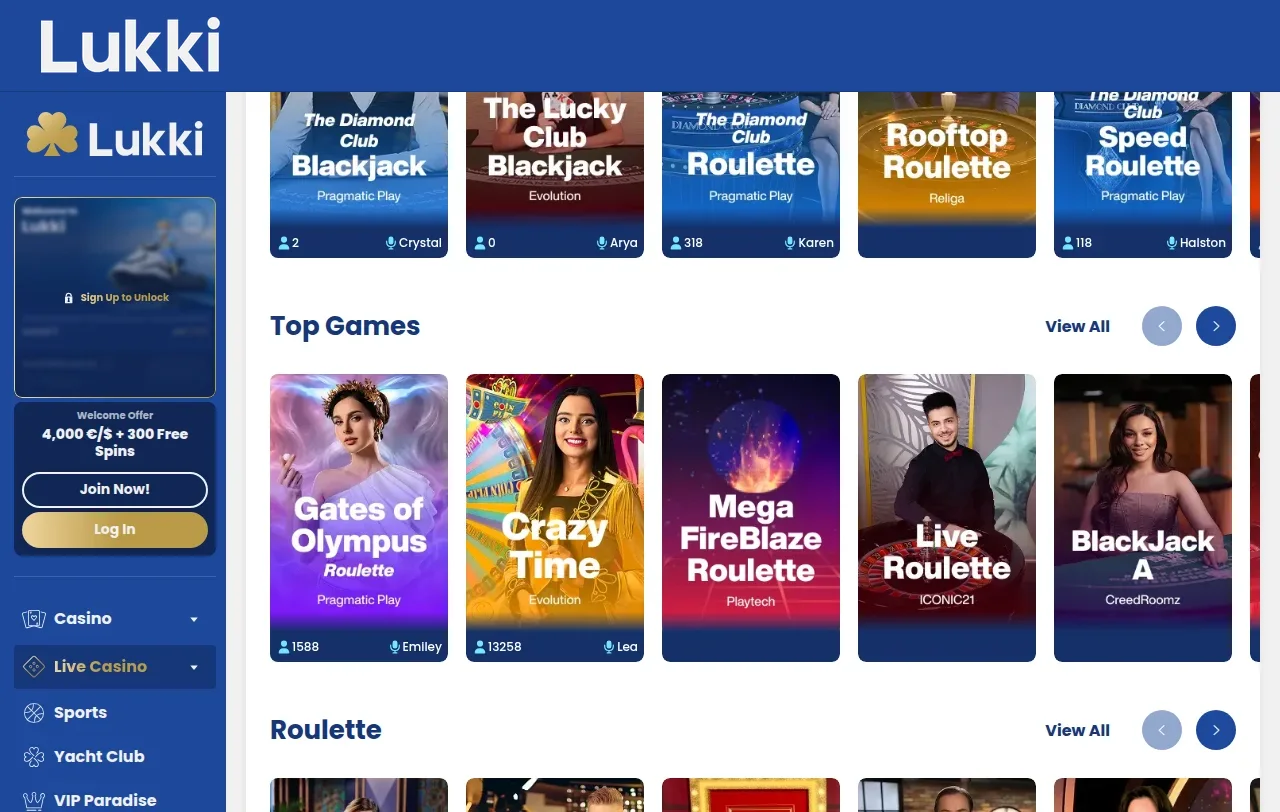
- 14,000+ casino games
- 24/7 live chat support
- Crypto deposits accepted
PlayOJO
PlayOJO scores 83 and takes a different approach: no-wagering free spins, with winnings paid as real cash. That removes the playthrough maths entirely, which is the main reason players choose it.
- Suits: players who dislike wagering requirements and want transparent value
- Check before playing: which slots the free spins apply to and the spin value
- Worth noting: a no-wagering spin is usually smaller in headline terms, but what you win is withdrawable
- Min. deposit €10
- Over 80 Must Drop jackpots
- 24/7 live chat support
Roobet
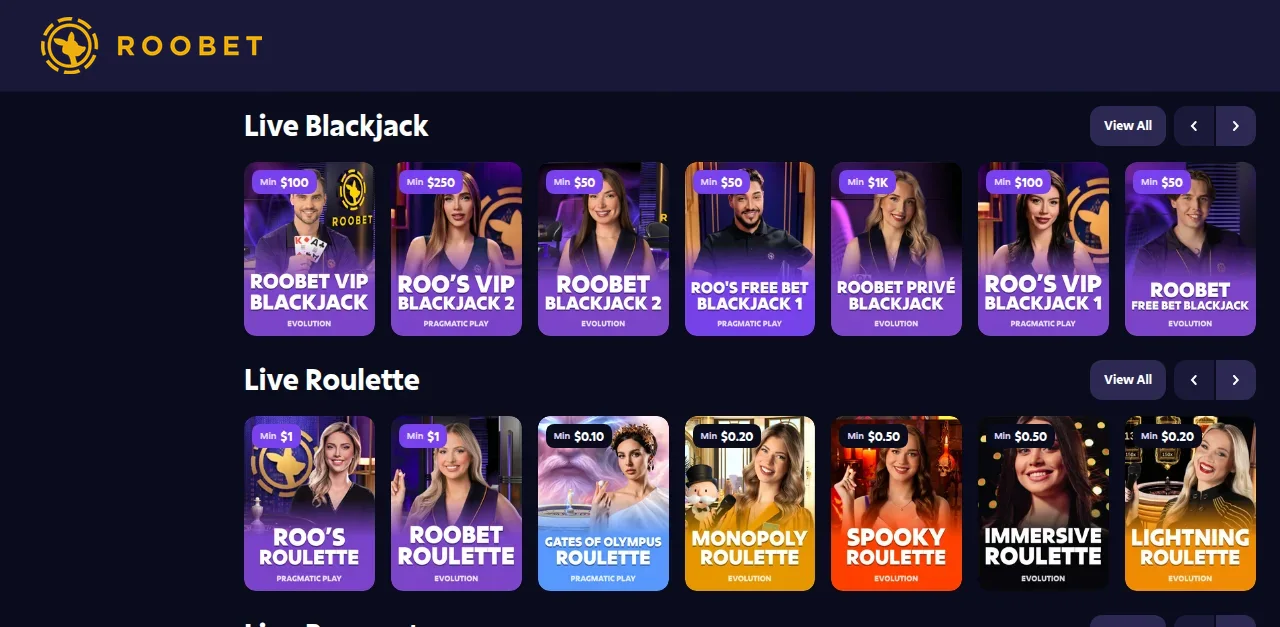
Roobet is rated 81. Its listing highlights a crypto + fiat cashier and games from 15 top studios. The catalogue is tighter than the largest lobbies here, focused on established names rather than volume.
- Suits: players who want both crypto and conventional payment options in one account
- Check before playing: which fiat methods are offered for withdrawals as well as deposits
- Worth noting: a curated studio list makes the lobby quick to navigate
- 24/7 live chat support
- Evolution live casino
- Browser play, iOS & Android
Puntit
Puntit scores 81, with a €500 Starter Pack and both crypto and PayPal deposits. That combination is less common than it sounds: many crypto-focused casinos do not offer PayPal, and many PayPal casinos do not take crypto.
- Suits: players who want to choose between an e-wallet and crypto
- Check before claiming: which deposit methods qualify for the Starter Pack, since e-wallet exclusions are common in bonus terms

Casumo
Casumo is rated 81. The offer is 100% up to €300, and its listing adds 50 spins on Wild Wild Riches. That is a modest headline, but a simple single-match structure is easier to assess than a multi-stage package.
- Suits: players who prefer a smaller, straightforward welcome match
- Check before claiming: the wagering on the match and whether the 50 spins are released at once or in batches

- 53 game studios listed
- PayPal, Skrill & Neteller
- €10 debit card deposit
Videoslots
Videoslots scores 80 and lists over 230 game providers, the widest provider count on this site. Its promotional focus is slot tournaments rather than a large deposit match, so the value comes from competitive play across a very broad library.
- Suits: slot players who want access to niche and smaller studios
- Check before entering: tournament buy-ins, prize structures and qualifying games
How to Read a Welcome Bonus Before You Accept It
The headline figure on a welcome offer tells you the maximum you could receive, not what you can realistically withdraw. Five terms decide that. Read them on the operator’s bonus terms page, not the banner, before you tick the opt-in box.
- Wagering requirement: how many times you must play through the bonus (sometimes bonus plus deposit)
- Maximum bet: the largest stake allowed while the bonus is active
- Game weighting: how much each game type counts towards wagering
- Time limit: how many days you have to complete wagering
- Maximum cashout: any cap on what can be withdrawn from bonus winnings
Wagering arithmetic
Wagering is a multiplier applied to an amount. The examples below use generic figures for illustration only, not any brand’s actual terms.
| Example | Bonus | Deposit | Wagering | Total to play through |
|---|---|---|---|---|
| Bonus only | €100 | €100 | 35x bonus | €3,500 |
| Bonus plus deposit | €100 | €100 | 35x (bonus + deposit) | €7,000 |
| Free spin winnings | €20 won | — | 40x winnings | €800 |
| No wagering | €20 won | — | None | €0, withdrawable |
The second row shows why the wording matters. The same 35x multiplier doubles the playthrough when it applies to bonus plus deposit. Turnover is not the same as losses, but more turnover means more exposure to the house edge.
Maximum bet while wagering
Almost every bonus caps the stake per spin or hand while it is active. Breaking that cap, even once and even by accident, is the most common reason operators void bonus winnings. The cap usually appears as a fixed euro amount or a percentage of the bonus.
Pro tip: Before you start playing with a bonus, set the slot’s bet to the maximum allowed and save it as a favourite. Some lobbies remember your last stake per game, so a higher bet from an earlier session can carry over without you noticing.
Game weighting
Slots usually count 100% towards wagering. Table games and live casino often count far less, sometimes nothing at all. Some high-RTP slots are excluded entirely.
- Slots: typically full contribution, with named exceptions
- Blackjack, roulette, baccarat: often reduced or zero
- Live casino: frequently excluded from bonus play
- Jackpot slots: sometimes excluded or capped
If you mainly play live tables, a large slot-weighted bonus may be worth little to you. A cash deposit without a bonus, or a no-wagering offer, can be the better choice.
Time limits and maximum cashout
Time limits range from a few days to a month. When they expire, the remaining bonus and any associated winnings are removed. Maximum cashout caps apply mainly to free spins and no-deposit offers, limiting what you can withdraw from bonus winnings regardless of how much you win.
Multi-deposit packages
Packages spread across several deposits, such as the four-deposit structure at Lukki Casino, show the combined total in the headline. Each stage usually has its own match percentage, cap, wagering and expiry.
- Work out the value of each stage separately
- Note the deadline for each deposit
- Remember that skipping later stages carries no penalty
- Do not deposit more than planned just to unlock the next stage
Pro tip: You can decline a welcome bonus. If you plan to withdraw soon after depositing, or you mainly play games that contribute little to wagering, playing with cash only keeps your balance fully withdrawable at all times.
Judging a Brand-New Casino
New casinos launch every month. A new brand is not a worse brand: many are run by experienced operators and launch with modern cashiers, large catalogues and competitive offers. What differs is the lack of a track record, so the quality signals have to come from the site itself.
Signs a new launch is well run
- Named operating company in the footer and terms, with a registered address
- Licence details that resolve on the regulator’s register; a published licence number counts in the casino’s favour
- Recognised studios in the lobby, since major studios vet the operators they supply
- Clear withdrawal terms stating processing times, limits and verification documents
- Responsible gambling tools available from the account menu: deposit limits, reality checks, time-out and self-exclusion
- Live chat that answers specific questions about payments and terms, not just stock replies
Signs to walk away
- No company name anywhere on the site
- Terms that contradict themselves or allow the casino to void winnings “at its discretion” without stated grounds
- Games from unknown studios with no published RTP
- Pressure to deposit through countdown timers tied to an offer
- Requests to send verification documents by ordinary e-mail rather than a secure upload area
- Withdrawal methods that differ from deposit methods with no explanation
None of these depend on the type of licence. They are product facts you can check in a few minutes before you register.
Verification timing at new casinos
Expect identity verification before your first withdrawal, and sometimes at registration. Typical documents are photo ID, proof of address and proof of payment method. New brands sometimes take longer during their first months as compliance teams scale up.
Pro tip: Upload your verification documents straight after registering, before you deposit. Approval then runs in the background, and your first withdrawal is not held up while documents are reviewed.
Payment Methods in Practice for Irish Players
Earlier sections covered which payment types international casinos accept. This section focuses on how each method behaves at the cashier: speed, bonus eligibility and the details worth checking.
| Method | Deposits | Withdrawals | What to check |
|---|---|---|---|
| Debit card | Instant | Usually a few working days | Credit cards are banned (s.165); use a debit card |
| PayPal | Instant | Often among the fastest fiat options | Sometimes excluded from welcome bonuses |
| Apple Pay | Instant | Often routed back to the linked card | Withdrawal may need an alternative method |
| Revolut | Instant via card or bank rails | Depends on the route used | Name must match your casino account |
| Bank transfer | Can take longer | Usually the slowest option | Useful for larger withdrawals with higher limits |
| Paysafecard | Instant, prepaid | Not usually available | You need a second method to withdraw |
| Crypto | After network confirmation | Often fast once approved | Coin, network and value changes while held |
Same-method withdrawals
Most casinos return funds to the method you deposited with, wherever possible. This is an anti-money-laundering rule, not a delay tactic. If you deposit by Paysafecard, which cannot receive funds, the casino will ask for a bank account or e-wallet in your name.
Crypto details that matter
- Network: sending a coin on the wrong network can mean the funds are lost
- Minimums: each coin often has its own minimum deposit and withdrawal
- Value: crypto balances can rise or fall in euro terms between deposit and withdrawal
- Wallet ownership: withdraw to a wallet you control
Brands that list a crypto cashier on this site include BitStarz, Duelbits, Roobet and Puntit.
Mobile Play and Account Security
Most Irish players use casinos on their phones. All the brands listed here run in a mobile browser, and some also offer apps. Security on your side matters as much as security on the casino’s side.
Browser or app
- Browser play needs no installation, updates automatically and works on any device
- Apps can offer biometric login and smoother navigation, but must come from an official source
- Avoid installation files sent through messages or links from unofficial pages
Passwords and two-factor authentication
Your casino account holds money and identity documents. Treat it like a bank account.
- Use a unique password not shared with any other site
- Turn on two-factor authentication where the casino offers it
- Use a password manager rather than writing passwords down
- Log out on shared devices
- Review your login history if the account menu shows it
Public Wi-Fi and phishing
Avoid logging in or making payments on open public Wi-Fi. Be wary of e-mails or texts claiming to be from a casino and asking you to “confirm” details through a link. Go to the casino directly through your bookmark instead. Genuine operators never ask for your full card number or password by e-mail.
What Changes When Irish Remote Gaming Licences Arrive
The GRAI plans to open remote gaming licensing in 2027-2028. Until then, online casino offered to Irish players operates under European and other international licences. Offering online casino is not yet a criminal offence under the 2024 Act, since s.67(2) has not commenced, although the Gaming and Lotteries Act 1956 remains on the statute book.
Expected sequence
- 1 July 2026: remote betting restricted to GRAI licensees (s.67(1)); Revenue remote licences ended on 30 June 2026
- 5 November 2026: the register held 37 remote betting licences and 4 intermediary licences
- 2027-2028: remote gaming licensing expected to open
- Not yet commenced: the National Gambling Exclusion Register (ss.44-49)
What it may mean for players
When Irish casino licences are issued, licensees will work under GRAI codes on promotions, limits and advertising. Exact figures are not yet published, so any prediction about specific caps is speculation. What is certain is that the international market will remain where catalogue breadth, promotional variety and payment choice are concentrated, as it is in other countries that regulate locally.
This guide will be updated when the GRAI publishes its remote gaming regulations.
Final Checklist Before You Sign Up
Use this list each time you try a new casino. Nothing on it takes more than a few minutes, and it covers everything this guide explains in depth.
- Licence: jurisdiction stated, entity named, register entry found where a number is published
- Company: operating company and address in the terms
- Catalogue: studios you recognise, RTP information available
- Bonus: wagering basis, maximum bet, game weighting, expiry and cashout cap read in full
- Payments: your preferred method accepted for both deposit and withdrawal
- Verification: documents uploaded before your first withdrawal
- Security: unique password and two-factor authentication turned on
- Limits: deposit limit and reality check set before your first session
- Budget: an amount you are comfortable losing, decided in advance
The international casinos covered here give Irish players broad catalogues, flexible payments and promotions that the future Irish framework is unlikely to match. Choose the one whose product fits how you play, check it against this list and keep your limits in place.
Gambling is for adults aged 18+. If you need support, Gambling Care runs a free 24-hour helpline on 1800 936 725, Extern Problem Gambling is on 089 241 5401, and Gamblers Anonymous Ireland is on +353 1 8721133 (10:00-22:00, every day).
Game Libraries and Software Providers
The software studios a new casino works with tell you a lot about it. A casino rarely builds its own games. It licenses them from independent developers, and those developers decide which operators they will supply. Established studios usually run their own checks on an operator before agreeing to a deal. A lobby full of recognisable providers is therefore a modest but real signal that the casino has passed some outside scrutiny.
When you open the lobby of an unfamiliar site, look past the banner games and use the provider filter, which most platforms include. A healthy library usually mixes large studios with smaller specialist developers, plus a separate live dealer section from a dedicated live casino supplier. If the provider list is very short, or the studio names don’t appear anywhere else, ask yourself whether the games are genuine licensed titles at all.
Why provider choice matters to you
- Game integrity: Reputable studios have their random number generators and game mathematics certified by independent laboratories. These certificates are often required by the regulators that license the studios themselves.
- Consistent rules: A well-known slot or table game should behave the same way at every licensed casino offering it, apart from any configurable settings the provider allows. More on those in the next section.
- Access to information: Established games carry an information or help panel that explains paylines, features, maximum win and the theoretical return. Missing or vague help screens are a warning sign.
Counterfeit and cloned games
Copied or “pirated” versions of popular slots have circulated on some unregulated websites over the years. They look like the originals but run on unknown servers with unknown mathematics. Software providers sometimes publish lists of operators they actually supply, or will confirm whether a site is a legitimate partner if you contact them. The game’s loading screen, the help file and the URL the game loads from can also give clues. A legitimate game normally shows the developer’s branding consistently, and its help file matches the version described on the developer’s own website.
A large library is not automatically a good one. Some new casinos advertise thousands of titles, but many are near-identical variants. For most players, it matters more that the specific games you enjoy are available, that table game rules are clearly stated, and that the site’s search and filter tools let you find things quickly. If you mainly play blackjack or roulette, check the table limits and rule variations on offer before you deposit. A strong slot library says nothing about the quality of the tables.
RTP, Volatility and the House Edge Explained
- Three ideas explain most of what happens to your balance over time: return to player (RTP), volatility and the house edge.
- Understanding them won’t help you win.
- It will help you choose games that suit your budget and spot when a casino’s presentation is misleading.
Return to player
RTP is the percentage of all money wagered on a game that the game is designed to pay back over a very large number of rounds. A slot with a 96% RTP is built to return €96 for every €100 staked, averaged across millions of spins and many players. It says nothing reliable about a single session. Over an evening you can finish far above or far below that figure. The house edge is simply the other side of the same number: a 96% RTP means a theoretical 4% edge for the casino.
The same slot can have different RTPs
Many game studios supply the same slot in several RTP configurations, and the operator chooses which version to run. The game looks and plays identically, but the long-run return can differ by several percentage points. The only way to know which version a casino uses is to open the game’s information panel, which normally states the theoretical RTP. Make a habit of checking it, especially at a new casino. Comparing the stated figure with the one on the developer’s website tells you whether you are playing the highest version available or a reduced one.
Table game edges
Table games have edges fixed by their rules, and those edges are well documented:
- European roulette (single zero) carries a house edge of about 2.70%. American roulette, with a double zero, carries about 5.26%. If a casino offers both, the European wheel is mathematically the better choice. Some single-zero tables also apply a “la partage” or “en prison” rule on even-money bets, which lowers the edge on those bets further.
- Blackjack can have an edge below 1% if you use basic strategy and the table rules are favourable. Rules such as paying 6:5 instead of 3:2 on a blackjack increase the edge significantly. Always read the payout printed on the table or in the rules.
- Baccarat has an edge of roughly 1.06% on the banker bet (with the standard 5% commission) and about 1.24% on the player bet. The tie bet, at the common 8:1 payout, carries an edge of over 14%.
Volatility
Volatility, sometimes called variance, describes how the return is distributed. Low-volatility games pay small amounts frequently. High-volatility games pay rarely but can pay large sums when they do. Two slots with the same RTP can feel completely different. On a high-volatility game, a modest budget can run out before any significant feature triggers. Many providers state a volatility rating in the help file, though there is no single industry standard for these ratings. If you want a session to last on a fixed budget, lower volatility and smaller stakes are the practical levers. No setting, pattern or timing changes the underlying odds.
Independent Testing and Game Fairness
A fair online game rests on two things. The random number generator must produce unpredictable results, and the game mathematics must match what is advertised. Neither can be checked by a player at home. The industry relies on independent testing laboratories instead, and the reputable regulators require operators and suppliers to use them.
Who does the testing
Several accredited laboratories specialise in gambling systems. Widely recognised names include Gaming Laboratories International (GLI), BMM Testlabs, iTech Labs and eCOGRA. They test RNG output statistically and review game code and paytables. Depending on the engagement, they may also audit the operator’s actual payout figures over a period. A certificate covers a specific product, version or audit period. It is not a permanent seal of approval for an entire company.
What to look for on a casino site
- Testing seals that link somewhere: A logo in the footer means little on its own, because anyone can copy an image. A credible seal usually links to a certificate or verification page hosted on the laboratory’s own domain. Check that the domain in your browser’s address bar actually belongs to the lab.
- Dates and scope: If a certificate is shown, look at what it covers and when. A payout report from several years ago, or one covering only part of the game library, tells you less than a current, broad certification.
- Consistency with the licence: Regulators such as the Malta Gaming Authority require certified gaming systems as part of their licensing. If a casino’s licence checks out, that already implies some level of system approval. Testing seals add detail rather than replacing licence verification.
Provably fair games
Some crypto-focused casinos offer “provably fair” games. These use cryptographic hashes so a player can check, after each round, that the result was not changed once the bet was placed. This is a genuine technical feature, but it has limits. It proves that a particular result followed from the stated inputs. It doesn’t prove that the game’s paytable is generous, that the operator is properly licensed, or that withdrawals will be honoured. Treat provably fair verification as a complement to the checks described elsewhere on this page, never as a substitute for them.
When a result looks wrong
Disconnections and display glitches do happen. Most licensed casinos keep a server-side record of every round, and their terms usually state that this record decides the outcome if the display and the server disagree. If you think a round was settled incorrectly, note the date, time, game name and stake. Take a screenshot if you can, and ask support for the round history. A licensed operator should be able to retrieve and explain it.
Live Dealer Casino: What to Expect
Live dealer games stream real tables from dedicated studios. A human croupier deals cards or spins a wheel, and your bets are placed through an on-screen interface. For many Irish players, live blackjack, roulette and baccarat have replaced RNG table games because the action is visible and the pace feels closer to a land-based casino.
Who runs the tables
Nearly all online casinos license live games from specialist suppliers rather than running their own studios. Large suppliers operate studios in several European countries and elsewhere, often with English-speaking tables available around the clock. Because the same supplier may serve hundreds of casinos, a live table at a brand-new site can be identical to one at a long-established operator. The casino controls the account, the bonus terms and the payments. The supplier controls the game itself.
Points to check before you sit down
- Table limits: Minimum and maximum stakes vary widely, from low-limit tables suited to casual play to high-limit tables with large minimums. The limits are shown in the lobby or on the table itself.
- Rule variations: Live blackjack rules differ between tables, including the number of decks, whether the dealer hits or stands on soft 17, doubling and splitting rules, and side bets. Live roulette includes European, French and American wheels, plus variants with random multipliers that change the payout structure. Read the help panel on each table.
- Game shows: Wheel-based and studio “game show” titles are very popular. Their house edges vary considerably between the different bet positions, and the help file usually states the RTP of each. Those figures are worth reading, because some positions return much less than others.
- Bonus contribution: Live games often contribute little or nothing towards bonus wagering, and some bonus terms exclude them entirely. Confirm this before playing with bonus funds.
Connection and conduct
Live streams need a stable connection. On mobile data, reduce the video quality in the table settings if the stream stutters. Most suppliers set rules for what happens to a bet when your connection drops. In blackjack, for example, a default action may be applied. These rules are set out in the help section. Chat functions at live tables are moderated, and abusive messages can lead to chat restrictions. Treat the dealer as you would at a physical table.
Live games deal more slowly than RNG games, which can make a budget last longer. The edge of each game is the same whether it is dealt live or by software with the same rules. The camera adds atmosphere, not better odds.
Progressive Jackpots and Networked Prizes
Jackpot games are among the most heavily advertised products in online gambling, and among the most misunderstood. Before chasing a headline figure, it helps to know how the prize pools work.
Types of jackpot
- Fixed jackpots: A set top prize that does not change, built into the game’s paytable.
- Local progressives: A pool that grows from a share of the stakes placed on a game, or a group of games, at a single casino.
- Networked progressives: A pool fed by stakes on the same game across many casinos, sometimes in many countries. These produce the very large, widely publicised wins. A well-known example is Mega Moolah, which has paid several multi-million euro jackpots since its launch.
- Time- or amount-triggered jackpots: Sometimes called “must drop” jackpots, these are designed to pay out before a set time or before the pool reaches a set amount. They are often shown with a countdown or a maximum value.
The trade-off
Money that feeds a progressive pool comes out of the game’s overall return. Part of every stake goes into the jackpot, so the base game usually pays back less than a comparable non-jackpot slot. The stated RTP of a jackpot game often includes the jackpot contribution. Most of that contribution goes to the rare player who hits the top prize, not to the typical player. For most people, a jackpot slot is a lower-returning game with a lottery-style ticket attached.
Eligibility conditions
Read the help file for any qualifying conditions. Some jackpot games scale your chance of triggering the prize with your stake. Others require a minimum bet to be eligible at all. Some casinos also exclude jackpot games from bonus play, or rule that jackpots won with bonus funds are void or capped. Check this before playing a jackpot title on a bonus balance.
How large wins are paid
- Networked jackpots are usually funded by the game supplier and paid through the casino.
- Because the sums involved can be very large, operators may require enhanced identity and source-of-funds checks before releasing the money.
- Some terms and conditions allow large wins to be paid in instalments.
- Look for any clause on payment of large wins, and for any maximum withdrawal limits, before you play, not after a win.
- A reputable operator states these terms clearly.
- Vague or missing terms around large payouts are a reason for caution.
Jackpot advertising tends to show the size of the pool, not the probability of winning it. That probability is generally extremely small. Treat any stake on a jackpot game as entertainment spending you are comfortable losing in full.
White-Label Platforms and Sister Sites
Many new online casinos are not independent companies building their own technology. They run on “white-label” platforms. A platform provider supplies the software, payment integrations, game aggregation and often the licence and compliance functions, and the brand owner focuses on marketing. This model explains why so many new casinos launch each year and why many of them look alike.
How to recognise a white-label casino
- The terms and conditions name an operating company that also appears on other casino brands, often listed together in the site footer or in the terms.
- The cashier, account pages and help centre have the same layout as other sites you may have used.
- Several brands display the same licence number when you check the regulator’s register.
Using a white-label platform is not a problem in itself. The operating company holds the licence and carries the regulatory duties. A brand on an established platform may be more reliable than a brand-new independent operator with untested systems. What matters is who the licensed entity is and what its track record looks like.
What sister sites mean for you
- Shared account checks: Some operators link customer records across their brands. Identity documents you submitted at one brand may be recognised at another, or you may be asked to verify again.
- Bonus eligibility: Terms often state that a welcome offer is available only once per person, household or IP address across a group of sister brands. Opening accounts at several sister sites to claim repeated welcome bonuses can lead to bonuses being voided and accounts being closed.
- Self-exclusion scope: This is the most important point. Excluding yourself at one brand does not automatically exclude you from every sister site. Some operators apply exclusion across their whole group and others do not. If you are taking a break, ask support directly whether the exclusion covers all brands operated by the same company. If it doesn’t, request exclusion at each one.
- Complaints: Because the licence belongs to the operating company, a complaint about any of its brands is ultimately directed at that company and its regulator.
Before signing up at a newly launched brand, it is worth five minutes to identify the operating company and look up its other brands. A group with a long, stable history of paying players and handling complaints properly tells you more than the launch marketing of a single new brand.
Account Verification and Anti-Money Laundering Checks
Every properly licensed casino has to verify who its customers are and monitor transactions for signs of money laundering or fraud. Within the European Union, these duties come from the EU’s anti-money laundering framework as applied by each licensing jurisdiction. Operators licensed elsewhere face comparable requirements from their own regulators. Verification can feel like an obstacle, but its absence is a far worse sign than its presence.
What you are typically asked for
- Proof of identity: A passport or driving licence is commonly requested. Some operators also ask for a selfie or a short video check to confirm that the document belongs to you.
- Proof of address: Usually a recent utility bill, bank statement or official letter. Many operators specify that it must be dated within the last three months.
- Proof of payment method: A photo of your card with the middle digits covered, or a screenshot of the e-wallet or bank account you used, showing your name.
- Source of funds or wealth: At higher deposit levels, or when activity triggers internal checks, operators may ask where your gambling money comes from. Payslips, bank statements or other documents may be requested.
When verification happens
Some casinos verify fully at registration. Others let you deposit and play first, and verify when you request your first withdrawal. The second approach is convenient at the start but can delay your first payout. The practical advice is simple: complete verification as soon as you open an account, before you have a balance you want to withdraw. Check the terms as well. Some casinos state that accounts which are not verified within a set period may be suspended.
Submitting documents safely
- Use the secure upload area inside your account rather than sending documents as ordinary email attachments, unless support specifically directs you otherwise.
- Make sure images are clear, uncropped and show all four corners of the document. Rejected uploads are one of the most common causes of payout delays.
- Never send documents in response to an unsolicited message claiming to be from a casino. Log in directly through the site you know and check whether a request actually exists.
- Be wary of any site that asks for far more than the categories above without explanation.
Names and addresses must match across your account, your documents and your payment methods. Using someone else’s card or e-wallet, even a family member’s, usually breaches the terms and can lead to winnings being withheld. If your details change, for example after moving house, update your account and expect to provide new proof.
Withdrawals: Timelines, Limits and Pending Periods
How a casino handles withdrawals is the clearest test of whether it deserves your money. Depositing is designed to be instant and easy everywhere. Withdrawal terms are where operators differ, and where new casinos are most likely to reveal weaknesses.
The stages of a withdrawal
- Request: You ask to withdraw from the cashier. Some casinos impose a minimum withdrawal amount.
- Pending or review period: The casino reviews the request, which can include verification, bonus compliance and fraud checks. Some operators state a fixed pending time. Others process requests continuously.
- Approval and transfer: The casino releases the funds to your payment provider.
- Arrival: The time for funds to reach you depends on the method. E-wallets are often among the faster options once a payout is approved, while card and bank transfers can take several working days.
When a casino advertises “fast withdrawals“, ask which stage it means. Fast processing at the casino doesn’t help if the chosen method then takes days, and vice versa.
Reversal options
Some casinos let you cancel a pending withdrawal and return the money to your playing balance. This can tempt players to keep gambling money they had decided to take out. If you are concerned about this, look for an option to disable withdrawal reversal, or ask support whether it can be switched off for your account. It also helps to request withdrawals when you are not in the middle of a session.
Limits and conditions to check in the terms
- Daily, weekly or monthly withdrawal caps: Low caps can mean a large win is paid over many weeks or months.
- Maximum win or cashout limits attached to particular promotions or account types.
- Fees: Some casinos charge for withdrawals, especially frequent or small ones, or for certain methods.
- Closed-loop rules: For anti-money laundering reasons, many operators return funds to the same method you used to deposit, up to the amount deposited, before allowing another method.
- Turnover requirements on deposits: Some terms require deposited funds to be wagered a certain number of times before they can be withdrawn, even without a bonus. These clauses exist to deter money laundering, but you should know about them in advance.
Warning signs
Repeated requests for documents you have already provided, unexplained delays beyond the stated timeframe, pressure to cancel a withdrawal, or offers of a bonus if you keep the money in your account are all red flags. A licensed operator should explain any delay and give you an expected timeframe. If it doesn’t, keep a record of every contact and escalate through the casino’s formal complaints procedure.
Gambling Winnings and Tax in Ireland
Irish players often ask whether they owe tax on casino winnings. As a general rule, gambling winnings received by individuals in Ireland are not treated as taxable income. The tax burden on gambling in Ireland has traditionally sat with operators, through betting duty and related levies, rather than with players.
What the general rule covers
For recreational players, money won at an online casino, whether the operator is based in Ireland or abroad, is generally not subject to income tax or capital gains tax. You do not normally need to declare an ordinary casino win as income on a tax return. If your circumstances are unusual, or if gambling is a significant part of how you earn your living, get personalised advice from a qualified tax adviser or check current guidance from the Revenue Commissioners rather than relying on general statements.
Where tax can still arise
- What you do with the money afterwards: If you put winnings in a deposit account, investments or property, the interest, dividends, rental income or gains they produce are taxable in the normal way.
- Gifting winnings to others: If you pass part of a win to family members or friends, the recipient may be within the scope of Capital Acquisitions Tax under the normal gift rules, depending on the amount and their relationship to you. Tax-free thresholds apply, and the details are set out in Revenue guidance.
- Different rules abroad: If you are not tax resident in Ireland, or you move abroad, the rules of your country of residence may treat winnings differently.
Banks and large transfers
Even when no tax is due, a large transfer from a gambling operator into your bank account may prompt questions from your bank under its own anti-money laundering obligations. This is particularly likely before a mortgage application or other borrowing. Lenders also commonly look at regular gambling transactions when assessing affordability. Keep evidence of significant wins, such as the casino’s transaction history and withdrawal confirmations. They can be useful if a bank asks where funds came from.
Taxes on operators can affect players indirectly, through the odds, payouts or promotions offered. As the new Irish licensing regime under the Gambling Regulation Act 2024 comes into force, the operator-side picture may change. Nothing in that Act introduces a tax on individual players’ winnings, but check current Revenue guidance if you need certainty.
Your Personal Data Under GDPR
Opening a casino account means handing over a substantial amount of personal information: identity documents, address, payment details, and a detailed record of how, when and how much you gamble. In the European Union, the General Data Protection Regulation (GDPR) governs how that information may be used. GDPR applies to organisations established in the EU. It can also apply to organisations outside the EU that offer services to people in the EU, which covers many international casinos serving Irish players.
Rights you can exercise
- Right of access: You can ask an operator for a copy of the personal data it holds about you, including your transaction and gameplay history. The organisation must normally respond within one month, with possible extensions in certain circumstances. These requests are commonly called subject access requests.
- Right to rectification: You can ask for inaccurate data to be corrected.
- Right to object to direct marketing: You can withdraw consent to marketing emails, texts and calls at any time. A reputable casino makes this simple through account settings or an unsubscribe link.
- Right to erasure: You can request deletion of your data, but this right is limited where the operator has a legal obligation to keep information. Anti-money laundering rules generally require records to be kept for a period after the customer relationship ends, commonly five years. Responsible gambling records, including self-exclusion, may also need to be retained.
What to look for in a privacy policy
- The name and contact details of the data controller, and of a data protection officer where one is appointed.
- The purposes for which your data is used, including fraud prevention, responsible gambling monitoring and marketing.
- Which third parties receive your data, such as payment processors, identity verification services, game providers and marketing partners.
- Whether data is transferred outside the European Economic Area, and on what legal basis.
- How long data is kept.
Marketing and responsible play
Persistent promotional messages can make it harder to stick to limits or to take a break. If you are cutting back, unsubscribe from all marketing channels at every casino where you hold an account, not just the one you use most. Where an operator keeps contacting you after you have withdrawn consent, raise it with the operator in writing first. If that fails, you can complain to a data protection supervisory authority. In Ireland, that is the Data Protection Commission.
A casino that is careless with data protection basics, such as an unclear privacy policy, no named controller, or marketing that ignores your choices, is likely to be careless in other areas as well.
Testing Customer Support Before You Deposit
Support quality rarely features in casino advertising, yet it decides how smoothly any problem gets resolved. You can test a casino’s support in a few minutes before you hand over any money, and new casinos in particular deserve this check.
Channels to look for
- Live chat: The standard channel for most international casinos. Check whether it is available around the clock or only at certain hours. Note whether you reach a human agent or a scripted bot, and how easily you can get from one to the other.
- Email or ticket system: Important for anything that needs a written record, such as disputes, document issues or formal complaints. A casino should give a working address or a ticket form.
- Phone: Less common, and often not available on an Irish number. Its absence is not a red flag in itself, but it means written channels need to work well.
- Help centre: A searchable knowledge base that answers common questions about verification, withdrawals and limits suggests an operator that has thought through its processes.
Questions that reveal a lot
Open live chat and ask one or two specific questions whose answers you can check against the terms and conditions, for example:
- “What is the maximum I can withdraw per week, and is there a fee?”
- “Which documents will I need for verification, and how long does the review usually take?”
- “If I self-exclude here, does it apply to your sister sites too?”
- “Can I set a deposit limit before my first deposit?”
Good support gives a clear, direct answer that matches the written terms, or points you to the exact clause. Poor support deflects, contradicts the terms, or pushes you towards depositing or claiming a bonus instead of answering. Also notice the language quality. Agents should communicate clearly in English, since that is the language of your contract with the casino.
Keep the transcript
Most live chat tools offer an option to email yourself the transcript. Use it whenever an agent confirms something important. If a dispute arises later, a written confirmation from the operator’s own support team is useful evidence. Remember, though, that the published terms and conditions normally take precedence over anything said in chat. An agent’s answer that conflicts with the terms should prompt you to ask for written clarification, not to rely on the chat alone.
Loyalty Programmes, VIP Schemes and the New Rules on Inducements
Beyond the welcome offer, many international casinos run ongoing reward schemes: points for each euro wagered, tiered loyalty levels, cashback, “reload” offers and invitation-only VIP programmes. These schemes are designed to encourage continued play. Treat them with care.
How typical schemes work
- Points systems: You earn points based on turnover, which can be exchanged for bonus funds, free spins or sometimes cash. The rate of return is usually small relative to the amount wagered, and the conversion rate can differ between game types.
- Tiers: Higher wagering unlocks higher levels with better rewards. Levels may reset or decay if you play less, which creates pressure to keep up activity.
- Cashback: A percentage of net losses returned over a period, sometimes as withdrawable cash and sometimes as bonus funds with wagering conditions. The difference matters, so read which applies.
- VIP or account managers: Personal contacts who offer tailored promotions and faster service to high-value customers.
Why caution is warranted
Rewards linked to turnover pay you, in effect, for gambling more. The value of the rewards is almost always smaller than the expected cost of the extra wagering needed to earn them. VIP schemes in particular have attracted regulatory attention in several European jurisdictions, because a personal account manager offering incentives to someone who is losing heavily can work directly against responsible gambling. If you notice that offers become more generous as your losses grow, take it as a cue to step back, not a reason to continue.
The Irish regulatory direction
The Gambling Regulation Act 2024 includes provisions restricting inducements that encourage people to gamble or to keep gambling, such as free bets and similar incentives, for operators licensed by the Gambling Regulatory Authority of Ireland. As licensing under the Act takes effect, GRAI licensees will be expected to comply with these restrictions and with any detailed rules the Authority issues. International operators that are not GRAI licensees are not bound by the Irish rules in the same way. You may therefore continue to see loyalty and VIP offers from some international sites that differ from what an Irish-licensed operator would be permitted to provide.
Practical guidance
- Never increase your stakes or session length to reach a loyalty tier.
- Check whether rewards come with wagering requirements before treating them as “free money”.
- If you are uncomfortable with personal VIP contact, ask the operator in writing to remove you from VIP and marketing programmes.
- Judge a casino on its licence, payment record and terms, not on the generosity of its rewards scheme.
Reading Casino Reviews and Ratings Critically
Most players research a new casino by reading reviews, including on sites like this one. Reviews are useful, but you should understand how the review ecosystem works so you can weigh what you read.
Affiliate websites
Many casino review sites, this one included, are affiliates. They may receive a commission or fee when a reader signs up at a featured operator. This doesn’t automatically make a review unreliable, but it is a potential conflict of interest. A credible affiliate site discloses its commercial relationships, explains how it assesses operators, includes negative points as well as positives, and updates or removes listings when operators change. Be cautious of review sites that rate every casino highly, never mention withdrawal problems, or give no information about who writes the content.
User review platforms
Public review platforms and gambling forums gather individual player experiences. They can surface patterns, such as repeated complaints about delayed withdrawals or confiscated winnings, that a polished review might miss. Keep their limitations in mind:
- People with problems are more motivated to post than satisfied customers, so complaints tend to be over-represented.
- Some complaints come from players who breached bonus terms or failed verification, and the operator’s action may have been justified.
- Fake positive reviews exist on many platforms. A sudden cluster of short, generic five-star reviews is a warning sign, especially for a casino that has only just launched.
- Older reviews may describe a casino under different ownership, terms or licensing.
Signals worth more than star ratings
- Patterns over anecdotes: One angry review means little. Dozens describing the same issue over several months mean a lot.
- Operator responses: Does the casino reply to complaints publicly, and do its replies resolve issues or just repeat a script?
- Complaint mediation records: Some independent complaint-handling websites publish case outcomes. Look at how many cases an operator has resolved and how many it ignored.
- Regulatory action: Regulators such as the Malta Gaming Authority publish enforcement and licence decisions. A casino with recent sanctions or a suspended licence deserves extra scrutiny, whatever its review scores.
No review replaces your own checks: verifying the licence, reading the terms, testing support and starting with a small deposit and withdrawal. Reviews help you decide which casinos to check. They should not do the checking for you.
Keeping Records of Your Play
Few players keep records of their casino activity, yet a simple habit of documentation protects you in two ways. It gives you an accurate picture of what you are actually spending, and it provides evidence if a dispute arises.
What to save
- The terms at the time you accepted them: Casinos update their terms and conditions and bonus rules from time to time. Save a copy or screenshot of the bonus terms when you claim a promotion, and of the general terms when you open your account.
- Deposit and withdrawal confirmations: Keep cashier receipts, payment provider notifications and bank statement entries.
- Support conversations: Email yourself live chat transcripts and keep all email threads with the operator, particularly about verification, withdrawals or complaints.
- Disputed rounds: If a game result looks wrong, note the date, time, game, stake and round ID if shown. Take a screenshot straight away.
- Responsible gambling settings: Save confirmation of any deposit limits, time-outs or self-exclusion you set, including the date and duration.
Using account history
Most licensed casinos provide a transaction history and often a gameplay history in the account area. Some also offer activity statements showing net deposits and withdrawals over a period. Download these periodically, because access to older history may be limited and an account you close may no longer be accessible. If an operator does not provide a history you need, you can request your data under GDPR, as explained above.
A monthly reality check
Once a month, add up total deposits minus total withdrawals across every casino where you hold an account. The single figure that results is your actual net cost of gambling for that month. It is often more revealing than the memory of individual wins, which tends to be more vivid than the memory of losses. If the figure is higher than you expected, or higher than you can comfortably afford, that is useful information. Act on it by lowering limits, reducing the number of accounts you hold, or using the support services available in Ireland.
Storing records safely
Your records will include sensitive financial and identity information. Store them securely, for example in an encrypted folder or a password-protected cloud account with two-factor authentication. Don’t keep copies of identity documents on shared devices. Delete records once they are no longer useful, keeping anything that relates to an unresolved dispute until the matter is closed.