

Free slot play means demo mode: the same game file the casino runs, loaded with virtual credits instead of your own money. Reels, paytable, bonus rounds, RTP setting and max-win cap all behave exactly as they do in the paid version. What demo mode does not do is pay anything out. Virtual credits cannot be withdrawn, demo spins do not qualify for progressive jackpots, and no free round ever converts into cash. Real balances, real jackpots and real withdrawals only exist when you play for money at a licensed operator.
That distinction is the whole point of this page. Below you get the demo library first — spin anything, no deposit, no registration on most titles — and then a straight, number-led look at where the same games are available for money, what the international casino catalogues actually contain, and how to read RTP, volatility and bet limits before you commit a cent.
Free slots in 60 seconds
- What you get: the full game, the full paytable, every feature, every bonus round — funded with virtual credits.
- What you don’t get: withdrawable winnings, progressive jackpot eligibility, loyalty points, tournament entries or bonus progress.
- Registration: not needed for most demos. A handful of providers gate demo play behind a logged-in session.
- Age: the legal gambling age in Ireland is 18+, and that applies to real-money play at any operator.
- Cost: nothing. Demo credits reset when you reload the game.
- Best use: learning a paytable, timing a bonus round, and finding out whether a game’s rhythm suits you before money is involved.
| Demo mode (free) | Real-money mode | |
|---|---|---|
| Game engine & maths | Identical | Identical |
| RTP setting | Same version the operator has configured | Same version the operator has configured |
| Bonus rounds | All of them, triggered the same way | All of them, triggered the same way |
| Progressive jackpots | Not eligible — pot is cosmetic | Eligible, usually at a qualifying stake |
| Winnings | Virtual credits only, never withdrawable | Real cash, subject to the cashier’s terms |
| Bonus wagering | No contribution | Counts according to the operator’s terms |
| Session limits & reality checks | Not applied | Applied if you set them |

How the games on this page were checked
Every title listed here was run in the provider’s own official demo build — not a clone, not a Flash port, not a video capture. The checking routine is deliberately boring and always the same, because that is what makes two games comparable.
- Paytable read end to end: symbol values, line/way count, scatter triggers, multiplier ranges, max-win cap and the RTP figure the provider publishes in the info screen.
- Several hundred base-game spins per title at a fixed stake, to see how often the game pays something at all and how long dead stretches run.
- Every feature triggered at least once where the game allows it, including any bonus-buy option, so the feature’s structure is described from the game and not from marketing copy.
- Bet range recorded from the stated minimum to the stated maximum per spin, because that range decides whether a game fits a small bankroll or not.
- Mobile build opened separately — a few titles lose autoplay, bet presets or the full paytable view on a phone.
Pro tip: hundreds of demo spins tell you a game’s rhythm, never its outcome. A demo run that hits two bonus rounds in 150 spins is noise, not a forecast. Use the demo for the paytable and the pacing; ignore what the virtual balance did.
Why the paytable matters more than the trailer
Two slots can both advertise “free spins with multipliers” and play nothing alike. One gives eight spins with a fixed ×2; the other gives ten spins with a progressive multiplier that never resets. The paytable states which it is, in one line, before you stake anything. It also states the max-win cap — the ceiling, expressed as a multiple of your stake, at which the game stops paying no matter what the reels do.
What a demo cannot tell you
- Whether your session will be profitable. No sample of spins predicts the next one.
- The operator’s RTP version. Some games ship in several configurations; the info screen inside the casino is the only reliable source.
- Payout speed or verification friction. Those are operator traits, not game traits.
- Bonus eligibility. Many welcome offers exclude or weight certain titles at a reduced percentage.
The slots we checked, side by side
The table below lists each game with its provider, published RTP, volatility band, grid and bet range, so you can filter by the numbers rather than by thumbnail art. Open any row’s demo and the game loads with virtual credits.
| Review | Provider | RTP | Volatility | Max. Win |
|---|---|---|---|---|
| The Dog House | Pragmatic Play | 96,51 % | Very high | 6,750x stake |
Use the bet-range column first if your budget is fixed: a game with a €0.20 minimum gives a €20 bankroll 100 spins, while a €1.00 minimum gives it 20. Nothing about RTP or volatility changes that arithmetic.
Where to play the same slots for money
Demo mode ends where the cashier begins. If you want jackpot eligibility, tournament entries and withdrawable balances, you need an account at an operator that carries the title. The brands below are the ones we cover; each card links to the full review with licence details, cashier list and terms.

- Wager-free Book of Dead spins
- 24/7 live chat in English
- PayPal, Trustly & Apple Pay

- Welcome pack over 4 deposits
- 24/7 live chat and phone
- Crypto, Skrill and Neteller

- 24/7 live chat support
- 180 free spins on deposit 1
- Cards, e-wallets and crypto
What the international catalogues actually add
Ireland has no Irish-licensed online casino to compare against yet: the Gambling Regulatory Authority of Ireland (GRAI) is scheduled to open remote gaming licensing in 2027-2028, so the casino product available to Irish players today runs on European licences — MGA, Gibraltar, UKGC — alongside Curaçao and similar jurisdictions. The practical consequence for a slots player is scale. These are multi-market operations, and their libraries are built for dozens of countries at once.
| Brand | Catalogue / studios | Rating |
|---|---|---|
| Videoslots | Over 230 game providers | 80 |
| BitStarz | 9,000+ games, crypto-friendly | 86 |
| 22Bet | About 9,000 casino games | 85 |
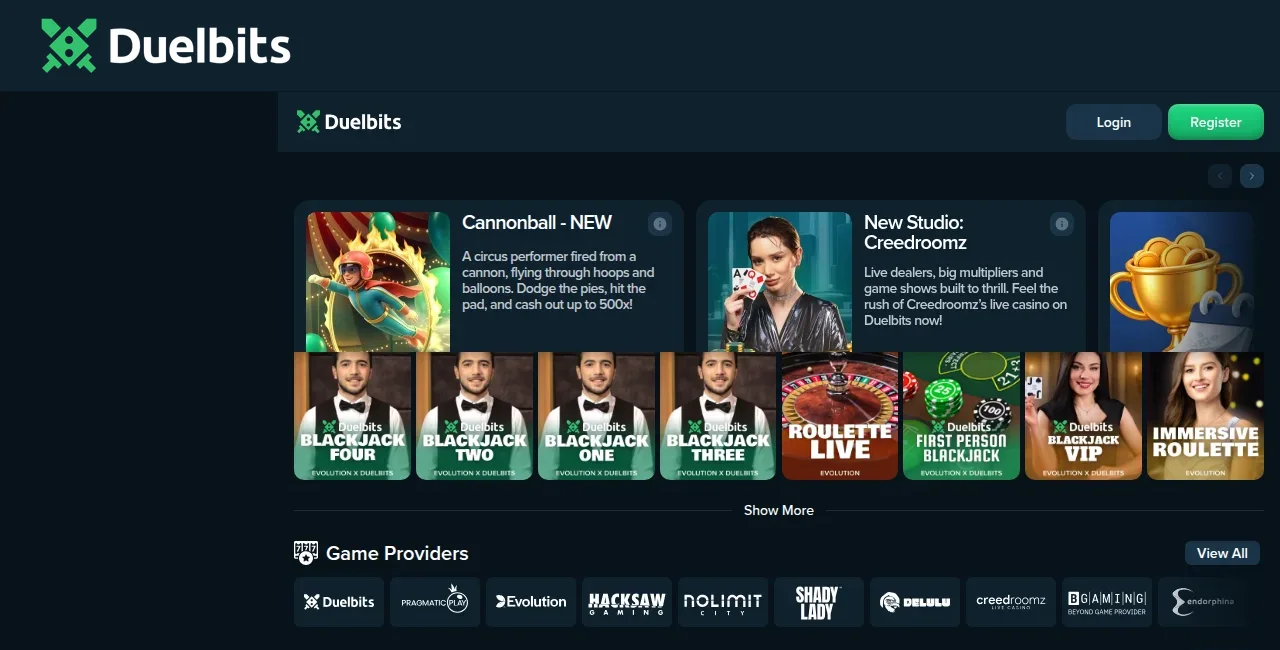
| Duelbits | 4,000+ games from 60+ studios | 85 |
| ICE Casino | 3,500+ slot games | 87 |
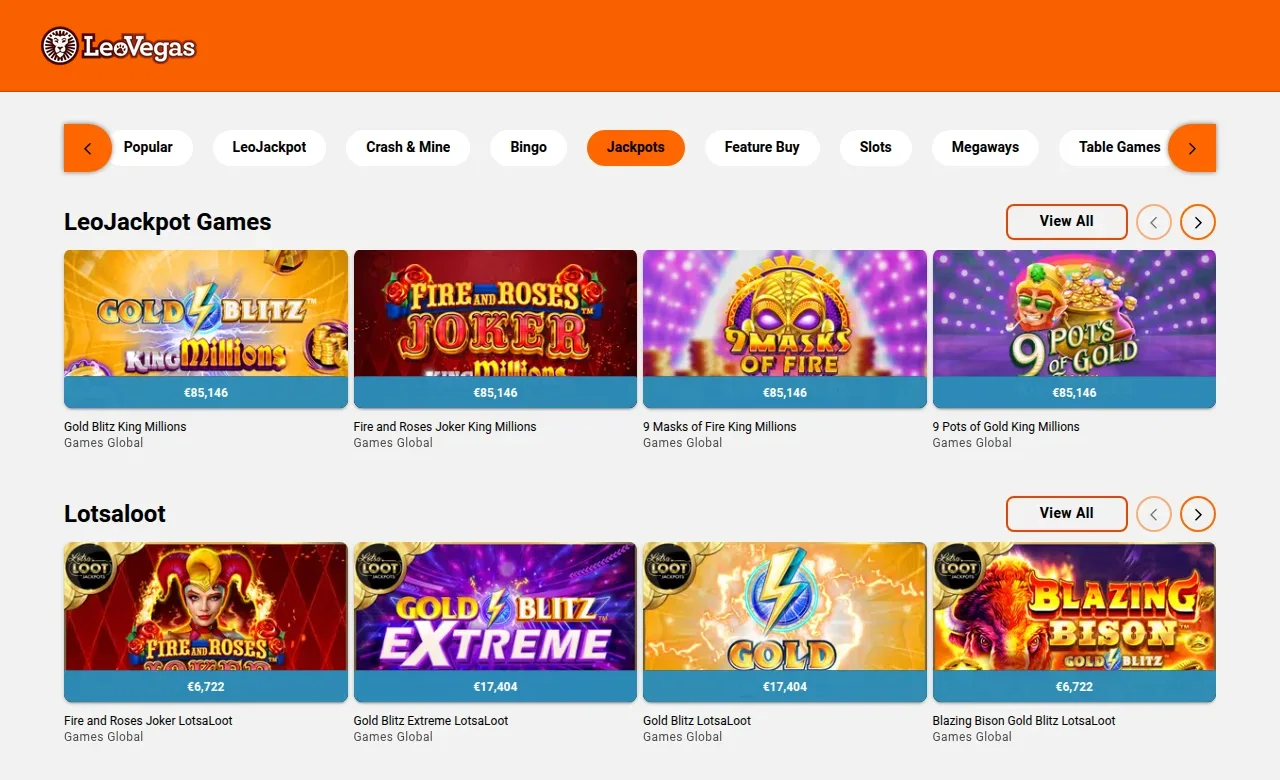
| LeoVegas | 2,000+ games from 40+ studios | 87 |
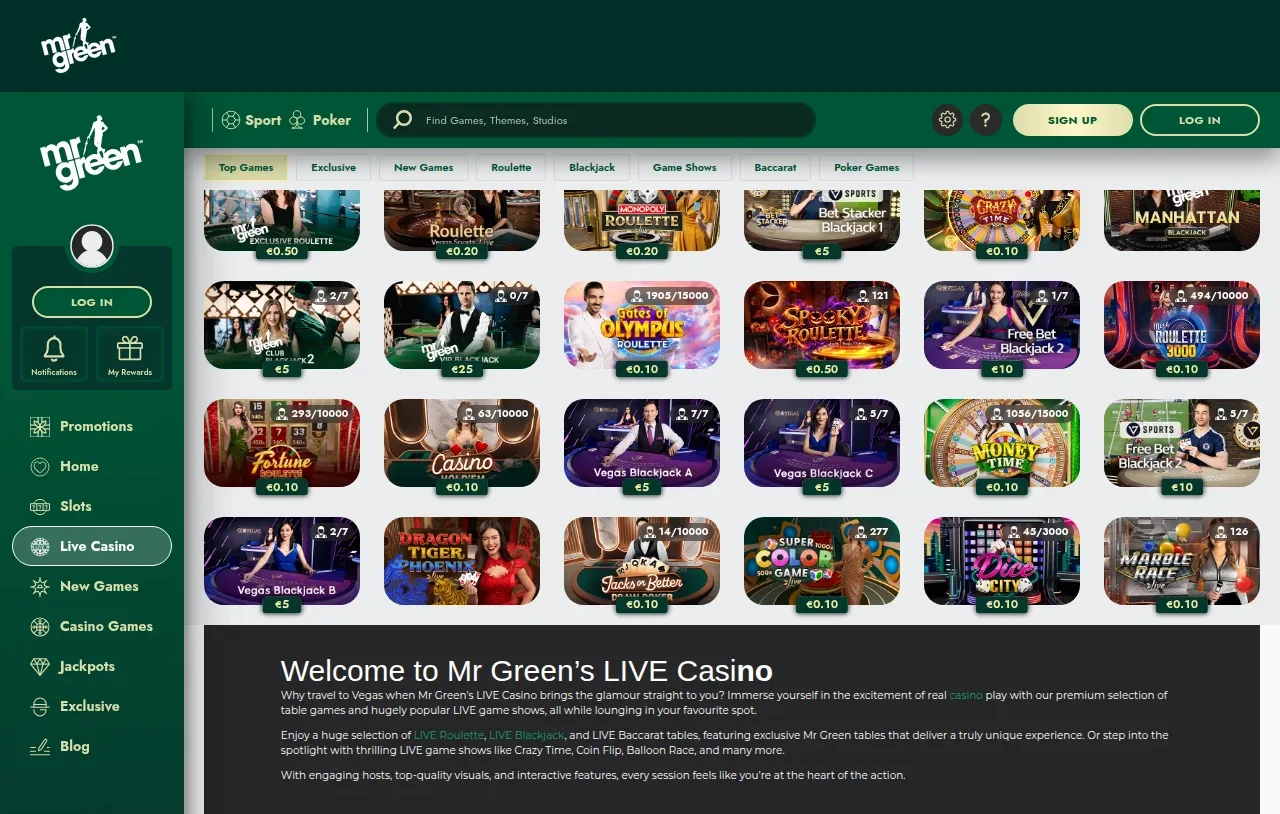
| Mr Green | 2,000+ games, 24/7 support | 86 |
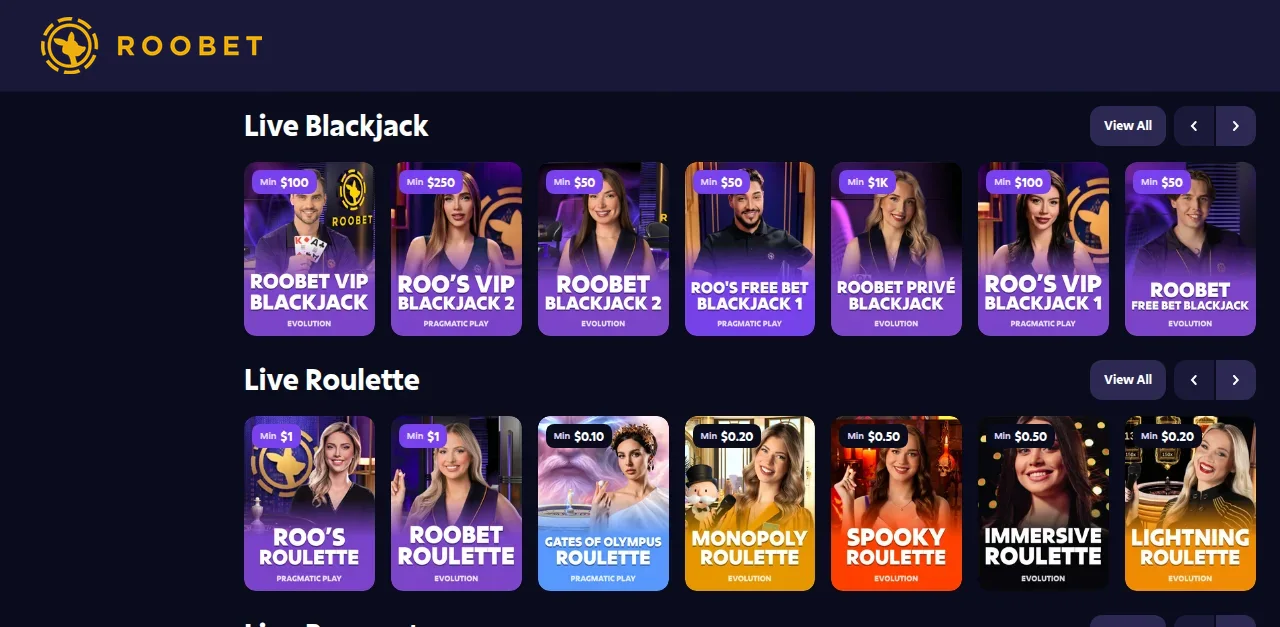
| Roobet | 15 top game studios | 81 |
Why studio count beats raw game count: a lobby of 9,000 titles from 15 studios repeats the same handful of engines. A lobby fed by 230 providers carries Megaways licensees, cluster-pays specialists, hold-and-win shops, Nordic boutique studios and Asian-market suppliers — different volatility profiles, different feature grammar, different bet floors. If you are hunting for a specific mechanic or a specific minimum stake, breadth of suppliers is what delivers it.

Welcome offers, exactly as listed
Offer structures differ sharply between these brands — percentage match, spin packages, multi-deposit ladders, or no bonus at all in favour of a faster cashier. The table reproduces what each brand lists; wagering requirements, game weighting and expiry vary by operator and are set out on the individual review pages.
| Brand | Listed offer | Shape of the deal |
|---|---|---|
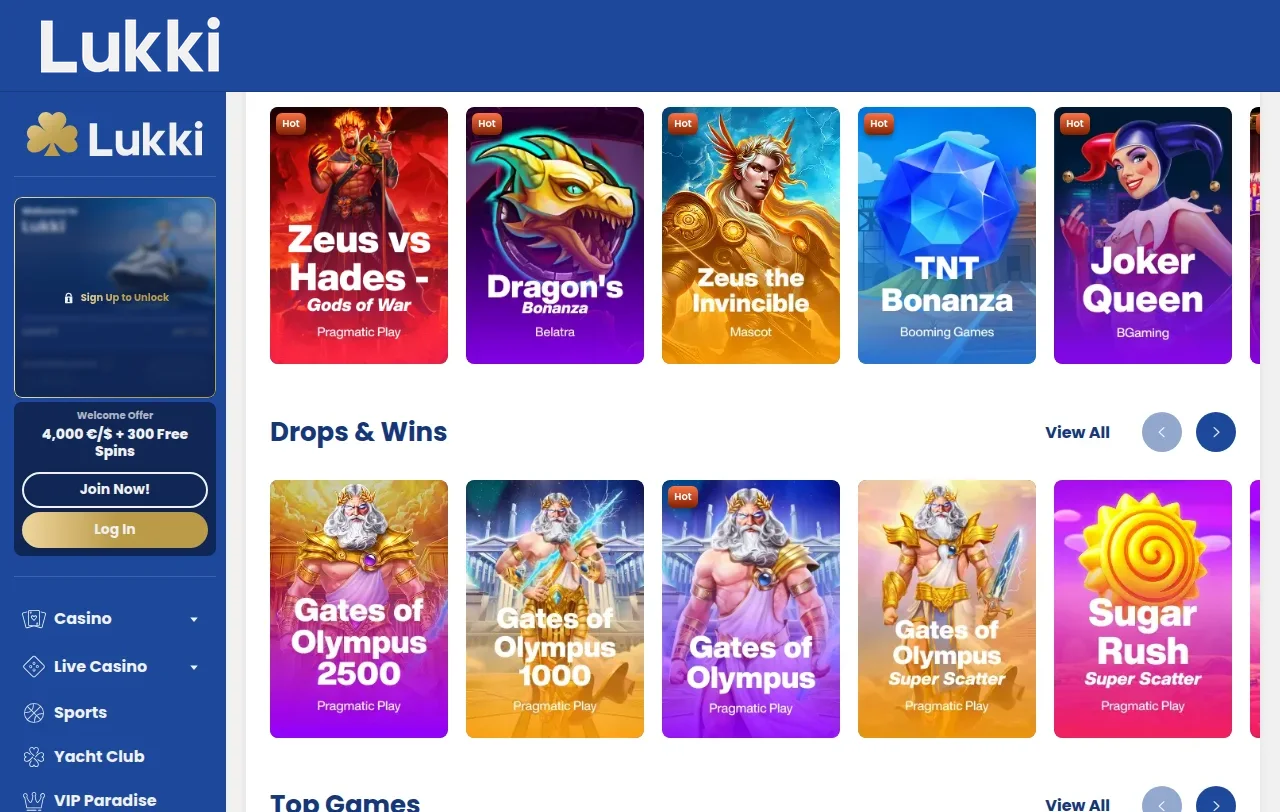
| Lukki Casino | €4,000 + 300 free | Four-deposit welcome offer |
| ICE Casino | Up to €1,500 + 270 FS | Match plus large spin package |
| 22Bet | Up to €1,500 + 150 FS | Match plus spins |
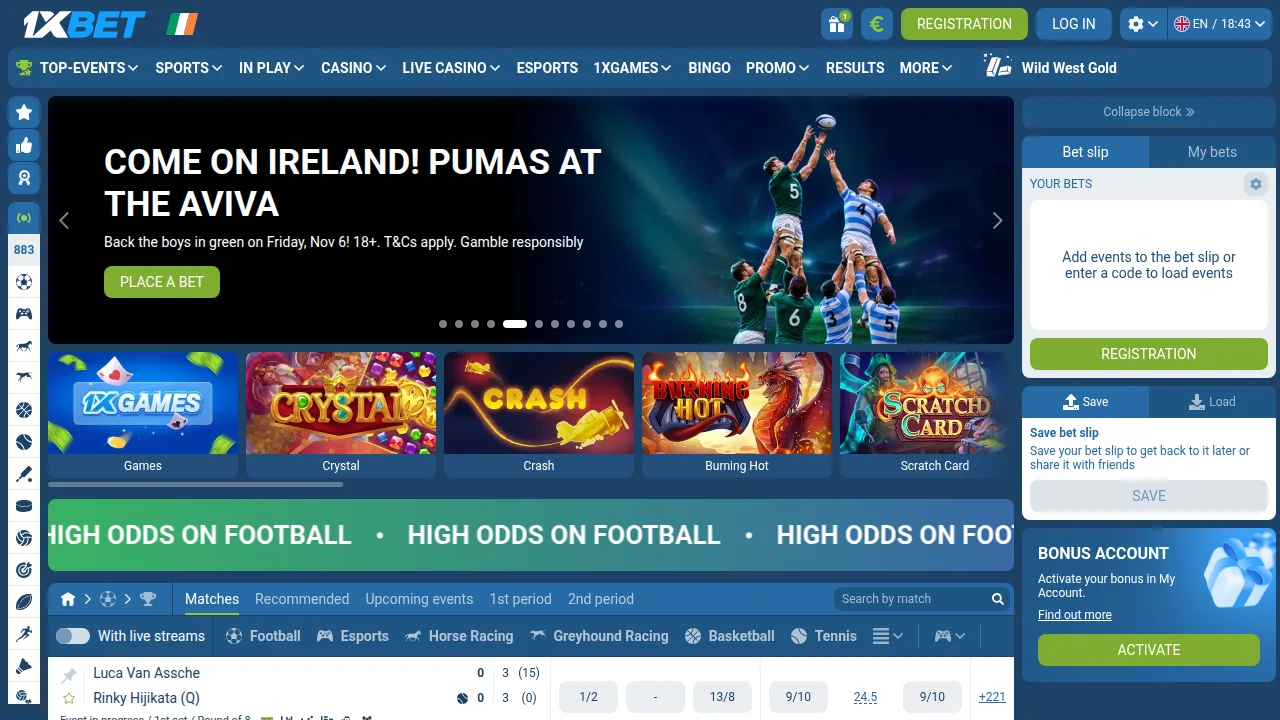
| 1xBet | Up to €1,500 + 150 FS | Match plus spins |
| LeoVegas | Up to €1,000 + 200 FS | Match plus spins |
| Mr Green | €500 + 200 Free Spins | Match plus spins |
| BitStarz | €500 + 180 free spins | Match plus spins |
| Puntit | €500 Starter Pack | Packaged starter offer |
| Casumo | 100% up to €300 | Plus 50 spins on Wild Wild Riches |
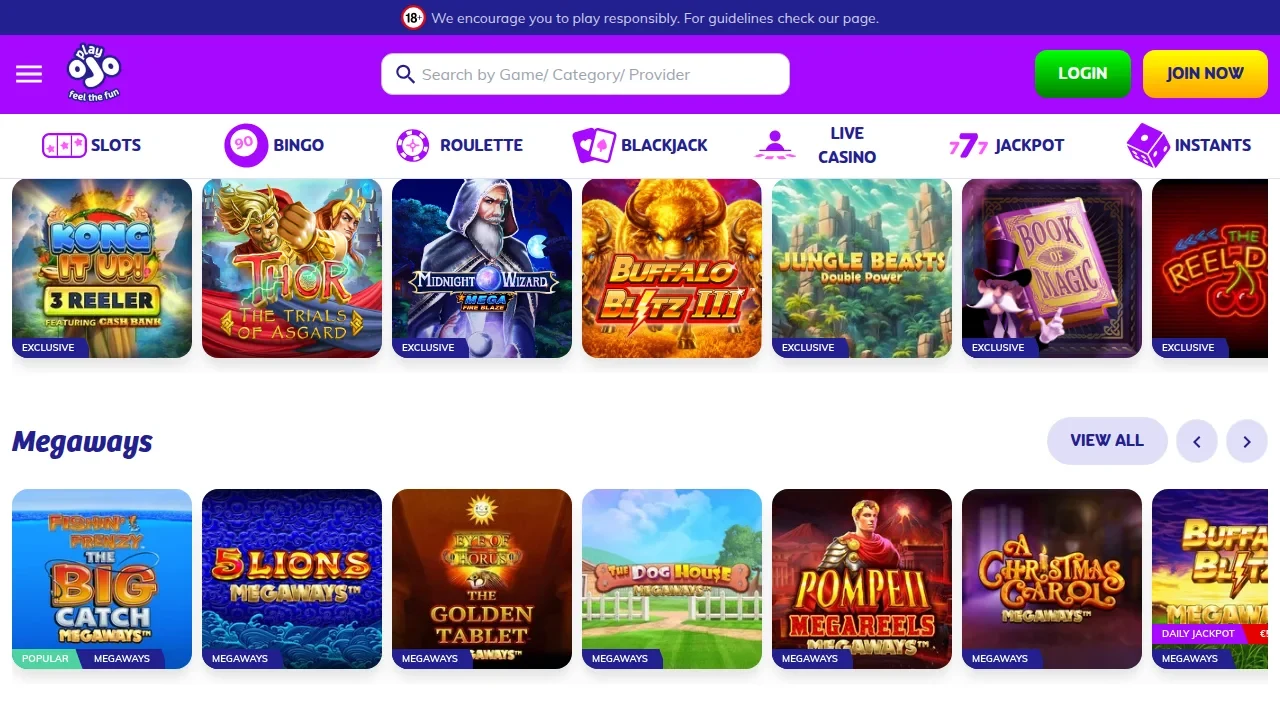
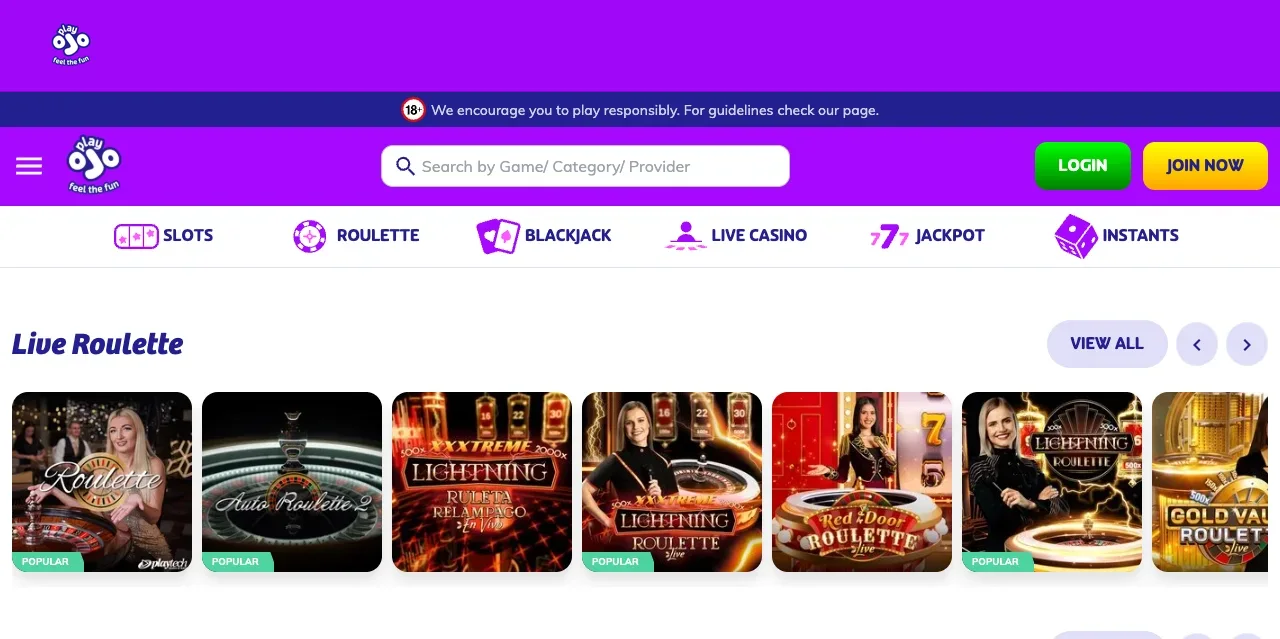
| PlayOJO | No-wagering free spins | Winnings paid as real cash |
| Duelbits | Instant crypto cashier | Cashier-led, no headline match |
| Roobet | Crypto + fiat cashier | Cashier-led, no headline match |
| Videoslots | Slot tournaments | Ongoing competition format |
Pro tip: a headline figure is the least informative part of a bonus. The three numbers that decide its value are the wagering multiple, the maximum stake allowed per spin while wagering, and the slot weighting percentage. A no-wagering spin package — the shape PlayOJO lists — converts to cash with none of that arithmetic, which is why it compares better than its face value suggests.

- Min. deposit €10
- Over 80 Must Drop jackpots
- 24/7 live chat support
Stake ranges, deposit limits and cashier choice
This is where multi-market operators differ most from a narrow single-country product, and the differences are concrete rather than philosophical:
- Bet ceiling per spin: set by the game and the operator’s own table, not by a national cap. High-limit slot sections and dedicated VIP tables exist on most of these lobbies.
- Deposit limits: operator-set, and adjustable downwards by you at any time. Setting a personal cap before your first deposit is the single most useful control on the account.
- Payment mix in Ireland: debit card, PayPal, Apple Pay, Revolut, bank transfer and Paysafecard are the methods in common use. Credit cards are prohibited for gambling payments under s.165 of the Gambling Regulation Act 2024.
- Crypto rails: BitStarz, Duelbits, Roobet and Puntit list crypto cashiers, which is why their withdrawal timings behave differently from card-only sites.
- Tournaments and ladders: Videoslots runs slot tournaments; several others run recurring spin drops. These are catalogue-wide promotions that a small lobby cannot support.

- 100% match up to €500
- 200 free spins included
- PayPal, Apple Pay & Trustly
The Irish framework, stated once
The Gambling Regulation Act 2024 (Act No. 35 of 2024) is being commenced in stages by the GRAI. Remote betting has been licensable since 1 July 2026 and the register showed 37 remote betting licences and 4 intermediary licences on 5 November 2026. Remote gaming — online casino and slots — is not yet licensable in Ireland; that phase is scheduled for 2027-2028, so casino play is served from European and offshore jurisdictions in the meantime. The Gaming and Lotteries Act 1956 remains in force alongside the new Act.
Tax: what you keep
Straightforward, and worth knowing before you compare net outcomes: players in Ireland pay no tax on betting or lottery winnings — they are exempt from Capital Gains Tax. The duty sits with the operator, which pays 2% Remote Betting Duty on bets placed by people in Ireland, and 25% on the commission earned by betting intermediaries. Nothing is deducted from a withdrawal on the Revenue side.
How to choose a slot: five criteria that matter
Thousands of titles, one decision. These five columns are the ones worth filtering on, in roughly this order of usefulness.
| Criterion | Where to find it | What it changes |
|---|---|---|
| RTP | Game info screen, inside the casino | Long-run cost of play |
| Volatility | Info screen or provider sheet | Swing size and session length |
| Lines / ways / clusters | Paytable, first page | How wins are formed and how often |
| Features | Paytable, feature pages | Where most of the RTP is concentrated |
| Bet range | Stake selector | How many spins your bankroll buys |
RTP: the first filter
Return to player is the share of all wagered money a game is designed to return across an enormous number of spins. Most modern online slots publish an RTP somewhere between roughly 94% and 97%, and the figure appears in the game’s own info screen. Within the same mechanic and the same volatility band, the higher-RTP version is simply the cheaper one to play over time. It is the one criterion where “higher is better” needs no qualification.
Volatility: the second filter
Volatility describes how a game’s returns are distributed. Low volatility pays small amounts often; high volatility pays rarely and large. Two games can share an identical RTP and feel like different hobbies. The practical question is not which band is “better” but which band your bankroll and your patience can absorb — a high-volatility title needs far more spins before its long-run behaviour appears at all.
Lines, ways and cluster grids
- Fixed paylines (10-50): wins read along set patterns. Predictable, easy to follow, usually the lowest minimum stakes.
- Ways / “all ways” (243-3,125): any matching symbol in adjacent reels pays. More frequent small wins, flatter base game.
- Megaways-style variable reels: symbol counts change per spin, so way counts swing from a few hundred to six figures. Almost always high volatility.
- Cluster pays: groups of touching symbols pay and vanish, with cascades. Session rhythm is choppier — long nothing, then chains.
- Pays-anywhere grids: symbol count alone decides the win, regardless of position. Common in hold-and-win formats.
None of these structures is inherently more generous. They redistribute the same RTP into different shapes. What they genuinely change is minimum stake: a 25-line game often starts at €0.25 while a 6-reel Megaways title may start at €0.20 or €0.10 depending on the studio.
Features: where the RTP actually lives
In most high-volatility slots, the majority of the theoretical return sits inside the bonus round, not the base game. That single fact explains the experience: long flat stretches punctuated by the feature. Read the paytable for which of these the game uses, because each one implies a different pattern.
- Free spins with fixed multiplier: moderate, repeatable upside.
- Progressive or sticky multipliers: the big-tail mechanic; most of the max-win potential lives here.
- Hold and win / respin: collect coin values until respins run out. Capped, often with a jackpot tier.
- Expanding or walking wilds: raises base-game hit value without touching frequency much.
- Bonus buy: pay a fixed multiple of your stake to enter the feature immediately. Published RTP for the buy is usually different from the base-game RTP — check both figures, they are listed separately.
- Gamble / double-up: a coin-flip on a win. Adds variance, never adds expected value.
Bet limits: minimum, maximum and what they imply
The stake selector is the most honest number on the screen. Minimums across the mainstream studios typically sit between €0.10 and €0.25 per spin; maximums range from around €100 to several hundred euro on high-limit titles, and the ceiling is set by the game and the operator rather than by any national cap. Two things follow from it.
- Session length is arithmetic. A €50 bankroll buys 500 spins at €0.10, 200 at €0.25, or 50 at €1.00. Decide the number of spins you want first, then pick the stake that produces it.
- Jackpot qualification can carry a minimum. Some progressives only pay the top tier above a stated stake; the info screen says so explicitly.
- Bonus terms often cap the stake. If an offer limits spins to a maximum while wagering, exceeding it can void the bonus — operator-specific, always written in the terms.
Hit frequency and the max-win cap
Two underused numbers. Hit frequency is the share of spins that return anything at all; it sits around a third of spins in many base games, and lower in high-volatility titles. The max-win cap is the hard ceiling — commonly expressed as 5,000×, 10,000× or 50,000× stake — beyond which the game stops paying even if the reels keep landing. A huge cap is a marketing feature of extreme volatility, not a prediction.
What RTP is — and what it is not
RTP is the single most misquoted number in online slots. Getting it right costs nothing and prevents most false expectations.
| RTP is | RTP is not |
|---|---|
| A theoretical design figure from the game’s maths model | A promise about your session, your day or your month |
| Measured over millions of simulated spins | Measurable in a few hundred spins |
| Published in the game info screen | Something the casino adjusts spin by spin |
| Useful for comparing two titles | A ranking of which game “is due” |
| Sometimes configurable in several versions by the operator | A single universal number for a given title name |
The long run is longer than you think
A 96% RTP means a theoretical €4 cost per €100 wagered — across the full model. In a real session of 300 spins the outcome can land anywhere from zero to the max-win cap, and the average result of a short run tells you almost nothing about the parameter. Variance dominates short samples. This is exactly why demo results, however long, should never be read as evidence about a game’s generosity.
Multiple RTP versions of the same game
Several large studios ship a title in two or three configurations — a flagship version and lower-RTP variants — and the operator chooses which it deploys. Two casinos can therefore offer the “same” slot at measurably different returns. The number in the in-game info screen on that specific site is the only one that applies to you. If a title’s info screen shows a range rather than a figure, treat it as a prompt to check before playing for money.
Pro tip: open the info screen of the same slot on two sites before depositing. It takes thirty seconds and occasionally shows a full percentage point of difference — which, on identical mechanics and identical volatility, is a free improvement with no trade-off attached.
Why RTP says nothing about a session
Each spin is an independent event drawn by a certified random number generator. Nothing accumulates: a game that has not paid a bonus in 400 spins is not closer to paying one, and a game that just paid is not “emptied”. The arithmetic has no memory. Any system built on tracking previous outcomes — stake ladders, hot-and-cold lists, timing the bonus — is tracking noise.
Volatility in practice
Volatility is the difference between a game you can sit with for an hour on a small balance and one that empties it in ten minutes — or doesn’t. Here is how the three bands behave once you are actually spinning.
| Band | Typical pattern | Spins to see the feature | Suits |
|---|---|---|---|
| Low | Frequent small wins, shallow dips | Often under 100 | Long sessions, small stakes, bonus wagering |
| Medium | Mixed: regular line wins plus occasional features | Roughly 100-200 | General play, most popular titles |
| High | Long dry stretches, feature-driven returns | Several hundred, highly variable | Larger spin counts at low stake, big-tail chasing |
Low volatility: the long sitting
Returns arrive in small, frequent pieces. The balance moves gently in both directions, and 200 spins at a €0.20 stake can finish close to where it started. This is the band that suits a fixed budget and a long evening, and the one that behaves most predictably when a bonus has wagering attached — fewer swings means fewer accounts emptied before the requirement is met.
Medium volatility: the default
Most of the best-known titles in any lobby sit here. Line wins keep the base game ticking, the feature appears often enough to shape the session, and the max-win caps are usually in the 2,000×-10,000× range rather than the extremes. If you are unsure what you want, medium is the band where the fewest assumptions go wrong.
High volatility: the maths of waiting
High-volatility slots concentrate most of their theoretical return inside a rare feature. The consequence is structural: expect long unproductive stretches, and expect the bulk of any upside to arrive in one place. The only sensible adjustment is stake size — the same bankroll needs to cover far more spins here than in a low-volatility title, which means a lower stake per spin, not a higher one.
Matching volatility to bankroll: plain arithmetic
- Decide the number of spins, not the stake. 400 spins on €40 means €0.10 per spin. Full stop.
- Raise the spin count as volatility rises. A high-volatility title at 100 spins is a coin toss on whether you see the feature at all.
- Never scale the stake to recover a dip. The arithmetic of the game does not change when your balance does.
- Set the deposit limit before the first deposit, not after. It is the one setting that works on your behalf while you are playing.
Free play versus real money: what actually changes
The reels do not know which mode you are in. Everything around them does.
What carries over from the demo
- Paytable knowledge: symbol values, trigger conditions, feature structure, max-win cap.
- Interface fluency: where the stake selector, autoplay limits and info screen live.
- Pacing: whether the base game’s rhythm is something you enjoy for an hour.
- Mechanic preference: cluster versus ways versus hold-and-win is a taste you can discover for free.
What does not carry over
- Results. A demo balance that tripled means nothing for the next session.
- Jackpot eligibility. Progressive pools are funded by real-money wagers only.
- Bonus progress, loyalty points and tournament positions. All real-money only.
- Risk. This is the entire difference, and it is not a small one: in real-money mode the balance is yours.
Pro tip: one habit worth carrying from demo to cashier — before your first paid spin on a new title, open the info screen and note the RTP figure, the volatility band and the max-win cap. Three numbers, ten seconds, and you will never again be surprised by a game that goes 300 spins without a feature.
Demo without registration — and when it is not available
Most slot demos load straight from a game tile with no account at all. Exceptions are consistent and easy to recognise:
- Progressive jackpot slots often have no demo, because the pool only exists in real-money mode.
- Live casino tables never have a demo: a real dealer and a real wheel cannot run on virtual credits.
- Some exclusive or branded titles are licensed to a single operator and only open inside a logged-in session.
- A few studios require a logged-in session for all demos, regardless of title.
Browsing by category: theme, provider, feature
A 9,000-game lobby is unusable without filters. The three that do real work are theme, provider and mechanic — and only two of them tell you anything about how a game plays.
| Filter | What it tells you | Useful for |
|---|---|---|
| Theme | Art and sound only | Mood, nothing more |
| Provider | Maths style, feature grammar, bet floors | Finding more of what you liked |
| Mechanic / feature | How wins form and where RTP sits | The most predictive filter available |
| Format (jackpot, bonus buy) | Payout structure and qualifying stakes | Targeted sessions |
By theme
Egyptian, Irish luck, fruit, mythology, fishing, sweets, Wild West, horror. Themes cluster because they sell, and a popular theme attracts dozens of imitators built on completely different maths. Use theme to choose between two games you already like mechanically — never as a proxy for how a game behaves.
By provider
Studios have house styles that persist across their catalogues: one favours high-volatility multiplier ladders, another builds low-volatility cluster games, another specialises in hold-and-win with jackpot tiers. Once you identify the studio behind a title you enjoyed, its provider page is the highest-yield place to look next. This is where a 230-provider lobby like Videoslots or a 60-studio catalogue like Duelbits pays off against a 15-studio one.
By feature and mechanic
- Megaways and variable-reel engines — high volatility, large caps, licensed to many studios.
- Cluster pays with cascades — choppy sessions, chain-driven upside.
- Hold and win / link-and-win — capped feature with jackpot tiers, frequently fixed-stake jackpot qualification.
- Multiplier-collect free spins — the classic big-tail structure.
- Bonus-buy titles — separate published RTP for the purchase; read both figures.
- Jackpot slots — local pools, network pools, or must-drop timers. Real-money only.
By format: jackpots and bonus buys
Two formats deserve their own filter. Progressive jackpot slots trade base-game return for a shared pool, which is why their standard RTP often reads lower than a comparable non-jackpot title — part of the return is sitting in the pot. Bonus-buy games let you skip the base game at a fixed price; they shorten the session dramatically and change the stake arithmetic completely, since one purchase can equal fifty or a hundred ordinary spins.

- 35x wagering requirements
- Minimum deposit €10
- 24/7 live chat and email
Whichever route you take through a lobby, the sequence that works is the same: find the mechanic in demo, read the three numbers in the info screen, set your spin count and stake before you deposit, and keep the age rule in view — real-money play in Ireland is 18+, with no exceptions and no “nearly”.
Playing slot demos on a phone
Most free play in Ireland happens on a handset, not a desktop. The demo build is the same HTML5 file in both cases, but the layout is redrawn, and a few things that are obvious on a monitor get buried behind a menu icon on a 6-inch screen.
- Portrait vs landscape — cluster grids and 6-reel games usually need landscape before the symbols are legible.
- The hamburger menu — on mobile, the paytable, game rules and RTP line are almost always behind it, not on the main screen.
- Spin button position — some studios put it under your thumb, which makes accidental repeat spins easy.
- Data use — a slot loads once, then streams almost nothing; the first load is the heavy part.
Browser or app
Demos run in the mobile browser without any download. Apps, where a brand publishes one, mainly change navigation and notifications, not the game itself: the same supplier build, the same maths, the same paytable. If a title refuses to load in the browser, the usual cause is an ad-blocker or a strict tracking-prevention setting blocking the supplier’s domain, not the game being unavailable.
What the small screen hides
Three details are routinely missed on mobile and matter in real play:
| Detail | Where it hides | Why it matters |
|---|---|---|
| RTP line | Last page of game rules | Confirms which version of the game you are on |
| Max win cap | Paytable footer | Sets the ceiling the feature is building towards |
| Bet per spin vs bet per line | Stake selector | A €0.20 “line bet” on 25 lines is €5.00 a spin |
Pro tip: before your first real spin on a phone, open the stake selector and tap the minimum once. Whatever the game loaded with is the supplier’s default, not your choice — and on several popular titles that default is five to ten times the floor.
Autoplay, turbo and the pace of a session
Demo play tends to be slow and curious. Real play on the same title is usually faster, because autoplay and turbo are sitting right next to the spin button. Speed does not change RTP or volatility — it changes how many spins fit into an hour, and therefore how quickly a planned stake budget is used.
Autoplay stop conditions
European supplier builds generally require you to set at least one stop condition before autoplay will run. The usual set:
- Number of spins — a fixed count, commonly 10 to 100.
- Stop on any win — ends the run the moment a paying combination lands.
- Stop if single win exceeds — a cash threshold you type in, for example €50.
- Loss limit — stops once net losses across the run reach a figure you set.
- Stop on feature — halts when free spins or a bonus round triggers, so you play it by hand.
These are the only controls inside the game. Anything broader — session reminders, deposit caps — lives in the account settings, not in the slot.
Turbo, quick spin and skip animations
Turbo removes the reel animation and the win celebrations. A standard spin cycle is roughly three to five seconds; with turbo, it can be under two. The same €20 of stake money that lasted forty minutes in demo can be gone in twelve. Nothing about the maths changed — only the clock.
How the licences differ: MGA, Gibraltar, Curaçao, Kahnawake
Because the GRAI does not open remote gaming licensing until 2027–2028, online casino offered to players in Ireland currently runs on European and international licences. They are not interchangeable: each regulator has its own rulebook, its own complaints route and its own publication habits. Comparing them by what they actually do is more useful than comparing them by reputation.
| Regulator | Based in | Complaints route | Typical traits |
|---|---|---|---|
| Malta Gaming Authority (MGA) | Malta (EU) | MGA player support, then approved ADR | Segregated player funds, published licence register, game certification rules |
| Gibraltar Gambling Division | Gibraltar | Licensing Authority, plus ADR | Small licensee base, long-established operators |
| Curaçao Gaming Authority (CGA) | Curaçao | Direct to the CGA since the LOK reform | Single-tier licences replacing the old master/sub model |
| Kahnawà:ke Gaming Commission | Mohawk Territory, Canada | Commission complaints process | Operating since 1999, strong hosting/server tradition |
What an MGA licence actually does
Malta’s framework is EU-based supervision with teeth on the operational side: licensee registers are public and searchable, player balances must be held separately from operating funds, and game software has to be certified by an approved test house before it goes live. For a slots player that translates into one practical thing — the RTP printed in the info screen is the certified build, not a marketing figure.
Curaçao after the LOK reform
Curaçao historically issued master licences that were then sub-licensed onward, which made it hard to tell who supervised whom. The LOK reform replaced that with direct licences issued by the Curaçao Gaming Authority, with named licence holders and an application process that includes AML and fit-and-proper checks. A licence issued under the new regime and one issued under the old sub-licence model are not the same document, even though both say “Curaçao”.
Where the licence number is published
Plenty of international brands print the issuing jurisdiction in the footer without the number. A published, verifiable number is a mark in the operator’s favour — it lets anyone cross-check the entry in the issuer’s register in under a minute. Where it is not published, the operator still states the jurisdiction and the licensed company name, and that is what gets recorded here. A number only ever appears on this site when it has been confirmed in the issuer’s own register.
Tournaments, prize drops and slot races
Beyond the welcome offer, the recurring promotion attached to slots is almost always a leaderboard. The mechanic is simple: qualifying spins on listed games earn points, points build a ranking, and the ranking pays out at the end of a window. Videoslots is built around this, listing slot tournaments as a standing part of the product rather than a one-off campaign.
- Points by win multiplier — the most common scoring: your biggest win relative to stake, not your biggest win in euro. This keeps small stakes competitive.
- Points by spin count — volume-based scoring, which rewards time rather than outcome.
- Prize drops — a supplier-run pool that awards random cash prizes on qualifying spins across every casino running the campaign.
- Qualifying stake — nearly every race sets a minimum bet below which spins do not score.
The qualifying stake is the term to read first. If a race requires €0.50 a spin and your planned stake is €0.10, the race is not part of your session — and joining it at five times your intended stake is a decision about money, not about the leaderboard.
Videoslots lists over 230 game providers, which is what makes a rotating tournament calendar possible in the first place: a different set of qualifying titles each week.

Reading wagering terms before the first real spin
A bonus is not free money with a number on it; it is a number with conditions attached. Four conditions do nearly all the work, and all four are in the terms page, not the banner.
| Term | What to look for | Effect on slots play |
|---|---|---|
| Rollover | Multiplier, and whether it applies to bonus or bonus + deposit | Doubles the turnover requirement when it covers both |
| Game contribution | Percentage per category | Slots usually count most; table games often count least |
| Max bet while wagering | A cash cap per spin | Exceeding it can void the bonus, not just the spin |
| Expiry | Days for the bonus, days for the spins | Determines whether the requirement is realistic at your stake |
Max bet is the clause that catches people
Rollover is the headline, but max bet while wagering is the clause most often broken by accident — usually by someone who set a stake in demo, deposited, and carried the stake over without checking. The cap is a per-spin figure in euro, and in most terms it applies to every spin funded by bonus money until the requirement clears.
No-wagering offers change the arithmetic
Where spins carry no wagering requirement, anything they return is cash from the first euro — there is no turnover to clear and no expiry race to lose. PlayOJO’s offer is built on exactly that: no-wagering free spins, with winnings paid as real cash.
- Min. deposit €10
- Over 80 Must Drop jackpots
- 24/7 live chat support
Withdrawals: rails, timing and verification
The demo has no cashier, so this is the part of real play that nothing in free mode prepares you for. Three stages decide how long a withdrawal takes: the operator’s internal review, the payment rail, and whether your identity check is already complete.
| Method | Deposit | Withdrawal behaviour |
|---|---|---|
| Debit card | Instant | Back to the same card; bank clearing adds time |
| PayPal | Instant | Fast once approved, where the brand supports payouts |
| Revolut | Instant | Treated as a card or bank rail depending on setup |
| Apple Pay | Instant | Deposit-only in most cashiers; payout goes elsewhere |
| Bank transfer | Slower | Reliable for larger sums, slowest to land |
| Paysafecard | Instant | Deposit-only by design; nominate another payout method |
| Crypto | Network-speed | Fastest rail where offered; network fee applies |
Credit cards are not an option: section 165 of the Gambling Regulation Act 2024 prohibits their use for gambling. Debit cards are unaffected.
Do verification first, not at payout
Identity checks are the single biggest source of delay, and they are entirely avoidable. Uploading proof of identity and address the day you register means the first withdrawal is processed on its own merits rather than queued behind a document review. Name on the account must match name on the payment method — mismatches are rejected, not negotiated.
Deposit-only methods and the payout fallback
Paysafecard and, in most cashiers, Apple Pay cannot receive money back. If you deposit with either, nominate a bank account or card as the withdrawal destination before you need it.
Crypto-first cashiers handle this differently: Duelbits and Roobet both run instant crypto rails alongside fiat options, which removes the banking window from the equation entirely — the constraint becomes network confirmation time rather than business hours.

- 24/7 live chat support
- Evolution live casino
- Browser play, iOS & Android
Five mistakes when moving from demo to cash
The transition from free play to real money fails in predictable ways. All five of these are avoidable before the first spin.
- Carrying over the demo stake. Demo balances are typically €1,000 to €5,000 in virtual credits. A €2 spin looks trivial against €5,000 and significant against a €50 deposit. Reset the stake to match the real balance, not the practice one.
- Assuming the RTP is the same. Multi-version titles exist; the number in the live game’s info screen is the one that applies to your spins.
- Chasing a feature you saw in demo. Hundreds of demo spins can produce several bonus rounds. That tells you what the feature pays, not how often it will arrive next time.
- Ignoring max bet while a bonus is active. The cap voids bonuses, not just individual spins.
- Leaving verification to payout day. It converts a same-day withdrawal into a multi-day one.
Pro tip: write down two numbers before you deposit — the stake per spin and the number of spins you intend to play. Multiply them. That product is the session budget, and it is the only figure that needs to match what is in the cashier.
A pre-session checklist
Six checks, roughly two minutes, done once per game rather than once per spin.
| # | Check | Where |
|---|---|---|
| 1 | RTP figure of the live build | Game rules, final page |
| 2 | Volatility rating | Info screen or supplier sheet |
| 3 | Max win cap | Paytable footer |
| 4 | Minimum stake per spin | Stake selector |
| 5 | Deposit limit set on the account | Account settings |
| 6 | Payout method nominated and verified | Cashier |
Nothing on that list is about picking a winner, because no list can do that. It is about making sure the game you are playing is the game you think you chose, at the stake you meant to set.

Slot glossary
The vocabulary used across supplier info screens, in plain terms.
| Term | Meaning |
|---|---|
| Scatter | Symbol that pays or triggers a feature regardless of reel position |
| Wild | Substitutes for paying symbols; may carry a multiplier |
| Sticky | A symbol that stays locked in place for one or more spins |
| Cascade / tumble | Winning symbols are removed and replaced, allowing chained wins on one spin |
| Megaways | Licensed mechanic where reel heights change each spin, varying the number of ways |
| Cluster pays | Wins formed by adjacent groups of symbols rather than lines |
| Hold & win | Respin feature where collected symbols lock and reset the respin counter |
| Bonus buy | Paying a fixed multiple of the stake to enter the feature immediately |
| Ante bet | Raising the stake, usually by 25%, to increase feature trigger frequency |
| Max win | The capped ceiling, expressed as a multiple of the stake |
| Hit frequency | Share of spins returning any win, however small |
| Rollover | Turnover required before bonus funds convert to withdrawable cash |
Studio counts and what they mean for a demo search
The practical reason catalogue size matters on a free-play page is availability: the larger the supplier list, the more likely a specific demo exists on that lobby rather than only on the studio’s own site.
| Brand | Catalogue as listed | Rating |
|---|---|---|
| BitStarz | 9,000+ games, crypto-friendly | 86 |
| 22Bet | About 9,000 casino games | 85 |
| Duelbits | 4,000+ games from 60+ studios | 85 |
| ICE Casino | 3,500+ slot games | 87 |
| LeoVegas | 2,000+ games from 40+ studios | 87 |
| Mr Green | 2,000+ games, 24/7 support | 86 |
| Videoslots | Over 230 game providers | 80 |
| Roobet | 15 top game studios | 81 |
Read these as two different measurements. A title count tells you how deep the back catalogue goes; a studio count tells you how wide the sourcing is. A lobby with 15 curated studios can be a better fit than one with 9,000 titles if those 15 are the studios whose mechanics you actually play.
Where slots sit next to the live tables
Slots and live casino share a wallet but not a rhythm. If you move between them, three differences are worth knowing before the first bet.
- Pace — a live roulette round runs on the dealer’s clock, roughly 45 to 60 seconds; a turbo slot spin is under two.
- Bonus contribution — live tables typically contribute far less than slots towards rollover, sometimes nothing at all.
- No demo mode — live tables stream from a real studio, so there is no free version. What you can do is watch a table without betting.
- Table limits — live minimums are usually higher than slot minimums, which changes what a given balance covers.
Game-show formats sit between the two: live-dealt, but with slot-style multipliers and a bonus round. They are listed under live casino, and they follow live-casino bonus contribution rules, not slots rules.
Staying in control: age, tools and help in Ireland
Free play has no financial risk attached. Real-money play does, and the Irish framework is explicit about the boundary. Under section 158 of the Gambling Regulation Act 2024, the minimum age for gambling is 18. There is no lower age for any product, no exception for free spins funded by a deposit, and no grey zone for someone “nearly” 18.
What is in force right now
- 18+ age requirement — section 158.
- Credit card ban — section 165 prohibits paying for gambling by credit card.
- Parental control links — section 174 requires licensees to link to parental control programmes from the home page.
- National Gambling Exclusion Register — provided for in sections 44–49, but not yet commenced. As of November 2026 there is no national self-exclusion scheme in operation in Ireland.
Until the register goes live, self-exclusion is operator-by-operator. That means setting it at each account you hold, and treating the tools inside the account as the real mechanism rather than a formality.
Account tools worth setting on day one
| Tool | What it does | Why set it early |
|---|---|---|
| Deposit limit | Caps money added per day, week or month | Increases usually take a cooling-off period; decreases apply at once |
| Loss limit | Caps net losses over a period | Works regardless of how many spins or games |
| Session reminder | Pops up elapsed time | Turbo spins distort the sense of how long you have played |
| Time-out | Short lock, typically 24 hours to six weeks | Reversible break without closing the account |
| Self-exclusion | Longer lock at that operator | Cannot be lifted early on request |
Where to get help
Support in Ireland is free and confidential:
- Gambling Care (Gambling Awareness Trust) — free 24-hour line 1800 936 725 · gamblingcare.ie
- Extern Problem Gambling (formerly Problem Gambling Ireland) — 089 241 5401 · extern.org
- Gamblers Anonymous Ireland — +353 1 8721133, 10am–10pm, every day · gamblersanonymous.ie
- HSE — public health services and referrals · hse.ie
Pro tip: set the deposit limit the same day you register, not the day you think you need it. Lowering a limit takes effect immediately at most operators; raising one is deliberately slow, which is the whole point of setting it while nothing is at stake.

The short version
Free slots are a genuine tool, not a teaser. In demo you can learn a mechanic properly, read the three numbers that define it, and find out whether the game’s rhythm suits you — all without a deposit, an account, or a euro at risk. What demo cannot do is produce cash, and nothing on this page pretends otherwise.
When free play stops being enough, the step to real money is small but it is a real step. The brands covered here differ most in catalogue depth and cashier rails:
- Depth of library — BitStarz at 9,000+ games and 22Bet at around 9,000 sit at the top; Videoslots lists over 230 providers behind its tournament calendar.
- Curated and familiar — LeoVegas (2,000+ games, 40+ studios) and Mr Green (2,000+ games, 24/7 support) are the tightest lobbies here.
- Cashier style — Duelbits and Roobet run instant crypto alongside fiat; Puntit lists crypto and PayPal.
- Offer structure — PlayOJO’s no-wagering spins pay as real cash; Casumo’s is a straight 100% up to €300 with 50 spins on Wild Wild Riches.

- 53 game studios listed
- PayPal, Skrill & Neteller
- €10 debit card deposit
Pick the lobby that holds the games you actually open. Set the stake and the limits before the deposit, not after. Keep verification done in advance so a payout is a payment and not a process. And keep the one fixed rule in view: real-money play in Ireland is 18+. If it stops being entertainment, Gambling Care answers free on 1800 936 725, 24 hours a day.

Slot mechanics beyond the five-reel grid
Most demo libraries are still dominated by the classic layout: five reels, three rows, a fixed set of paylines reading left to right. But a large share of releases from the last decade use engines that behave quite differently, and recognising the engine before you spin tells you more about a game than its theme ever will.
Ways-based grids. Instead of lines, every reel position counts. A 5×3 grid with “243 ways” simply means any symbol anywhere on reel one can combine with any matching symbol on reel two, and so on. Variable-reel systems take that further: the number of symbols per reel changes each spin, so the number of winning combinations changes with it. The Megaways engine, licensed from Big Time Gaming, is the best-known example and tops out at 117,649 ways when all six reels land at maximum height.
- Cluster and scatter pays. Here position matters, not direction.
- A cluster game pays when a minimum number of matching symbols touch horizontally or vertically — often five or more on a 6×5 or 7×7 grid.
- Scatter-pay games ignore adjacency entirely and simply count how many of a symbol landed anywhere on screen.
- Both are usually paired with cascading or tumbling symbols, where winners are removed and replaced, allowing several wins from a single paid spin.
Hold-and-win and respin engines. Cash-value symbols land, lock in place, and a counter of respins resets whenever a new one appears. The base game can be unusually quiet because the maths is concentrated in that one feature.
Expanding grids. Engines such as Infinity Reels add a reel each time a win extends, with no theoretical limit on length other than the game’s own cap.
In free play, the practical point is simple: spend your first fifty demo spins identifying which of these you are looking at, because the pace, the length of dry spells and the shape of the win distribution all follow from the engine rather than the artwork.
Jackpots: fixed, progressive and must-drop
“Jackpot” on a slot thumbnail can mean at least four different things, and the differences change both the maths and whether the prize is reachable in a demo at all.
Fixed jackpots are simply the top prize in the paytable, expressed as a multiple of the stake or as a set coin amount. Nothing accumulates; the figure you see is the figure on offer, and it is already baked into the published return.
Standalone progressives grow from a small percentage of bets placed on that one game at that one operator. Pools are modest and reset frequently.
- Network progressives pool contributions across every operator running the title, which is how headline figures reach six and seven figures.
- The contribution is taken out of the overall return, which is why these games often show a base return that looks low on paper — a meaningful slice of it sits in a prize that very few players will ever trigger.
- Some network jackpots require a qualifying bet level; stake below it and the pool is unreachable no matter what lands.
Must-drop or time-locked jackpots carry a guarantee: the prize falls before a stated amount, hour, or date. These are usually smaller, tiered pools (hourly, daily, “before €500”) and the guarantee changes the timing of payouts rather than the long-run return.
Two practical notes for free play. First, demo versions of jackpot slots generally run the base game only; the jackpot mechanic may be visible but is not live, and any “win” credited in a demo has no cash value. Second, jackpot contributions are often excluded from the base return figure quoted in the information panel, so comparing a jackpot title’s percentage against a non-jackpot one is not a like-for-like comparison. Read the help screen to see whether the quoted number includes the progressive element or sits beneath it.
Maximum win caps and why they matter more than they look
Almost every modern slot states a maximum win, and it is one of the most consequential numbers in the information panel — yet it rarely appears in marketing. It is usually expressed as a multiple of the total stake: 1,000x, 5,000x, 10,000x, 50,000x. A handful of older titles are effectively uncapped; a handful of newer ones carry an absolute currency ceiling as well as a multiplier.
The cap matters for three reasons.
- It defines the shape of the game. A cap of 500x and a cap of 25,000x cannot coexist with the same return unless the frequency of smaller wins differs sharply. High-cap games pay their theoretical return through rare, very large outcomes, which is exactly why long losing runs are normal in them.
- It can end a round early. In many high-cap games, when the cap is reached mid-feature the round stops immediately: remaining free spins are forfeited, multipliers stop climbing, and the balance is credited at the ceiling. That behaviour is disclosed in the rules, not in the lobby.
- It interacts with other limits you may not control. A game cap is separate from any operator-level limit on winnings from bonus funds, and separate again from payout processing thresholds. A 50,000x theoretical maximum means little if the promotion you are playing under caps conversion at a small fixed figure.
When you are testing a game for free, note the cap and then ask whether the base game you are experiencing is consistent with it. If a title advertises a very high ceiling but the demo produces frequent modest wins with an easily triggered feature, the big outcomes are concentrated somewhere you have not reached yet — usually a multiplier chain or a retriggering mechanic. That is useful information before you decide what a sensible stake looks like.
Hit frequency, the number most paytables do not show
Return tells you what proportion of stakes a game pays back over an enormous sample. Volatility tells you how unevenly. Hit frequency tells you something neither covers: how often a spin returns anything at all.
Typical figures sit somewhere between roughly one spin in five and one spin in three, though cluster and cascade games can read much higher because a single paid spin can contain several separate wins. Providers publish it inconsistently — some put it in the help screen, some in a press kit, many nowhere at all.
Why it matters in free play is a matter of perception. Two games with identical returns and identical volatility can feel completely different if one pays small amounts constantly and the other pays nothing for long stretches before a larger hit. A high hit frequency does not mean a game is generous; most of those hits may be worth less than the stake that produced them, which is why a counter can tick upward while the balance drifts down. This is sometimes called a “loss disguised as a win”, and the demo is the right place to notice how often it happens in a given title.
- You can measure a rough figure yourself without any special tools.
- Set a fixed demo stake, run a counted block of spins — a hundred is enough to get a feel, several hundred for anything meaningful — and tally how many returned at least one credit, then how many returned more than the stake.
- The gap between those two counts is the honest picture of a game’s rhythm.
- Keep in mind that a few hundred spins is far too small a sample to say anything about return; it is only large enough to describe texture.
- Hit frequency is the one statistic a short free session can genuinely sample, which is a good reason to pay attention to it.
Bonus buy features and the arithmetic behind them
Many recent releases let you pay a fixed multiple of your stake to enter the feature immediately — typically between 50x and 200x, occasionally far more. The button is variously labelled “buy bonus”, “bonus buy“, “feature buy” or “ante bet”.
The maths is not a discount. Providers normally publish a separate return figure for the purchased feature, and it is often slightly higher than the base-game figure, because the house edge is applied to a single large transaction instead of many small ones. That does not make it cheaper. Paying 100x your stake once is the same outlay as a hundred ordinary spins, compressed into one outcome with no middle ground. Volatility rises steeply: you either reach a good feature result or you do not, and there is no base game to cushion the wait.
A related mechanic is the ante bet, usually a 25% stake increase that improves the odds of triggering the feature naturally. The published return may go up, down or stay level depending on the title — it is listed in the help screen, and it is worth checking rather than assuming.
- Two things to note for an Irish audience.
- First, availability is market-dependent.
- Feature buys are prohibited in some jurisdictions, and providers ship builds with the button removed where required, so a game you tested with a buy option elsewhere may appear without it.
- Second, the buy price interacts badly with bonus funds: many promotions exclude feature purchases from wagering contribution, or disallow them entirely while a bonus is active, and spending bonus money on a 100x purchase can breach a maximum-stake rule in a single click.
Free play is the sensible place to test a buy, because it costs nothing to see the distribution of outcomes across a dozen purchases — and often that distribution is sobering.
Who tests the maths: labs, RNG certificates and audit seals
A slot’s return is not a claim the studio simply makes. Before a game can be supplied into a regulated market it is normally submitted to an independent testing laboratory, which examines the random number generator, verifies that simulated results converge on the stated return, and checks that the game behaves as its rules describe.
Names you will encounter in certificates and footers include Gaming Laboratories International (GLI), eCOGRA, iTech Labs, BMM Testlabs, Quinel and Trisigma. Their reports cover different things, so it helps to know what you are looking at:
- RNG certification confirms that outcome generation is statistically random and unpredictable, and that results are not influenced by prior spins, balance size or session length.
- Game or maths certification confirms that a specific title, at a specific configuration, returns what its documentation says over a very large simulated sample — typically billions of rounds.
- Platform and operator audits look at the casino rather than the game: how outcomes are requested and recorded, whether reported payout percentages match logs, and whether responsible-gambling tools function.
Seals in a site footer are worth a click. A live certificate links to a dated document naming the entity audited and the scope. A static image with no link proves nothing, and an expired certificate proves less than people assume.
One limitation is worth stating plainly: certification is about correctness, not generosity. A lab confirming that a game returns 92% has verified exactly that — a figure well below the market norm, properly implemented. The seal tells you the game is honest, not that the terms are good. Both questions matter, and only the first is answered by the lab.
One game, several return settings
A detail that surprises most players: a single slot title frequently exists in multiple mathematical versions. Studios commonly ship a flagship configuration alongside lower-return variants — a game might be available at roughly 96%, 94% and 92%, with identical artwork, identical features and identical rules. The operator chooses which build to deploy.
This is why two casinos can offer what appears to be the same slot while returning materially different amounts over time, and why a return figure quoted on a review site, a provider page or a demo hosted outside a casino may not match the version you are actually playing.
How to check which one you have:
- Open the in-game information or help screen from within the casino’s own lobby — not from a third-party demo — and read the stated percentage there. That figure describes the deployed build.
- Look for a range rather than a single number. Text such as “the theoretical return is 94.00%” is definitive; “up to 96.5%” usually is not.
- Check whether the panel mentions configurable elements. Some help screens list every variant the game supports, which tells you variants exist but not which is live.
- Compare across operators. If the same title shows different figures at two sites, you have found a configured game rather than a typo.
Demos hosted by the provider typically run the default, highest configuration, so free play can flatter a game relative to the version a particular casino has installed. It costs nothing to verify, and on a title you expect to play repeatedly, a two-point difference in return is the single largest controllable factor in your long-run cost — larger than stake choice, feature buys or any promotion.
Ireland’s regulatory picture and what is changing
Ireland’s framework for online gambling has been rebuilt recently, and the rollout is still in progress, so the practical position differs from the law on the books.
The Gambling Regulation Act 2024 was signed into law in October 2024 and created a dedicated statutory regulator, the Gambling Regulatory Authority of Ireland, which was formally established in March 2025. The Authority takes over functions previously scattered across the Betting Acts, the Gaming and Lotteries Acts and Revenue licensing, and it is being commenced in phases, with licensing categories opening in sequence rather than all at once. Until a given category is live, operators serving Irish players continue to hold licences from other jurisdictions — which is why the licence badges in a casino footer still matter.
Provisions in the Act that directly affect slot players include:
- A prohibition on credit card payments for gambling, meaning deposits must come from funds you already hold.
- Restrictions on inducements, including limits on free bets and bonus offers targeted at named individuals, and on VIP-style arrangements and arrangements that reward higher spending.
- Advertising controls, including a broadcast and on-demand watershed restricting gambling advertising to specified evening hours, and rules on advertising that would appeal to children.
- A National Gambling Exclusion Register, intended to let a person self-exclude from all licensed operators through one request rather than site by site.
- A Social Impact Fund, financed by levies on licensees, to support research, education and treatment.
The minimum age for gambling in Ireland is 18. Because commencement is staged, it is worth checking the Authority’s own published guidance for the current status of a licence category rather than relying on a summary — including this one.
Tax, currency and the shape of an Irish account
Two administrative questions come up constantly and both have straightforward answers for most players.
Tax. In Ireland, gambling winnings are not generally treated as income for income tax purposes for recreational players; the duties associated with gambling fall on operators rather than on the person placing the bet. Betting duty, for instance, is charged to bookmakers on turnover rather than deducted from a customer’s winnings. The position can differ for anyone whose activity amounts to a trade, and tax treatment is not something a casino page should be relied on for — Revenue’s own guidance is the authority, and professional advice is appropriate for unusual cases.
Currency. Ireland uses the euro, and the sensible default is an account denominated in euro, funded from a euro payment method. Mismatches cost money in ways that are easy to miss:
- A euro-denominated wallet funded by a sterling or dollar card can attract a conversion fee at the card issuer on the way in and again on the way out.
- Where an operator offers to convert for you, the rate applied is set by the operator or its processor, not the interbank rate.
- Stake and limit tables translated from another currency sometimes round awkwardly, which can push a minimum stake slightly above the figure advertised.
- Promotional values stated in another currency are converted at a fixed internal rate that may not match the market rate on the day.
Demo play is unaffected by any of this — a free balance is a notional number — but the stake values you get used to in a demo are worth re-checking in euro before the first real spin, because a game whose minimum reads as a round number in one currency may not in another.
Funding an account: the methods Irish players actually see
Deposit options differ from withdrawal options, and the list available to an Irish account is narrower than the generic payments page on most casino sites suggests.
Commonly supported: Visa and Mastercard debit cards; mobile wallets such as Apple Pay and Google Pay where the operator’s processor supports them; open-banking transfers that push money directly from a current account after authentication in your banking app; bank transfer; prepaid vouchers; and e-wallets. Revolut accounts are widely used in Ireland and are typically presented either as a card or through an open-banking flow, depending on the processor.
Points that matter in practice:
- Credit cards are out. Under the Gambling Regulation Act 2024 credit card funding is prohibited, and many Irish-facing operators had already stopped accepting it. A credit card declined at deposit is usually policy, not a technical fault.
- Some deposit methods cannot receive withdrawals. Prepaid vouchers and certain wallets are one-way, which means an alternative has to be registered and verified before money can come back out.
- Open banking removes a step but adds a check. Payments initiated from your bank arrive with the name on the account attached, which satisfies source-and-ownership checks quickly.
- Deposit limits are a tool, not a restriction. Daily, weekly and monthly caps can be set in the account area, usually taking effect immediately when lowered and after a delay when raised.
- Your bank may block gambling transactions. Several Irish banks and app-based providers offer a gambling block as a customer feature; if it is switched on, every method will fail regardless of the casino.
None of this applies to the demos on this page, which require no payment method and no account balance of any kind.
Game history, round IDs and what to do when a spin goes wrong
Disconnections, frozen reels and a balance that looks wrong after a feature are the ordinary failure modes of online slots. They are also the ones that resolve most easily, provided you know where the evidence lives.
Every real-money round is logged with a unique identifier, a timestamp, the stake, the outcome and the resulting balance. Licensed operators are required to retain these logs and, in most cases, to expose at least a recent window of them to the player. Look for “game history”, “my bets”, “gaming history” or “transaction history” in the account menu; some games also carry an in-client round history reachable from the settings cog, which is useful because it shows the reel positions rather than just the figures.
If something looks wrong:
- Do not reload repeatedly. Most engines resume an interrupted round when the game is reopened, and an unfinished feature is usually restored exactly where it stopped. Reloading in a panic makes the sequence harder to read later.
- Capture the round ID and timestamp, plus a screenshot if the screen is still showing the problem.
- Raise it with the operator first. They hold the logs, and a round ID turns a vague complaint into a specific query.
- Escalate if the answer does not resolve it. Licensed operators must name a complaints route and, under most licences, an independent dispute resolution body; the licence condition that requires it will also set a response deadline. Where the operator holds an Irish licence as the new regime rolls out, the Gambling Regulatory Authority of Ireland is the relevant statutory point of contact for regulatory concerns.
Demo rounds are generally not logged in the same way and carry no financial consequence, so a crashed free spin is a nuisance rather than a dispute — reload and carry on.
Settings, sound and accessibility inside the game client
Slot clients hide more configuration than most players use, and several of the options materially change the experience rather than just the presentation.
Worth finding in the menu of any game you play more than once:
- Sound layers. Many games separate music, sound effects and win celebrations into independent sliders. Muting celebrations while leaving effects on is a surprisingly effective way to stop small wins feeling like big ones.
- Quick spin and animation skipping. Distinct from turbo in some clients; it shortens reel animation without altering the outcome, and it also reduces the cue-and-reward rhythm that makes sessions run long.
- Space bar and tap-to-stop. Keyboard spinning is supported in many desktop clients, which helps players who find repeated mouse clicking uncomfortable.
- Reduced motion. Fewer titles offer this than should, but where present it suppresses screen shake, flashing transitions and rapid zooms. Players sensitive to flashing imagery should also know that the browser and operating system can enforce reduced motion globally, which some HTML5 clients respect.
- Paytable navigation. The information screens are paginated; the symbol values are usually on page one, but the feature rules, the return figure, the maximum win and the behaviour on disconnection sit several pages deeper. That is where the answers to most questions actually are.
- Stake presets versus the slider. Presets round to tidy values; the slider sometimes reaches a lower minimum than the lowest preset shown.
On the technical side, every game on this page runs in HTML5 in the browser. Flash support ended in December 2020 and no current slot depends on it, so nothing needs installing and nothing needs enabling — but ad blockers, strict tracking protection and corporate network filters can prevent a game frame from loading, which presents as a blank panel or a permanently spinning loader rather than an error message. Disabling blocking for the page, or trying a different browser, resolves the great majority of those cases.